

Updated September 17, 2026.
The best workout split is one you can repeat consistently while making progress and recovering between sessions. A six day routine will not help much if you can reliably train only twice a week. Start with your actual schedule, then choose how to distribute the work.
For busy adults over 40, full body training on two or three days is often a practical starting point. An upper and lower body split can work well when four days are realistic. Push, pull, legs and body part splits are other options, rather than automatic upgrades.

What Is a Workout Split?
A split organizes resistance training across different days, usually by body region or movement pattern. Full body training is the alternative: each session includes work for major upper and lower body muscle groups. You do not need to train every muscle with a separate exercise in every session.
Two terms make the choice clearer. Training Frequency describes how often you train, including how often a particular muscle group is trained. Training Volume describes the amount of work performed. Adding gym days changes the schedule; it does not automatically improve the quality of that work.
Does One Split Build More Muscle?
A 2024 systematic review and meta analysis combined 14 studies involving 392 participants. It found no significant differences in strength or muscle growth between split and full body routines when training volume was matched.
That finding supports choosing a format around your preferences and availability. It does not mean every routine is equally well designed, or that the findings are an individualized prescription for someone with medical restrictions. Exercise selection, effort, workload, and consistency still matter.
Choose Your Starting Schedule
| Available days | Practical starting option | Main consideration |
|---|---|---|
| 2 each week | Full body A and B | Each visit covers upper and lower body work. |
| 3 each week | Full body, alternating A and B | Regular practice without dedicating a whole day to one region. |
| 4 each week | Upper and lower body split | Distributes the work into more focused sessions. |
| 5 or 6 each week | Push, pull, legs or another tailored split | Useful only if attendance, workload, and recovery justify it. |
These are coaching options, not mandatory rules. If you prefer a different structure and it produces consistent progress, there is no need to change it simply because another split is popular.
Full Body Training: Two or Three Days
Full body training is useful when the week is unpredictable. If one session is missed, the other session still includes both upper and lower body work. Alternate two sessions with different exercise selections or emphases.
| Schedule | Example week | Following week |
|---|---|---|
| Two days | Monday: A. Thursday: B. | Repeat A and B. |
| Three days | Monday: A. Wednesday: B. Friday: A. | Monday: B. Wednesday: A. Friday: B. |
The following exercise menu is a general example for an otherwise healthy beginner. Choose a comfortable variation of each movement and adjust it to your abilities. An exercise listed here is an option, not a requirement.
| Movement or focus | Session A example | Session B example |
|---|---|---|
| Knee dominant | Sit to stand or goblet squat | Leg press or supported split squat |
| Hip dominant | Light dumbbell Romanian deadlift | Glute bridge |
| Upper body push | Machine chest press | Incline push up |
| Upper body pull | Supported row | Lat pulldown |
| Trunk control | Bird dog | Dead bug |
Start with a small amount of work you can perform well. For example, one or two working sets per exercise may be enough to learn the routine before adding more. Use controlled repetitions, stop before technique deteriorates, and take enough rest to repeat the movement confidently. Exact repetitions and effort should reflect the exercise and your needs.
Upper and Lower Body: Four Days
An upper and lower body split separates the main work into two categories. It can make individual sessions more focused while giving each region two planned sessions in a typical week.
| Day | Session |
|---|---|
| Monday | Upper body A |
| Tuesday | Lower body A |
| Wednesday | Rest or easy activity |
| Thursday | Upper body B |
| Friday | Lower body B |
| Weekend | Rest, walking, or other manageable activity |
Upper sessions can include a press, a row or pulldown, and selected shoulder or arm work. Lower sessions can include a squat or leg press pattern, a hip hinge or bridge, and selected leg or trunk work. Avoid filling every session with exercises just because time is available.
With three available days, you can alternate upper, lower, upper in one week and lower, upper, lower the next. That gives each region three sessions across two weeks, rather than twice every calendar week.
Push, Pull, Legs: Understand the Rotation
Push sessions emphasize pressing muscles. Pull sessions emphasize the back and elbow flexors. Leg sessions emphasize the lower body. This format can suit people who enjoy focused workouts.
At three sessions weekly, a simple Monday push, Wednesday pull, Friday legs schedule gives each category one dedicated session. Repeating the sequence twice within a week requires six sessions. That is a substantial commitment, not a requirement for results.
A rolling sequence is another option: continue with the next session when you return instead of resetting every Monday. Plan recovery around overlapping work, especially if pulling exercises and leg sessions both load the lower back. More training days should distribute an appropriate workload, not justify endlessly adding sets.
The Body Part or Bro Split
A body part split might dedicate separate days to chest, back, shoulders, legs, and arms. It can be enjoyable and effective for a person who likes that format and attends consistently.
Its practical weakness for a busy beginner is that missing a particular day can leave a long gap before that area is trained again. It also concentrates more work for one area into a single visit. Choose it because it fits your circumstances, not because a more experienced lifter uses it.

Build Each Session Around Appropriate Exercises
Compound exercises involve movement at multiple joints. Examples include presses, rows, squats, and dips. Isolation exercises mainly involve movement at one joint, such as biceps curls, triceps extensions, and leg curls.
Dips are a compound exercise, even when you emphasize the triceps. They are also optional. If a movement is uncomfortable, choose a suitable alternative rather than forcing it to fit a program.
Warm up with easy movement and progressively lighter practice sets before heavier work. A split organizes training; it does not guarantee injury prevention. For a return after surgery, an injury, or a medical condition, follow your clinician’s exercise restrictions and have the program adapted.
Track Progress Without Buying More Equipment
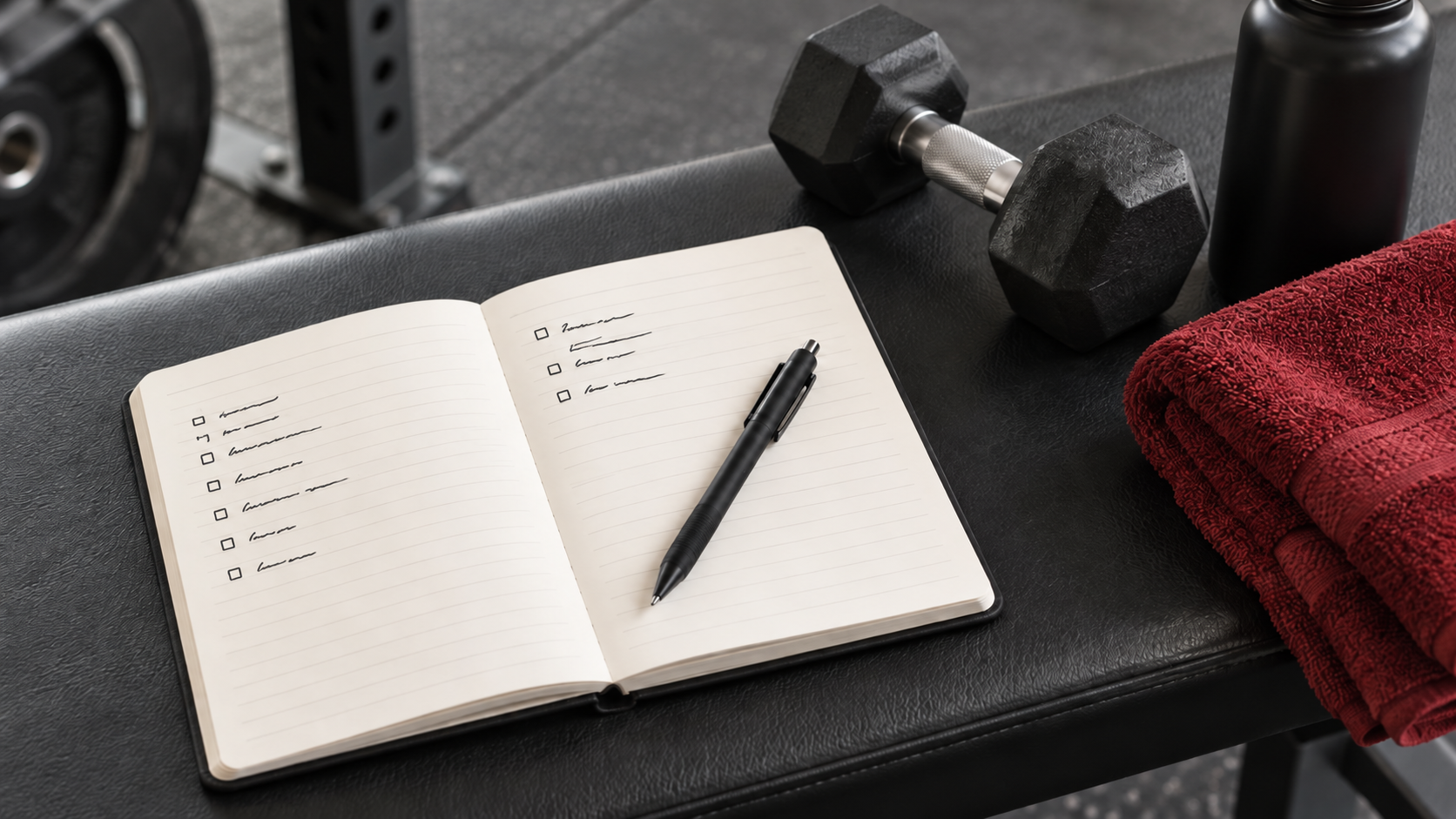
A notebook or simple app is enough to record the exercise, load, repetitions, and how demanding the sets felt. You do not need a particular watch, scale, or paid app to start.
Use a repeatable progression rule. For example, with a planned range of 8 to 12 repetitions, build repetitions at the same load while maintaining technique and your intended effort. Once all planned sets reach the top comfortably, consider the smallest suitable increase in weight. Do not add weight solely because you completed another week.
Review attendance, performance, and recovery across several weeks. If progress has stalled, check missed sessions, exercise consistency, workload, sleep, and food intake before replacing the entire split. Soreness alone is not a reliable score for workout quality.
What If You Miss a Workout?
Resume with the next planned session, or adjust the remaining week to cover the most important work. Avoid squeezing several missed sessions into one exhausting catch up workout. Repeatedly missing the same day is a sign that the schedule needs redesigning.
The most useful split is the one that survives normal life: work, family, and occasional changes of plan. Start with a manageable commitment and earn additional work through consistent attendance and recovery.
Get a Routine That Fits Your Week
Steadfast Strength and Mobility can help you choose exercises, distribute your weekly workload, and adjust the plan as you progress. Explore online coaching or in person personal training.
Contact Steadfast to discuss your training schedule.
Sources
Ramos Campo, D. J., and colleagues (2024). Efficacy of Split Versus Full Body Resistance Training on Strength and Muscle Growth: A Systematic Review With Meta Analysis. Journal of Strength and Conditioning Research, 38(7), 1330–1340.
ACSM: Physical Activity Guidelines. General guidance includes muscle strengthening activity on at least two days weekly. The schedules and exercise menus above are coaching examples, not protocols copied from the cited research.
Enjoy our strength and mobility articles?
Add Steadfast Strength and Mobility as a preferred source on Google to see more of our training advice, educational articles, and practical fitness information.
Or choose Steadfast in Google’s source preferences
Be the first to comment