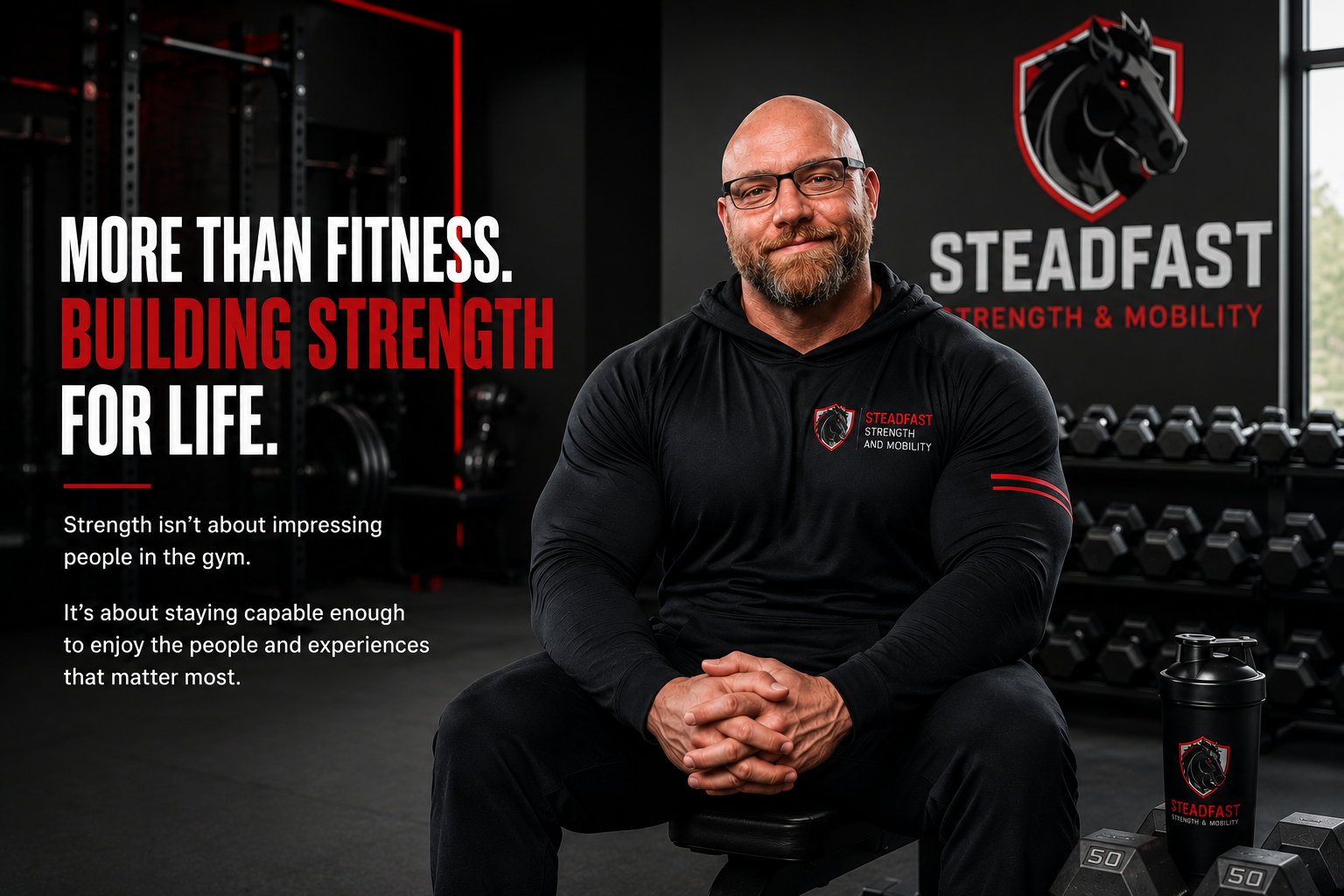
Most People Do Not Need Another Random Workout.
They need a plan that understands the person standing in front of it.
Thank you for reading this post, don't forget to subscribe!
Most adults are not struggling because they are lazy or unwilling to work. Life changed. Work became more demanding. Responsibilities grew. Injuries happened. Energy shifted. Recovery became more important.
Somewhere along the way, the training advice stopped fitting the person.
Generic programs rarely account for your history, schedule, mobility, available equipment, current ability, or the activities you want to keep doing.
Steadfast Strength and Mobility was built on a different belief: training should adapt to your life, not force your life to adapt to it.
Personalized Coaching
Every program begins with the individual, not a template.
Strength That Transfers
Build strength that supports work, family, recreation, and daily life.
Move With Confidence
Mobility should make movement more useful, comfortable, and capable.
Progress That Lasts
Sustainable progress is built through intelligent, repeatable action.
The Legacy Behind Steadfast
Steadfast is not only the company I built. It is the legacy I inherited, the standard I live by, and the example I intend to pass forward.
Steadfast was built on a foundation my father laid long before it became a business. He taught me that strength is not about being the strongest person in the room. It is about being accountable for what you do with it.
He was a man of principle. Regardless of the consequences, you owned your actions. He showed me that true strength comes from within and that conviction means continuing forward when the easier choice would be to yield.
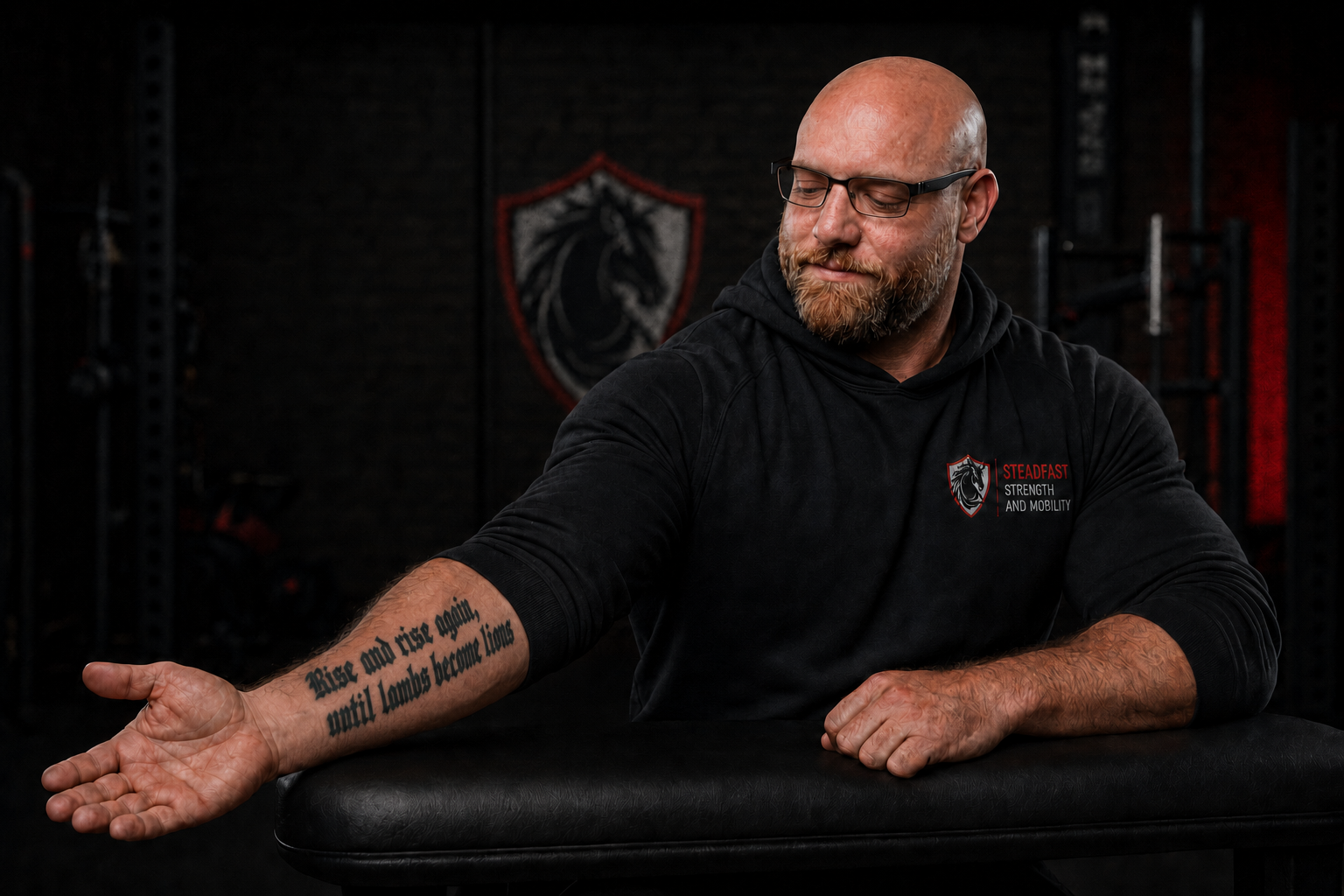
The words on my arm, “Rise and rise again, until lambs become lions,” were words he loved. Today, they are a permanent reminder of his influence, the resilience he gave me, and the standard I carry into everything I build.
The Steadfast logo is more than a mark. It is a physical representation of my father’s life and the way his example shaped mine. It reminds me where I came from and why this work must always stand for something greater than me.
Now I am building that legacy for my son and my family, and for every person who walks through our doors determined to become stronger than they believed possible.
The Strength to Listen
Courage Can Be Afraid
When I was five, I split my face open while playing tag with my sister. I lost a frightening amount of blood. My mother was scared—I could feel it—but she did not freeze. She got me to the hospital and did what needed to be done.
That memory taught me something I would understand more deeply as I grew older: courage is not the absence of fear. Sometimes courage is being terrified and still becoming exactly what someone else needs.
My mother possessed that kind of strength. She was intelligent, capable, and compassionate. She listened when someone needed to be heard. She reassured them when fear took over. She helped solve the problem when action was required. And when nothing could be fixed immediately, she simply stayed.
The Person Carrying the Weight
From her, I learned that empathy is not weakness. It is attention. It is noticing silence, posture, hesitation, frustration, and everything a person may be communicating without saying a word.
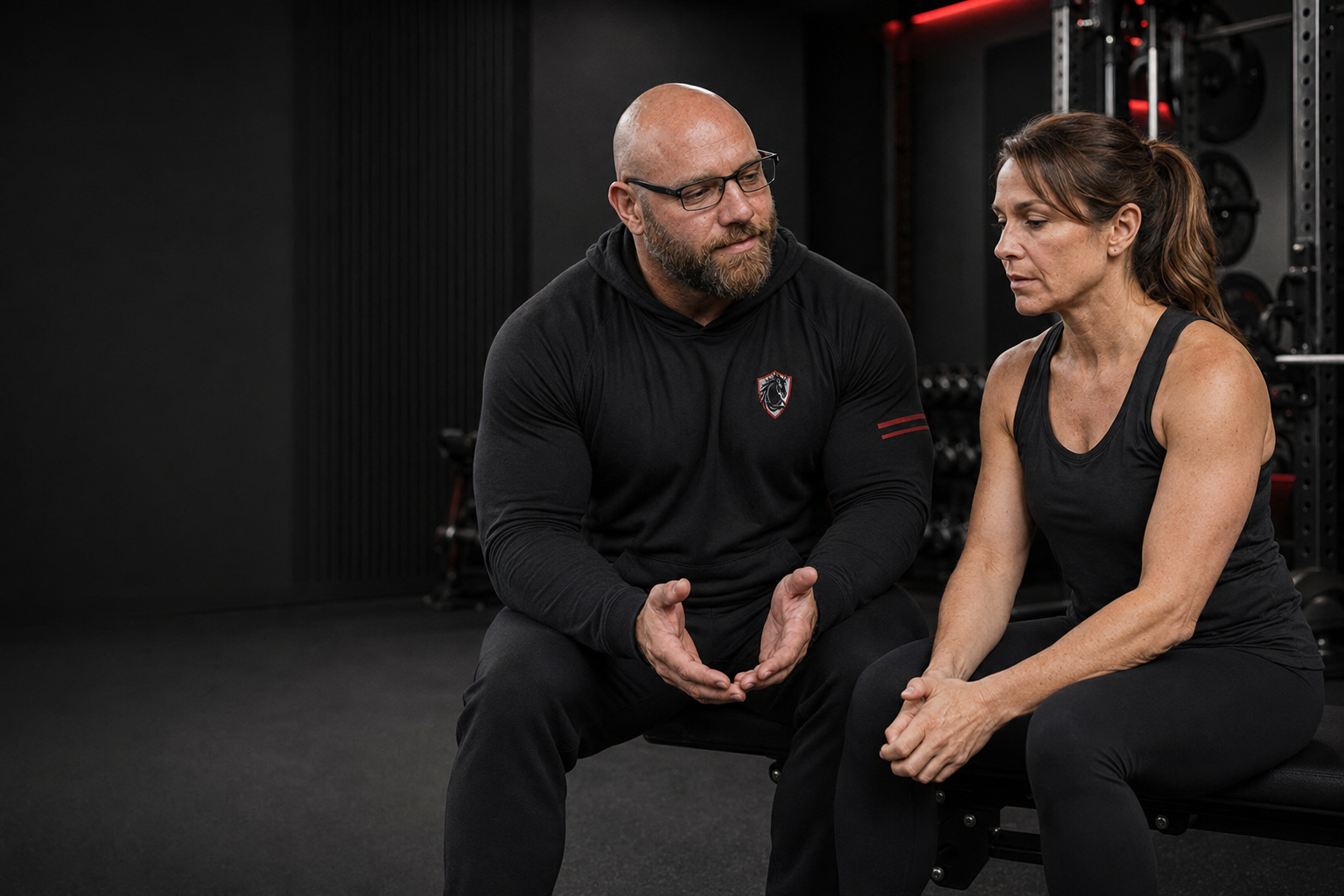
When I notice a client becoming distracted, overwhelmed, or disconnected from the session, I have them stop and take a break. Then I ask, “Where are you?” I am not asking where they are physically. I am asking where they are mentally.
Sometimes they need an emotional download before they can focus on training. Others take the pressure and frustration of a stressful day and pour all of it into the session. Both responses are valid. My responsibility is to recognize which person is standing in front of me and coach accordingly.
A program can tell me what exercise comes next. Empathy helps me understand the person performing it.
Strength helps me challenge people. Compassion helps me understand when they need something different.
Why Today?
I am not only asking what you want to change. I want to know what put the spark in you to walk through the door today.
Most programs begin with an assumption: everyone has the same goal, wants the same outcome, and can follow the same generic workout. But life can be brutal. We all carry our own scars, limitations, fears, responsibilities, and reasons for wanting something to change. Pretending those differences do not matter is not coaching.
Someone may tell me, “I want to lose twenty pounds.” That is a target, but it is not yet the reason. Is it a health concern? A high-school reunion? The fear of losing independence? The desire to recognize themselves again? There is usually something deeper beneath the number—and that deeper reason is what keeps the work meaningful when motivation gets tested.
Once I understand that reason, I learn how the person is motivated. Some clients are driven from within. Others need reassurance, visible evidence, or regular reminders of how far they have come. Neither is wrong. My job is to package every realization, milestone, and challenge in a way that connects to their goal—not mine.
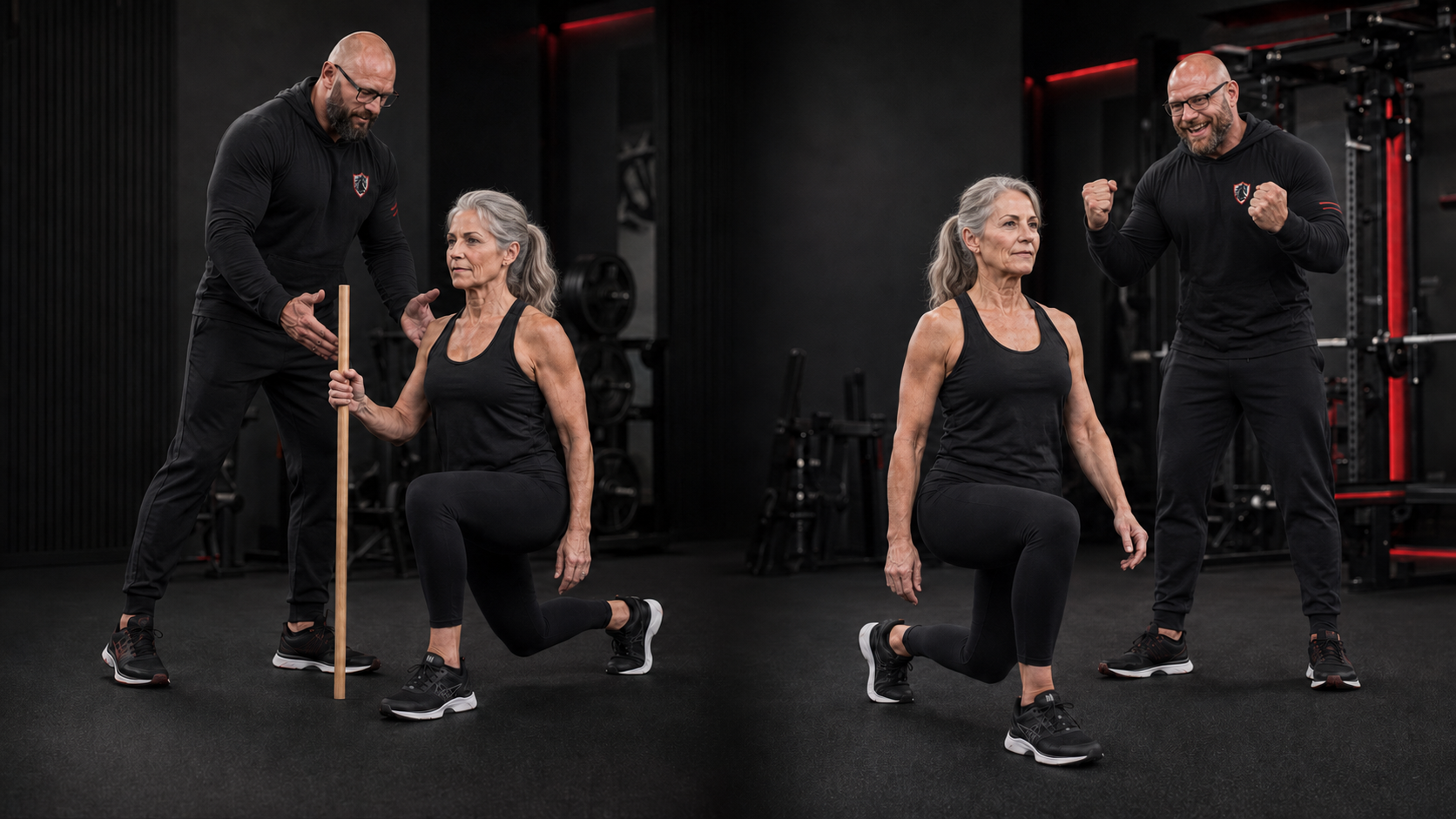
I once trained a 64-year-old woman with serious vertigo. In the beginning, she could not perform a lunge without using a stick for stability. Eight months later, she completed thirty yards of walking lunges without it. I did not cure her vertigo. We developed the strength, control, confidence, and proprioception that helped her body better understand where it was in space and adapt to changing positions.
Progress is not always dramatic or instantly noticeable. For a 79-year-old working on balance, posture, and strength, the victory may be standing more confidently, recovering from a misstep, or moving through daily life with less hesitation. Those changes deserve to be seen. Sometimes my role is to hold up the evidence until the client can finally recognize it for themselves.
A generic workout asks, “What can you do?”
Real coaching asks, “Why does it matter to you?”
Experience Becomes A Method
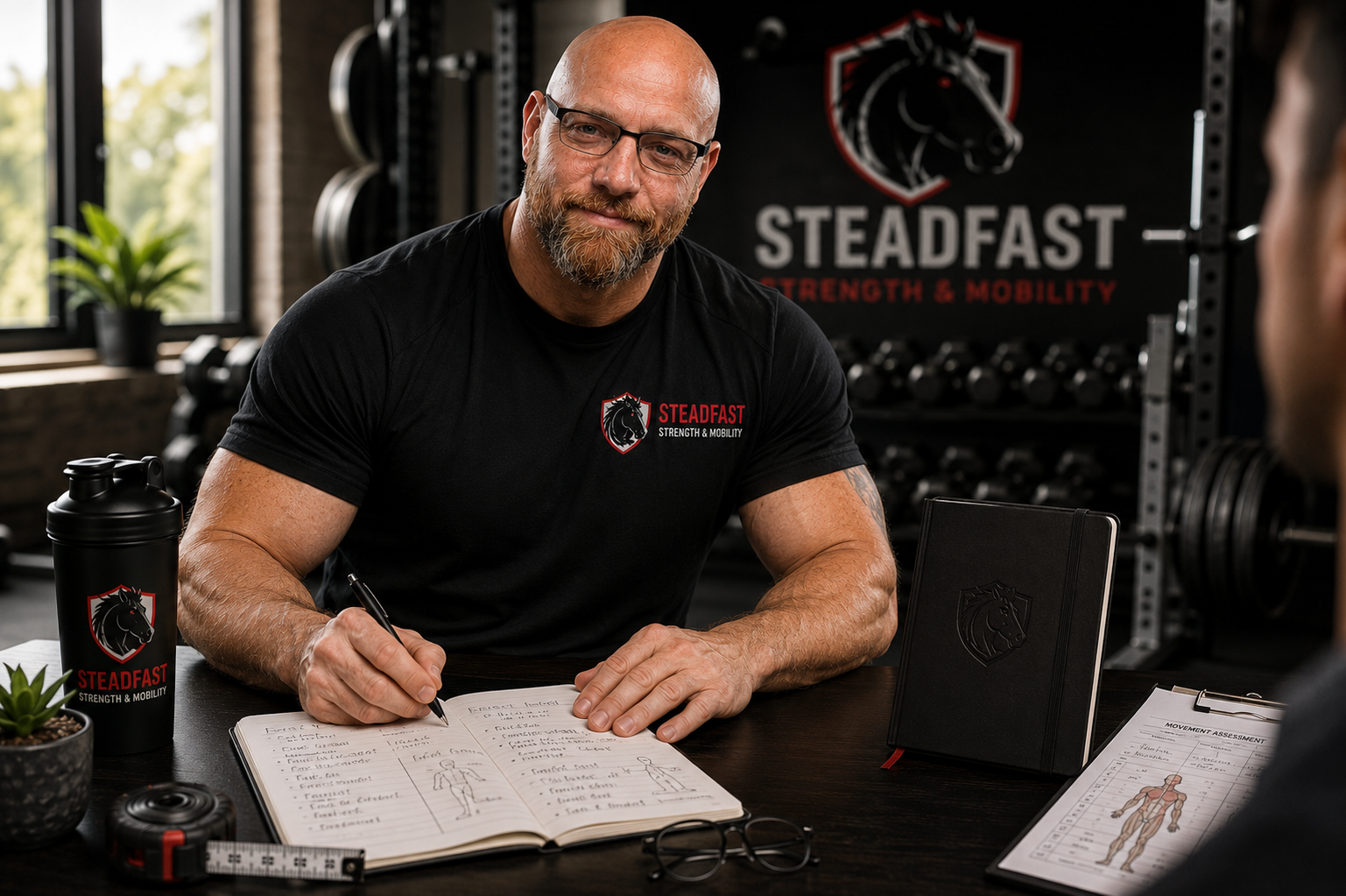
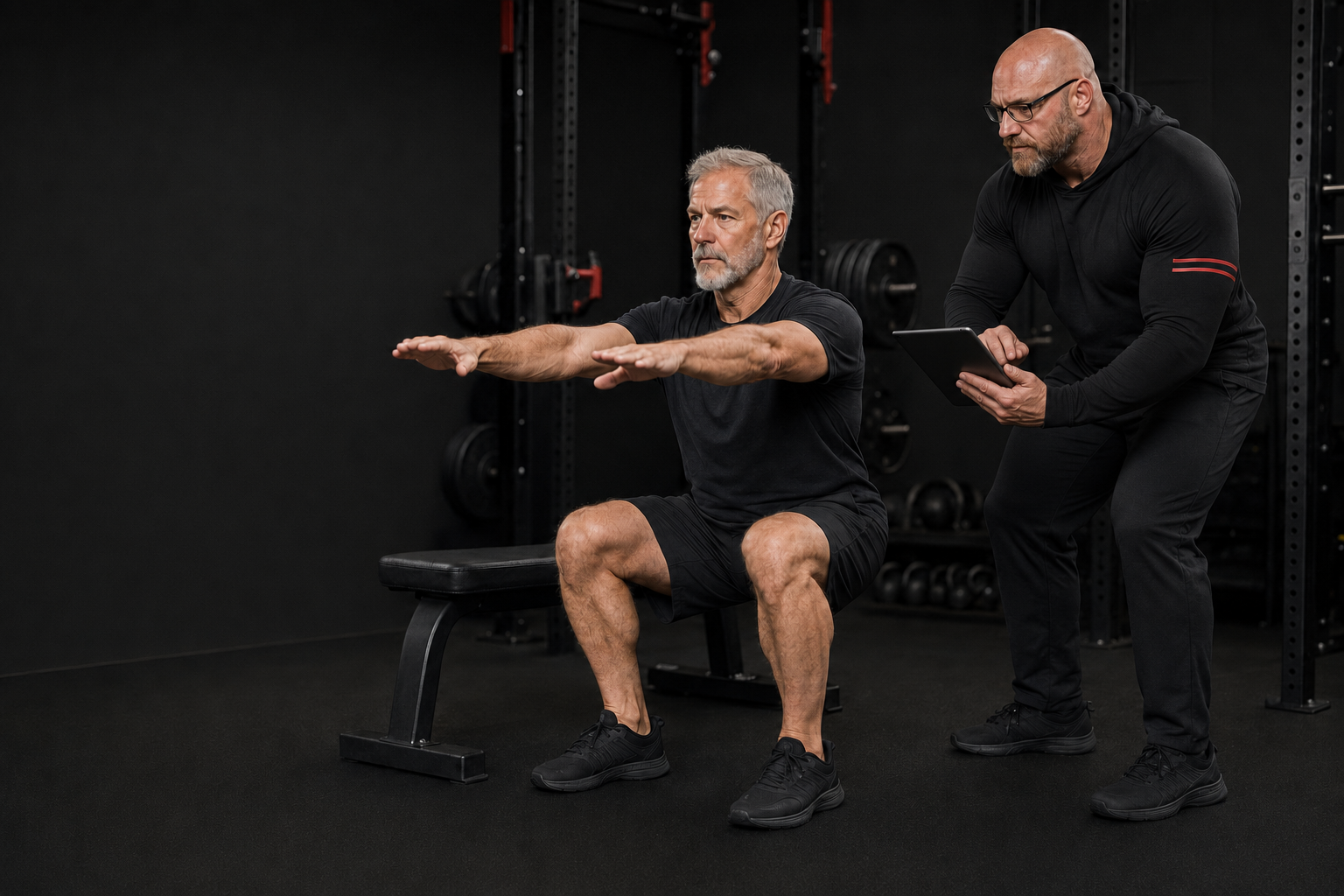
I do not begin with a generic workout. I begin by learning how your body moves today—because the assessment shapes everything that follows.
01 Assess
Establish a movement baseline by observing balance, range of motion, posture, muscular imbalances, and control.
02 Build
Create the starting protocol around the client's body, goals, history, and current capacity.
03 Observe
Watch how the client moves and responds in every session—not only on formal testing days.
04 Adapt
Modify the protocol as strength, mobility, confidence, and movement quality change.
05 Reassess
Repeat the original assessment every three months and compare the new evidence with the starting point.
A movement assessment gives me the information I need to make better programming decisions. I am looking at movement quality, balance, range of motion, muscular imbalances, and posture—the variables that affect the program most.
Some foundational patterns need attention before a client advances to more complicated exercises. That may mean using a separate mobility protocol to improve restricted ROM, isolating and strengthening an underperforming muscle, simplifying a movement, or training around a limitation while improving it. The purpose is not to hold someone back. It is to build the capacity that makes the next progression appropriate and may help reduce injury risk over time.
The calendar does not decide when a client progresses. Their body does. I am watching for clean, precise, repeatable movement; improvement in the weakness that affected it; and evidence that the current exercise no longer provides enough stimulus. Progress may mean more resistance, greater range, less external support, improved coordination, or a more demanding variation.
I repeat the original assessment every three months, but assessment is also continuous. Training is forever evolving. When a client adapts, the variables change—and the protocol must change with them.
Progress is measured against what matters to the individual. One person may care about scale weight or body measurements. Another values walking farther, moving better, getting stronger, or maintaining independence. Others may monitor medically obtained biomarkers with their healthcare provider. Progress is not one number. It is the evidence that a client is moving closer to the life they came here to reclaim.
Your program is never finished. It evolves because your body evolves.
The man behind the method
Built by Experience.
Driven by Purpose.
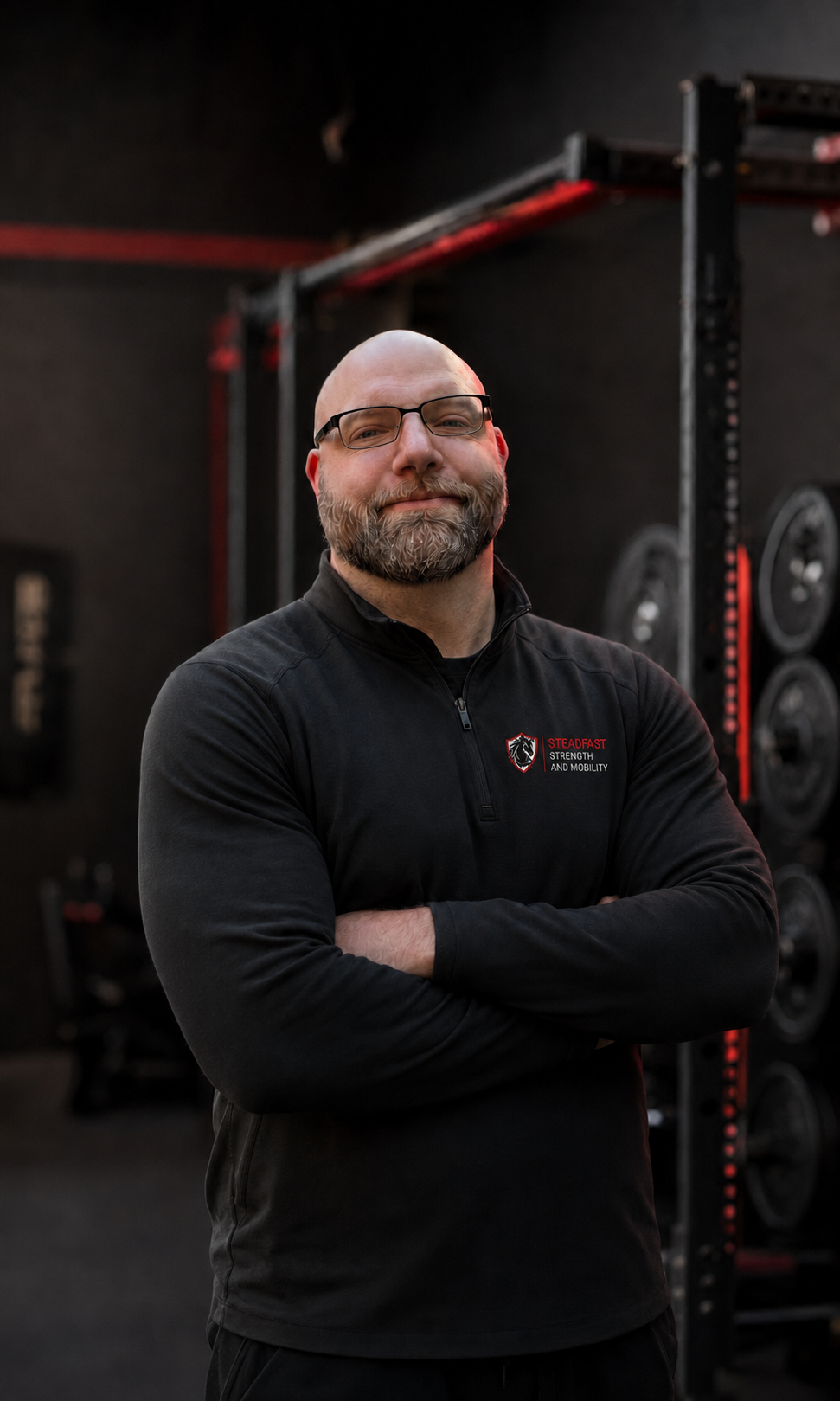
I am Justin Stead, founder of Steadfast Strength and Mobility.
I have spent years helping people become stronger, move with greater confidence, and reclaim capabilities they thought they had lost. But my understanding of rebuilding did not come from textbooks alone.
It came from living through setbacks, uncertainty, serious illness, major surgery, and the difficult work of beginning again.
My education gave me the foundation. Coaching taught me how differently every person responds. My own health journey taught me what no certification could.
The truth about rebuilding
Starting over
is not simple.
It can be frustrating when your body no longer responds the way it once did. Confidence disappears. Movements that once felt automatic become uncertain. Progress feels slower, and generic advice begins to sound disconnected from the reality you are living.
I understand that experience because I have lived it.
That perspective changed the way I coach. I do not see a client as a collection of numbers, limitations, or exercises. I see a person trying to regain control of something that matters deeply to them.
For one person, that means rebuilding after surgery. For another, it means becoming strong enough to keep up with their family. It may mean moving without fear, returning to an activity they love, or proving that getting older does not mean surrendering capability.
My job is to meet you where you are, determine what your body needs, and build a path forward that makes sense for your life.
I will challenge you. I will be honest with you. I will adjust when your body tells us something needs to change. And I will never reduce your training to a random collection of exercises.
This is not simply about completing workouts.
It is about becoming capable again.
Summa Cum Laude
Steadfast Strength and Mobility
Personalized strength and mobility
Northern Virginia and online