
Magnesium supplements after 40 and how to decide if you need one
You don't need magnesium pills just because you're over 40. A supplement may help if you aren't getting enough. But it isn't an automatic fix for poor sleep, sore muscles, or a calf cramp at night.
Start with why you want it. Are you trying to fill a gap in your meals? Has a clinician found a deficiency, meaning too little magnesium in your body? Or are you hoping it will help a symptom whose cause is still unclear?
Each situation calls for a different next step. Look at your food first. Then check whether a supplement fits your health needs and medicines. This is general education, not a diagnosis or a personal treatment plan.
Table of Contents

Start with what you already eat
Magnesium helps your body make energy and protein. Your muscles, nerves, and bones need it to work well. Foods such as beans, nuts, seeds, whole grains, leafy greens, and soy can supply it. Magnesium in food and the body
Think about a few normal days of eating. Do these foods show up often? Or do you tend to grab whatever is handy?
Choose a small change that fits your meals. You might add beans to a dish you already make or keep nuts around for a snack. A whole grain you enjoy is another option. Buying food you won't eat doesn't help.
As people get older, several things can make it harder to get enough magnesium. These include a smaller appetite, health conditions, medicines, and changes in how the body takes in nutrients. Age alone doesn't tell you whether you need a supplement. Magnesium and aging
If you have Crohn's disease, a food list may not fit your needs. Symptoms can reduce your appetite. Inflammation, some treatments, or surgery can affect how well your body takes in nutrients. Ask your care team about foods you can manage and whether you need supplements. You don't have to force yourself to eat foods that don't work for you. Nutrition guidance for Crohn's disease
If your meals provide enough and there's no other reason to take it, you can skip the bottle. You don't need a separate supplement for every mineral.
Know which daily amount you are looking at
For adults 31 and older, the U.S. daily recommendation is 420 milligrams for men and 320 milligrams for women. This is the total from food, drinks, and supplements. Needs during pregnancy differ.
A total of 420 milligrams does not mean a man should take a 420 milligram capsule on top of his meals.
Adults have a separate upper limit of 350 milligrams a day from supplements and medicines. Magnesium found naturally in food and drinks doesn't count toward this limit. The limit was set mainly because added magnesium can cause diarrhea. It isn't a goal to reach. It also doesn't mean that amount is safe for everyone, especially someone with kidney disease. Treatment under a clinician's care can use different amounts. Daily requirements and the supplemental upper limit
You don't need to count every milligram forever. Just remember that a daily food and nutrition goal isn't the same as a pill dose.
Read the back of the bottle before the front
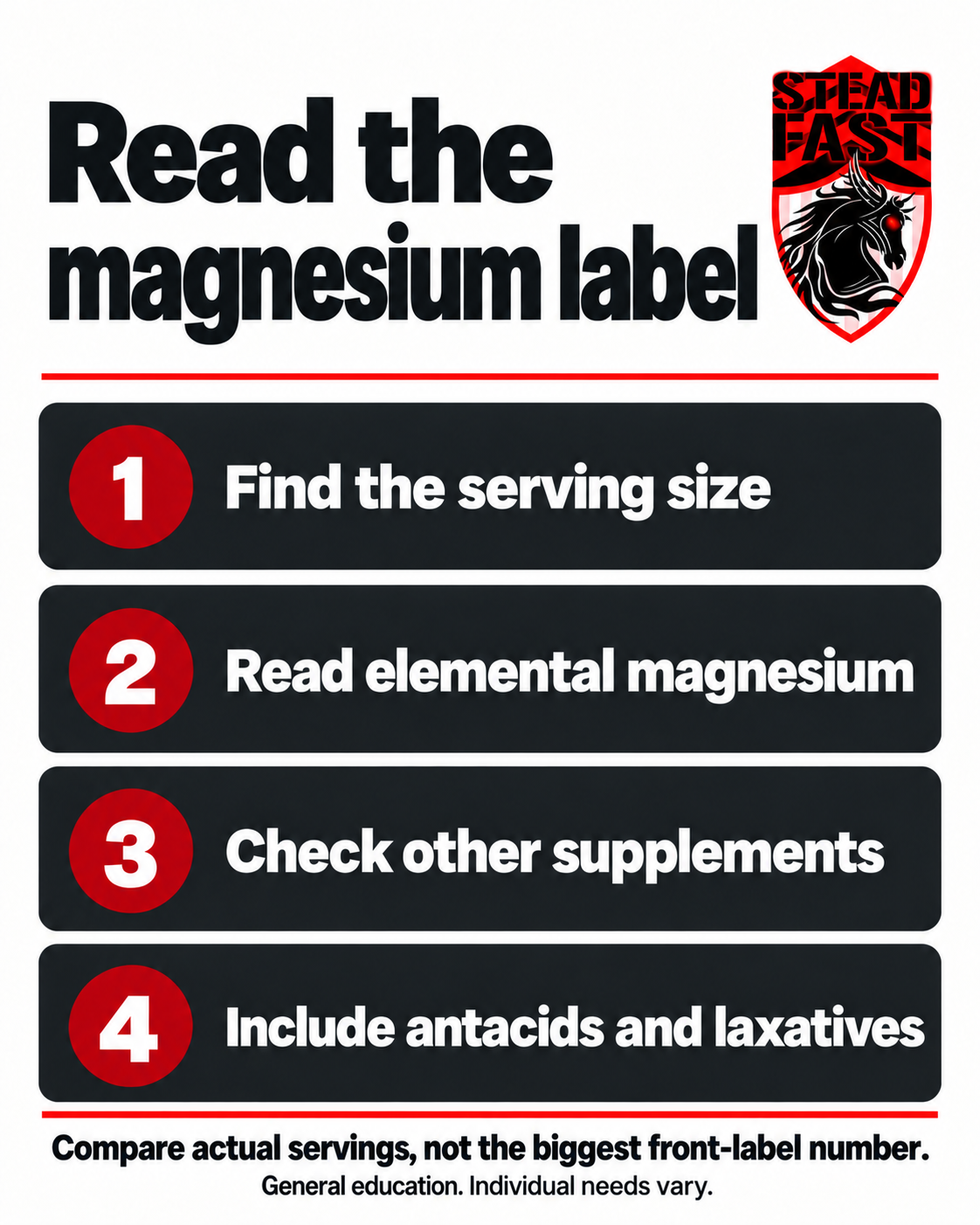
Find “Magnesium” on the Supplement Facts label. The number beside it is the amount of elemental magnesium. That means the magnesium itself, without the other substance it's joined to. Words such as “as magnesium citrate” name that form. Understanding magnesium supplement labels
For example, imagine a label that says:
- Serving size: two capsules.
- Magnesium: 200 milligrams per serving.
Two capsules provide 200 milligrams total. One provides 100. A bigger number elsewhere on the bottle may describe the weight of the whole compound. It doesn't change how much magnesium you get.
Check your other products too. A multivitamin, electrolyte powder, or sleep blend may already contain magnesium. Antacids and laxatives can add more. Include these when you review your total with a pharmacist.
When you compare bottles, use the elemental amount per serving. Don't choose one just because it has a bigger number on the front.
Choose a form with realistic expectations
You don't need to memorize every form. These differences can help you compare labels and ask questions. No single form is best for every purpose.
Citrate
Your body generally takes in magnesium citrate better than magnesium oxide. That doesn't prove it helps sleep or cramps more. Citrate is also used in laxatives, which treat constipation. Check whether the product is a daily supplement or a constipation medicine. Follow the instructions for that product. Supplement forms and magnesium citrate medicines
Glycinate or bisglycinate
This form is often sold for sleep. Some research suggests a small improvement in sleep problems that people report. It doesn't show that this form works better than others. A “For sleep” label isn't a promise that it will help you. Evidence behind bisglycinate sleep claims
Oxide
Your body takes in less magnesium from oxide than from some other forms. That doesn't mean it provides none. It also doesn't tell you whether it will help a symptom. Check the elemental amount and your reason for taking it. NIH guidance on absorption
Threonate
Sleep claims alone aren't a good reason to spend more on magnesium L-threonate. Research results are mixed. How people say they slept can differ from what a sleep tracker records. There's no clear basis for promising better sleep with this form. Sleep findings and their limits
Match your expectations to the reason you want it
If you are hoping to sleep better
Magnesium may help some people a little. It isn't a reliable fix for sleep trouble that keeps happening. The research is limited. Feeling that you slept better doesn't always mean you slept longer or got more deep sleep. What the sleep evidence supports
If you often struggle to sleep, talk with a clinician before buying more bedtime supplements. Ask about cognitive behavioral therapy for insomnia. This is an established treatment that helps people change thoughts and habits that interfere with sleep. Established care for ongoing insomnia
If you're taking magnesium and it hasn't helped your sleep, don't keep raising the dose to chase the label's promise.
If leg cramps are the problem
A cramp doesn't tell you which nutrient, if any, you're missing. Magnesium usually hasn't helped much to prevent common nighttime cramps in older adults. Some research has found benefits, so it may help in some cases. Still, the overall findings don't support buying it as a routine fix. Nighttime cramp evidence and findings that differ
If cramps disrupt your sleep or activities, discuss them and your medicines with a clinician. Treating a known magnesium deficiency differs from trying it for cramps with no clear cause. Cramps during exercise need their own review. Research on nighttime cramps doesn't answer every question about them.
If you want less soreness after training
Getting enough magnesium is part of eating well. We know less about whether taking extra helps you recover faster or build more muscle. A few small studies suggest it may help soreness. Most of that research involved younger adults. It doesn't tell us what everyone training after 40 should take. Magnesium and soreness
If recovery is your main goal, you can skip adding magnesium unless you have another reason to address your intake. Our guide to strength training supplements after 40 can help you see where supplements fit in your plan.
When fatigue makes you want a quick answer
Feeling worn out can make you wonder what your body needs. This may feel especially pressing if you're returning after illness or managing an autoimmune condition. You don't have to find the answer on a supplement label.
Fatigue means tiredness or lack of energy. It can occur with magnesium deficiency, along with weakness and cramps. But these symptoms can have other causes. Eating less than the daily recommendation doesn't prove you have a deficiency. Magnesium deficiency symptoms and context
A clinician can review your food, health history, and medicines and decide whether testing would help. A blood test doesn't fully show how much magnesium your body stores. Your clinician needs to consider the result with the rest of your health. Don't dismiss a normal result or use a symptom checklist to diagnose yourself. How magnesium status is assessed
Write down when you feel tired, how it affects your day, and what medicines and supplements you take. Tell your coach too, along with any advice from your care team. A coach can help plan training around that advice. Ongoing tiredness or tiredness with no clear cause needs your clinical team's attention, not a supplement suggestion at the gym.
Check these safety issues before starting
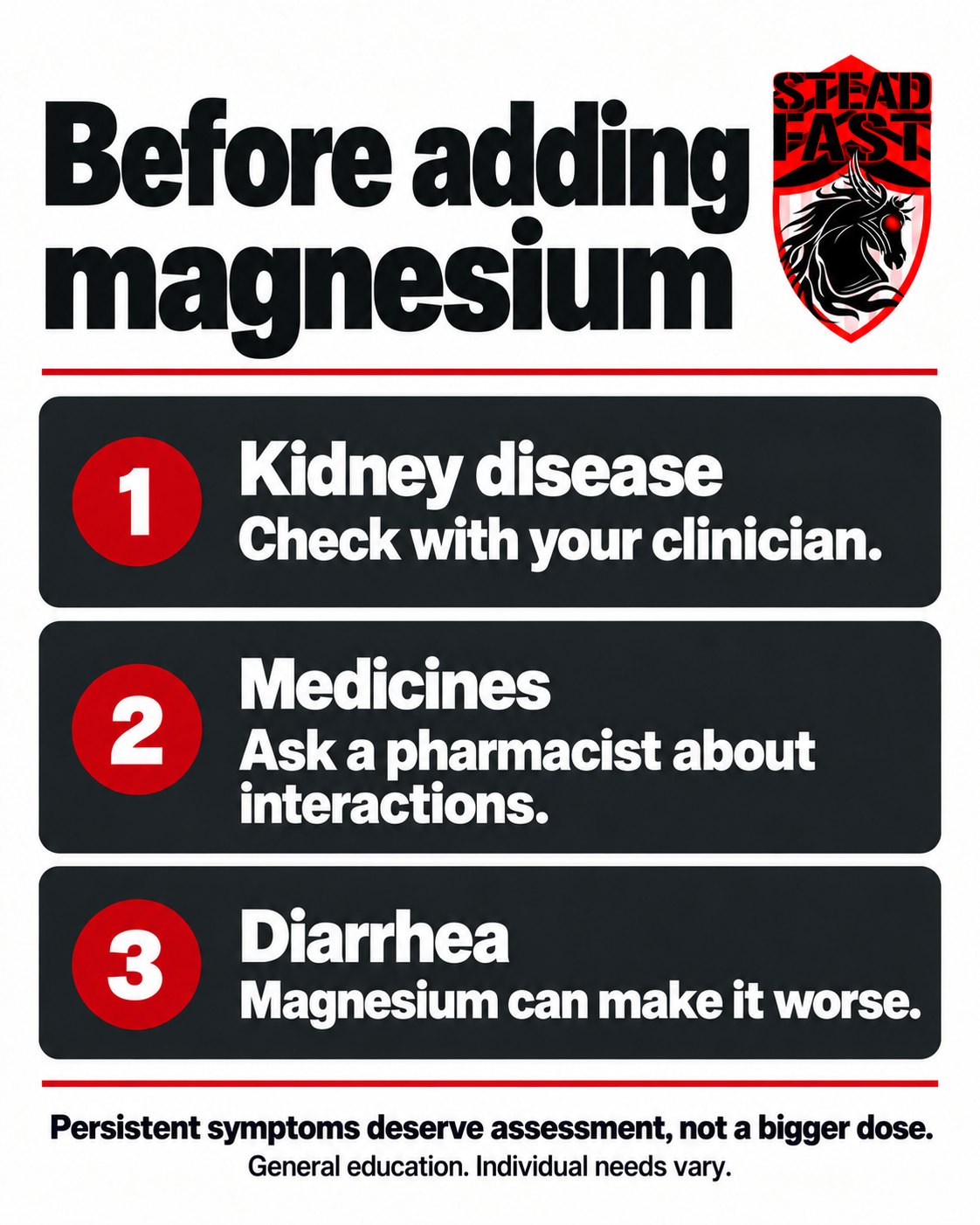
If you have kidney disease or reduced kidney function, ask your clinician before taking magnesium. Your kidneys remove extra magnesium. When they can't remove enough, it can build up to harmful levels.
Ask a pharmacist to check your medicines. Magnesium can reduce how much your body takes in of certain antibiotics and some bone medicines called oral bisphosphonates. Diuretics, often called water pills, can change how much magnesium you lose. Long use of acid reducing medicines called proton pump inhibitors can lower magnesium levels. Each medicine may need different timing or tests. Don't use one spacing rule for everything, and don't stop a prescribed medicine yourself. Kidney precautions and medication interactions
Mention antacids and laxatives even if you only use them now and then. Magnesium can make existing diarrhea worse. If a product gives you diarrhea, review whether to keep using it. Seek advice if symptoms don't stop. Magnesium citrate precautions
Keep the purchase simple if you decide to proceed
Look for a clear form, elemental amount, and serving size. Checks by an outside group can help you judge product quality. For example, NSF certification checks label claims and unwanted substances. Look up the exact product in the group's directory. These checks don't prove it will improve sleep or recovery. What certification checks
The FDA doesn't approve dietary supplements for safety or how well they work before sale. Polished packaging isn't proof of a health benefit. How supplement oversight works
Sprays, creams, and baths aren't proven replacements for magnesium from food or treatment prescribed to take by mouth. Enjoying a bath doesn't mean it corrected a deficiency. Limits of topical magnesium
Before buying, make sure you can explain why you're taking it. “My clinician and I identified a need” is a clearer starting point than “I heard everyone over 40 should use it.”
Bring the actual label and your medicine list to a clinician or pharmacist. Ask whether it meets a real need, how it fits with everything else you take, and how you'll know if it helps. If you don't need it, that's one less bottle to manage.
Common questions
What does elemental magnesium mean on the label?
It means the magnesium itself, without the other substance it's joined to. Find the amount beside "Magnesium" on the Supplement Facts panel, then check how many capsules make a serving. Compare that amount, not a bigger number on the front of the bottle.
Will magnesium help me sleep better?
It may help some people a little, but the research is limited. It isn't a reliable fix for ongoing sleep trouble, and no form guarantees better sleep. If sleep problems keep happening, discuss them with a clinician rather than raising the dose.
What if magnesium gives me diarrhea?
Magnesium can cause diarrhea or make existing diarrhea worse. Review whether to keep using the product, and seek advice if symptoms don't stop. Include any antacids or laxatives when you review your magnesium products with a clinician or pharmacist.
Can magnesium affect my medicines?
Yes. It can reduce how much your body takes in of certain antibiotics and some bone medicines. Ask a pharmacist to check your full medicine list, since timing advice differs by medicine. Don't stop a prescribed medicine yourself.
Need help finding your training starting point?
Explore a free strength and mobility assessment.
Explore the free assessmentSupplement questions and ongoing symptoms belong with your healthcare team.