Protein powder after 40 and how to decide if you need it
Protein powder can make it easier to get enough protein. If your meals already meet your needs, you can skip it. Turning 40 doesn't mean you need to buy a tub.
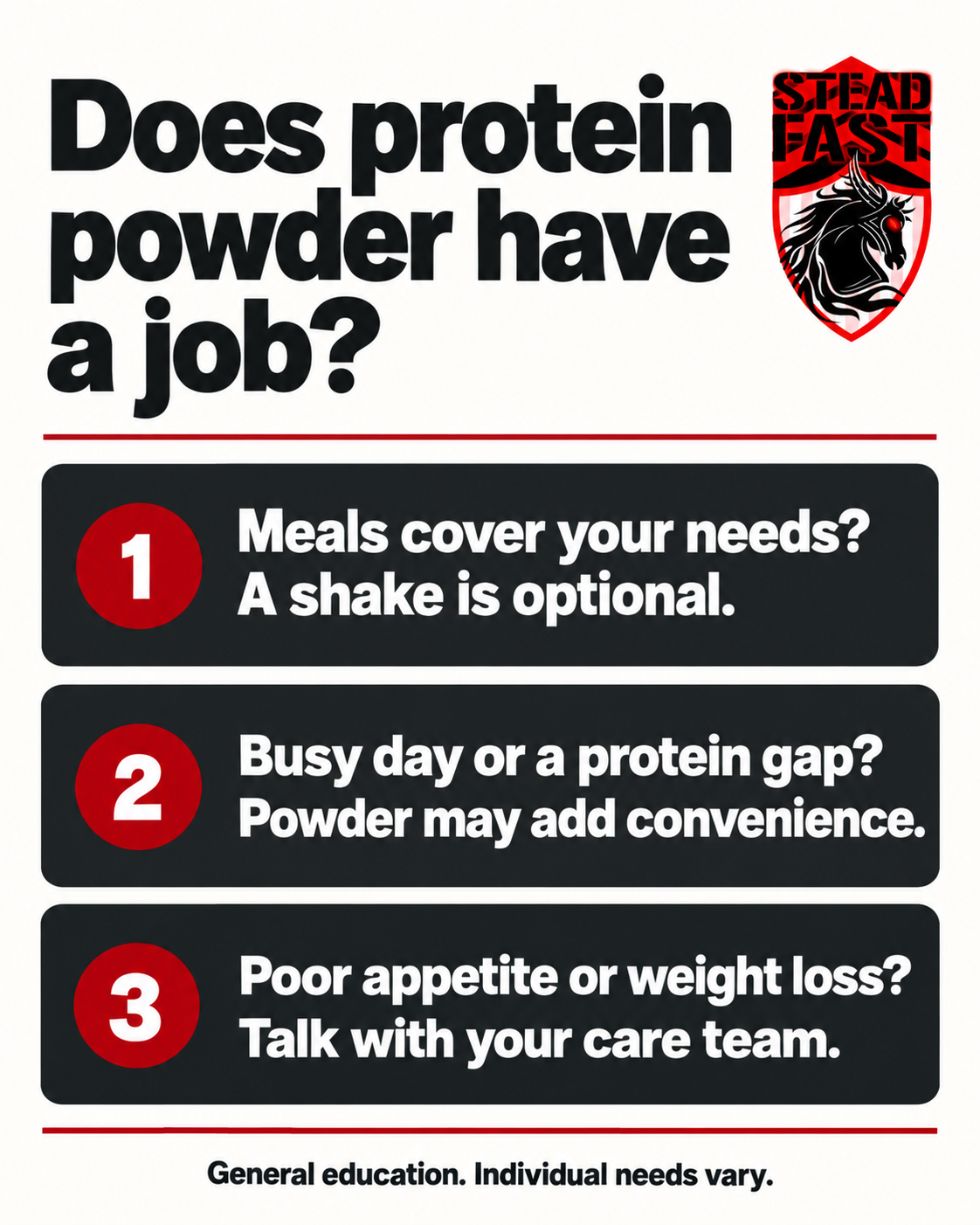
Think about your day before you shop. Do you often miss breakfast? Would a shake be easier than making food after an evening workout? A powder may help with those problems. It doesn't have to become another daily expense.
Table of Contents
Give the powder a specific job
Pick the meal or snack where you'd use it. You might add it to a smoothie you already enjoy or keep some at work. Perhaps you want an easy option when cooking feels like one task too many.
Convenience is a good enough reason. You don't need to believe a powder is better than food to find it useful.
Protein gives your body amino acids, the building blocks it uses to build and maintain tissues. Eggs, dairy, fish, meat, beans, and other plant foods provide protein too. Powder is one way to add protein. Ask whether food could solve the same problem just as easily.
If yogurt or a meal fits your needs and works better, choose that. If adding powder to something you already enjoy is easier, that's an option too.
Keep eating a range of foods. A scoop of protein doesn't replace everything a meal provides. Protein foods have nutrients beyond protein.
Check what you already eat
Look at a few normal days of eating before you order. Include snacks, drinks, and a weekend day. You don't need a perfect record to spot meals you often miss.
Does breakfast include a protein food? Can you count on having lunch, or do you grab whatever is nearby? Would planning a snack help without buying anything new?
If you're unsure how much protein you need, ask a registered dietitian. Your training, appetite, usual diet, and health all matter. An athlete's target may not be right for you just because you've started lifting or reached a certain age.
Your total includes protein from all your food and drinks. None of it has to come from powder. If meals cover your needs, you don't have to add a shake.
You can also use a powder on busy days and skip it when meals are easy. You don't have to plan your day around finishing a tub.
When eating enough is difficult
A rushed lunch and a poor appetite during illness need different kinds of help. With Crohn's disease, symptoms can reduce your appetite. Inflammation in your gut can also make it harder to absorb nutrients from food. Your care team can help you plan around those needs. If a shake makes you feel worse, tell them instead of forcing it down.
Tell your doctor or dietitian what you can eat comfortably and what you're avoiding. Mention changes in your weight or strength. Eating too little and losing weight without trying need attention. Buying more protein may not solve the problem.
A powder may fit the plan your care team suggests. It isn't a treatment for Crohn's disease. A product that suits someone else's digestion may not suit yours.
Keep your expectations sensible
Extra protein can help you make small gains in muscle and strength when you also strength train. Another scoop won't guarantee a change you can see or feel.
Adding a supplement has had mixed results in older exercisers. People start with different diets, health conditions, and training experience. Results in much older adults may not describe someone in their forties.
Ask whether you need help getting enough protein while you keep training. A powder can help with that part of your plan. It shouldn't take all your attention, time, or money away from training.
You don't have to feel something after a shake for it to be useful. Does it help you eat as planned? Does it sit well in your stomach? Do you like it enough to keep using it?
Choose a protein you can comfortably use
Whey, casein, and plant proteins give you several options. Start with your food preferences and allergies. Then compare products that fit.
Whey
Whey comes from milk. It supplies essential amino acids, which your body needs to get from food. You digest whey faster than casein. That alone doesn't make every whey product better for your goals. NIH explains these differences between milk proteins.
Labels may say concentrate, isolate, or hydrolyzed whey. Isolate is processed to contain a higher share of protein. Hydrolyzed protein has been broken into smaller parts. These names describe how the protein is processed. They don't mean you need the most expensive version.
Compare protein content, ingredients, and serving size. If lactose bothers you, check the product's lactose information. Don't assume every whey powder will affect you the same way.
Casein
Casein also comes from milk. It's an option if you like it and it fits your meals. You don't need separate powders for different times of day.
Casein takes longer to digest than whey. Digestion speed alone doesn't tell you which protein will give better results over time. Taste and how it feels in your stomach matter too.
Plant protein
Soy, pea, rice, and blends are options if you avoid dairy or prefer plant foods. They contain different amounts of amino acids. Combining sources can improve that balance. The makeup of plant protein matters, but a blend isn't proof of better muscle growth.
Research comparing plant and animal protein has found no clear overall strength advantage for animal protein. Some findings on muscle mass favor animal sources. Much of the plant research used soy, so it doesn't tell us that every plant formula works the same way.
Read the back of the tub
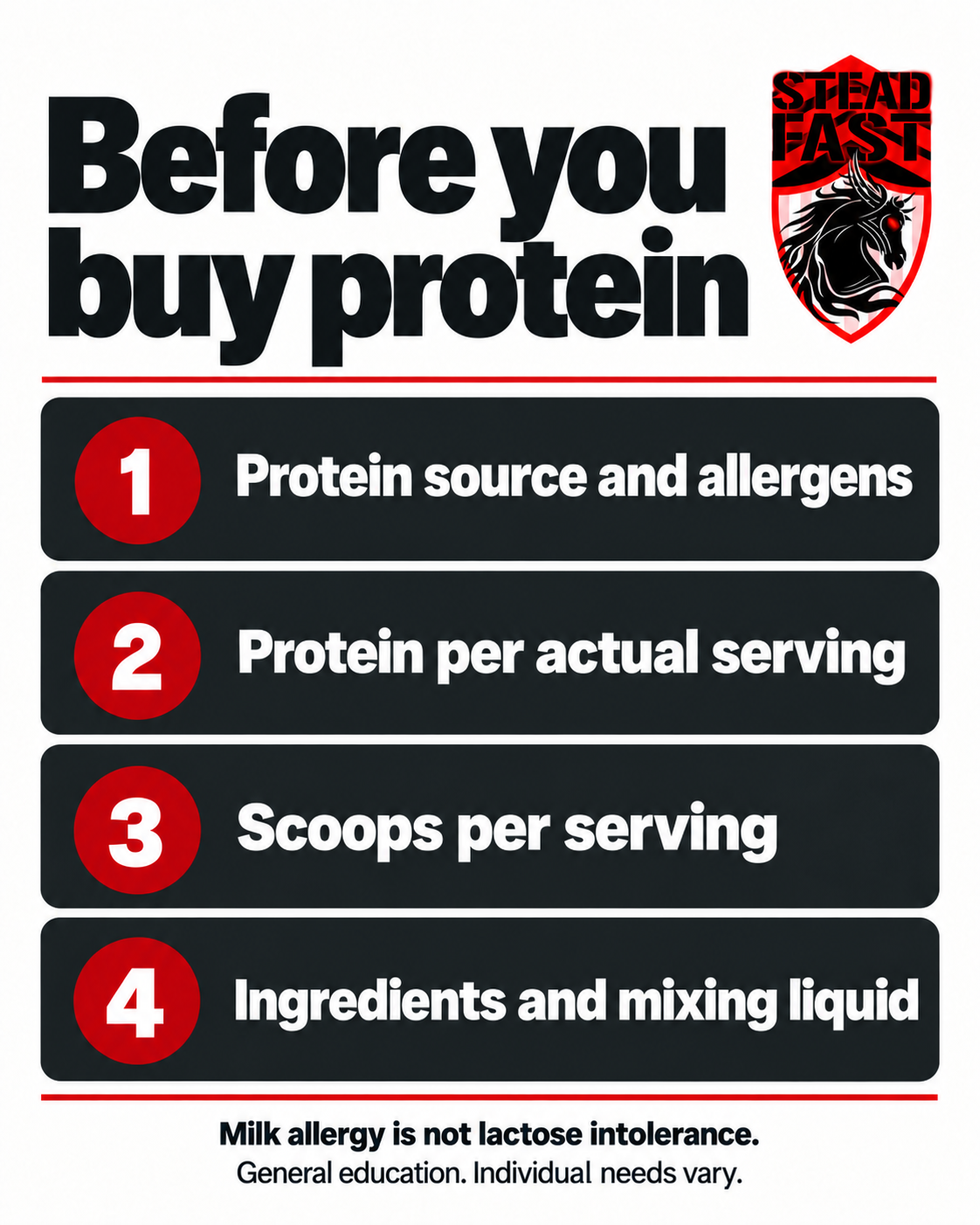
Once you've narrowed your options, check:
- The protein source and grams of protein per serving.
- How many scoops make one serving. Grams of powder and grams of protein aren't the same thing.
- The full ingredient list and allergy information, including extras beyond protein.
- Calories and other nutrients, plus what you'll add to mix it.
A plain protein product is easier to assess than one promising energy, fat loss, and hormone support. You shouldn't have to sort through several other supplement claims to make a shake.
An independent group can check product quality. For example, NSF checks label claims and tests for unwanted substances. This doesn't prove one powder builds more muscle than another. When possible, check with the group to confirm that it has certified the exact product.
In the United States, FDA doesn't approve the safety and effectiveness of dietary supplements before sale. A bold label doesn't prove that a product is safe or that it works.
Compare the cost of equal amounts of protein, not just tub sizes. Include foods you'd buy as well. Then consider taste and ease of use. A cheap tub you won't touch isn't much of a bargain.
Fit it around your meals and workouts
After training can be a handy time for a shake. You don't have to rush home if you forgot it. Your total protein matters more than meeting a narrow workout deadline.
If dinner comes after your workout, let dinner do its job. If your schedule makes eating hard, plan something you can manage. A shake may be that option.
Think the same way on rest days. Do you need help with food that day, or do meals cover it? Use powder when it helps without making it another task you must do.
Know when to pause or skip it
Stop using a powder if it keeps bothering your stomach. Discuss the symptoms with a doctor or dietitian. You don't need to push through discomfort for your training.
Lactose is a sugar in milk. Trouble digesting it can cause gas, bloating, or diarrhea. People differ in how much they can handle. Milk allergy is a different condition. A lactose free milk protein product may still be unsafe if you have a milk allergy. Don't try another dairy powder to test an allergy yourself.
Check the whole drink. That includes milk ingredients in the powder and what you mix it with. A new brand may not help if it has the same ingredient that bothers you.
If you have chronic kidney disease, reduced kidney function, or a prescribed protein limit, get advice before adding protein. Your needs depend on the condition and its treatment. People receiving dialysis, a treatment that filters the blood, may need more protein, not less. Your kidney care team can help you choose the right amount and sources.
Bring the label so your care team can see what else is in the product. General safety findings can't tell you whether a powder is safe for your health needs.
Make a purchase you can explain
“This will make breakfast easier” is a useful reason to buy a powder. “I keep seeing it advertised to people my age” doesn't tell you how it will help your day.
If you've found a need and a product that fits, consider a small package before starting a subscription. Use it where you planned and follow its mixing instructions. Keep it if it helps. If your meals change and you no longer need it, you can stop buying it.
If you're also considering creatine, read Steadfast's creatine monohydrate article. Protein and creatine have different roles. The guide to strength training supplements after 40 can help you compare those choices.
For a training plan that fits your experience, schedule, and goals, contact Steadfast Strength and Mobility. Coming back after time away can feel uncertain. Tell us what feels hard and what your medical team has advised. You don't have to settle every supplement choice before asking for training help.
Common questions
Do I need a protein shake on rest days?
Not automatically. Use a shake if it helps you get enough protein that day; if meals cover your needs, you can skip it. Fit it around your meals, rather than making it another daily task.
Do I have to drink it right after a workout?
No. Your total protein matters more than a narrow workout deadline. If dinner follows your workout, let dinner do its job; a shake can help when your schedule makes eating difficult.
What should I do if a shake bothers my stomach?
Stop using a powder if it keeps causing discomfort, and discuss the symptoms with a doctor or dietitian. Check the powder and what you mix it with. Milk allergy and lactose intolerance are different, so a lactose free dairy powder may still be unsafe with a milk allergy.
Can I choose a plant protein instead of whey?
Yes. Soy, pea, rice and blends are options if you avoid dairy or prefer plant foods. Compare the protein source and ingredients, and choose something you can comfortably use. A blend alone isn't proof of better muscle growth.
Build a training routine that fits your life
Tell us about your experience, schedule and goals. Let's discuss your next step with strength and mobility training.
Talk with Steadfast