
Vitamin D3 and K2 after 40 Do you need both
Before buying D3 and K2, ask what you want them to do. Has your clinician found low vitamin D? Are you trying to fill a gap in your diet? Or have you heard that everyone over 40 needs both for their bones and heart?
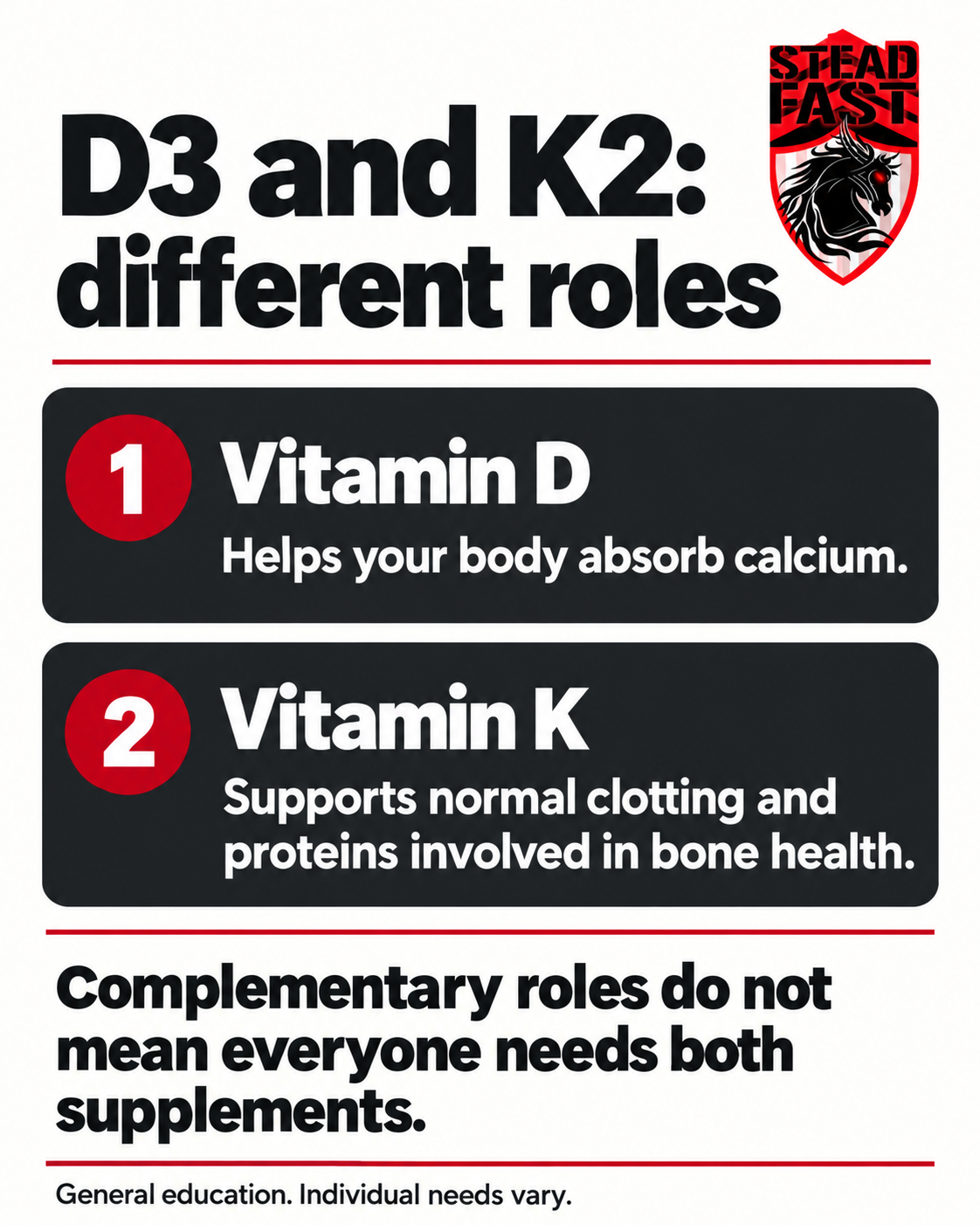
D3 and K2 play complementary roles in how your body handles calcium. That makes the pairing biologically sensible, but it doesn’t mean everyone needs both supplements.
Start with what you eat, what you already take and your health needs. Then ask whether another supplement would help.
Table of Contents
Start with your reason for taking it
Vitamin D helps your body absorb calcium, which your bones need. If you don’t have enough vitamin D, correcting that shortage matters. Vitamin D basics
Your clinician may prescribe vitamin D to treat a shortage, called a deficiency. It may also be part of care for osteoporosis, a condition that weakens bones. Follow that plan and ask when to review it. Don’t stop treatment because extra vitamin D didn’t help generally healthy people in a study.
Turning 40 isn’t a reason to start a supplement on its own. For otherwise healthy adults under 75, current guidance doesn’t support taking more than the recommended daily amount just to prevent disease. Advice differs for adults 75 and older, when supplements may have benefits worth discussing. Endocrine Society guidance
If you already buy several supplements, check what each one is for. You may be able to meet your needs without paying for more ingredients.
Look at your meals and your usual day
Fatty fish and foods with added vitamin D can help you get enough. Check the milk or plant drink you use. Don’t assume it contains vitamin D. Look at the amount per serving and how often you drink it.
Sunlight helps your skin make vitamin D. The amount varies with the season, your skin and other factors. Time outdoors won’t tell you your blood level. Keep using sun protection, and don’t use tanning beds to treat a possible shortage. Food and sunlight guidance
Check a few foods you eat often. Then gather the supplement bottles in your cupboard. Your multivitamin or calcium product may already contain vitamin D. Bring the labels to your pharmacist so you can check the total together.
If Crohn’s disease makes eating hard, a food checklist may not be enough. Symptoms can reduce your appetite. Inflammation and some treatments can make it harder to absorb nutrients from food. Tell your care team what you can comfortably eat. Ask whether you need help with nutrition. Your needs may differ from those of a healthy person buying a wellness supplement. Crohn’s nutrition guidance
Leafy greens supply vitamin K1. Some fermented foods and foods from animals supply forms of K2. Vitamin K helps blood clot normally and supports proteins involved in bone health. You don’t need to plan every meal around a specific form of K2. Vitamin K food sources and functions
Understand the letters on the bottle
D2 and D3 are forms of vitamin D. Both can raise vitamin D levels in your blood. D3 usually raises them more, so it is an option to discuss if you need a supplement. That doesn’t prove it leads to better health. It also doesn’t mean you should switch from prescribed D2 on your own. Comparison of vitamin D forms
K2 includes several related forms. MK4 and MK7 are two names you may see on labels. Studies use different forms and amounts, so you can’t assume they all work the same way. “MK7” tells you what is in the bottle. It doesn’t tell you whether you need it.
A combined product may be handy if both ingredients fit your care plan. If you’re adding K2 only because it comes with D3, ask what you expect it to help with.
Be realistic about bones and heart health
Taking extra vitamin D hasn’t reliably prevented broken bones in generally healthy older adults. We also don’t know for sure whether K2 supplements prevent broken bones. Treating a known vitamin D shortage is a different situation. Vitamin D and fractures, K2 and bone health
If you have osteoporosis or have broken a bone, ask how nutrition fits into your care. A D3 and K2 product should not replace your treatment plan.
Steroid medicines such as prednisone can also weaken bones. If you take them for an inflammatory or autoimmune condition, ask your prescriber about bone health checks. You may need a calcium and vitamin D plan. Don’t change prescribed medicine yourself or assume K2 covers the risk. Steroids and bone health
You may hear that K2 “puts calcium in your bones and keeps it out of your arteries.” That slogan leaves out a lot. A K2 capsule hasn’t been shown to clear your arteries.
Some newer findings are encouraging. Studies published in 2026 found slower calcium buildup on scans in selected groups of people. These people already had calcium buildup in the arteries that supply the heart. The findings don’t yet show fewer heart attacks or longer lives. They also don’t prove that a combined supplement helps generally healthy people. Recent coronary research, investigator explanation
If you have heart disease, ask the clinician treating it about supplements. Keep taking prescribed treatment unless they advise a change.
Keep the dose in perspective
The US recommended amount of vitamin D is 600 IU a day through age 70 and 800 IU after 70. That includes food and supplements together. IU is a unit used on supplement labels.
The adult upper intake level is 4,000 IU a day. This is a limit for general use, not a goal. It doesn’t mean that amount is safe for everyone. Medical treatment may use a different plan. Vitamin D intake guidance
You don’t need the strongest bottle just because you’re getting older. Higher doses haven’t reliably improved bone health. Some very large doses, given on specific schedules, have caused harm. That doesn’t mean normal intake is dangerous. Leave treatment doses to your clinician. Higher dose evidence, large intermittent dose caution
There is no proven D3 to K2 supplement ratio that everyone over 40 should use. The amounts a company puts in one bottle are not a personal prescription.
Read the back of the bottle before the front
Look at the Supplement Facts panel before the promises about healthy aging. Check:
- The serving size. Does the listed amount come from one capsule or several?
- The amount of vitamin D per serving, including the units.
- The vitamin K form and amount, if included.
- Whether another product you take already supplies either ingredient.
Products with similar names can contain different amounts. With a liquid, make sure you know whether the amount is per drop or per full dropper. Ask a pharmacist or the maker if the label is unclear.
The FDA does not approve supplements for safety and effectiveness before they are sold. A polished label won’t tell you whether you need the product. Bring the label, or a clear photo, when you ask for advice. FDA supplement guidance
When to ask before adding either supplement
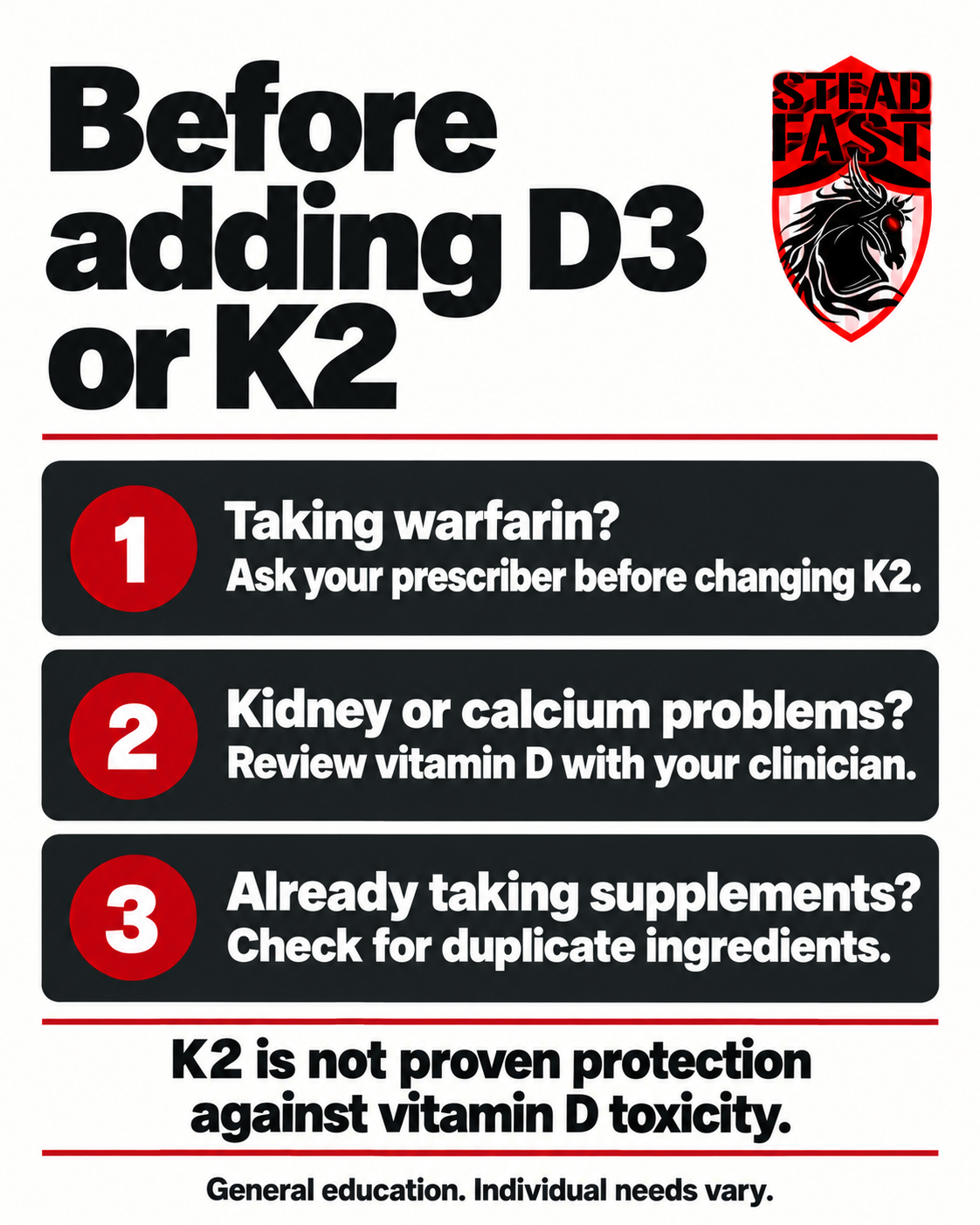
If you take warfarin or another vitamin K antagonist, check with your prescriber before starting, stopping or changing K2. These blood thinners work by blocking vitamin K. Changes in vitamin K intake can change how well they work. Keep your intake steady rather than suddenly cutting out leafy greens. Other blood thinners work differently, so ask about your medicine by name. Anticoagulant guidance
Check with your clinician about vitamin D if you have kidney problems or a condition that affects calcium levels. Also ask if you take a thiazide diuretic, a type of water pill. Medication considerations
Too much vitamin D can make blood calcium rise to harmful levels. Signs can include vomiting, confusion, unusual thirst and needing to urinate often. Serious cases can cause kidney problems. Get medical advice promptly if worrying symptoms develop while you’re taking large doses. Vitamin D toxicity information
K2 is not proven protection against vitamin D toxicity, or harm from too much vitamin D. Don’t use it to make a large D3 dose feel safer.
You may not need a routine blood test
You don’t need a blood test just because you’re thinking about supplements. The Endocrine Society doesn’t advise routine vitamin D testing for otherwise healthy adults without a medical reason. Testing can still help when your clinician is looking into a problem or checking treatment. Testing guidance
At your next appointment, you could ask:
- “Is there a reason to think I need more vitamin D?”
- “Would a blood test change what we do?”
- “Does my current supplement list duplicate anything or interact with my medicines?”
- “If I need a supplement, what is it treating and when should we review it?”
If you’re returning to training after illness and still feel unusually tired, mention that too. Feeling tired doesn’t prove you have low vitamin D. Explain what has changed and how it affects your day. Don’t keep raising the dose to see if it helps.
Choose a next step you can use
Follow your clinician’s treatment plan and ask about anything you don’t understand. If you’re shopping without a clear reason, check your food and current products first. You can leave the combined product on the shelf while you find out what you need.
Bone health also depends on good nutrition and suitable exercise. Strength training and weight bearing activity, where your body supports its own weight, can be part of the plan. Balance work and ways to prevent falls may matter too. If you have osteoporosis or have broken a bone, ask which exercise changes you may need. Bone health guidance
Write down one question before your next purchase. Do you need vitamin D? Is your current product enough? Why has K2 been suggested? You don’t have to answer every question in the supplement aisle.
For help putting the options in context, read Steadfast’s guide to strength training supplements after 40.
This article provides general education, not an individual diagnosis or supplement prescription.
Common questions
Do I need K2 whenever I take D3?
No. D3 and K2 have complementary roles in how your body handles calcium, but that doesn't mean everyone needs both supplements. Ask what each ingredient would do for you before choosing a combined product.
Do I need a vitamin D blood test first?
Not just because you're considering a supplement. Routine testing isn't advised for otherwise healthy adults without a medical reason. Your clinician can decide whether a test would help investigate a problem or check treatment.
Does K2 make a high vitamin D dose safe?
No. K2 isn't proven protection against harm from too much vitamin D. Too much vitamin D can raise blood calcium to harmful levels, so leave treatment doses and safety checks to your clinician.
What should I check if I take a blood thinner?
Ask your prescriber about your medicine by name before adding K2. If you take warfarin or another vitamin K antagonist, changes in vitamin K can change how well it works. Keep intake steady and get advice before starting, stopping or changing K2; other blood thinners work differently.
Still comparing supplements?
See how the options fit into the bigger picture of training after 40.
Compare supplement options