STEADFAST FULL BODY STRENGTH AFTER 40 · PART 1 OF 8
Thank you for reading this post, don't forget to subscribe!
Squat. Push. Pull. Carry. Six exercises, three simple blocks, and a session you can come back to.
A good workout should leave you knowing what you accomplished and what you want to improve next time. You do not need a different exercise every time you walk through the gym doors. You need a starting point you can understand, adjust, and repeat.
This full body strength workout for adults over 40 is that starting point. It pairs familiar movements with enough rest to practice them well. There is no race against the clock and no requirement to finish exhausted.
This is Part 1 of our eight part workout collection. Each installment adds another option to your training toolbox. You can repeat this session for several weeks instead of changing workouts whenever a new post appears.
Who this workout is for
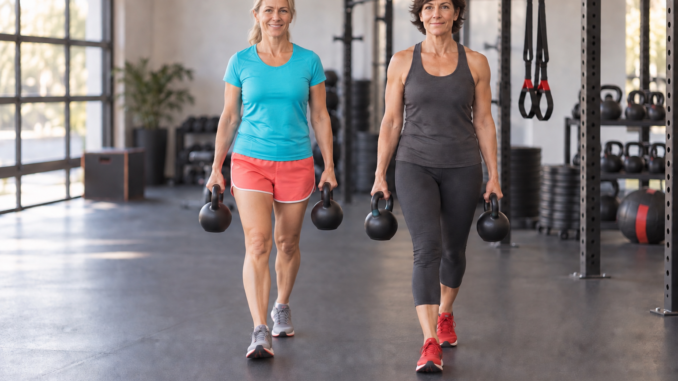
This session suits adults who can exercise independently and want a straightforward gym routine. Being over 40 does not automatically mean lifting light, nor does it tell us your training experience. Choose the version and resistance that match where you are today.
If you are returning after time away, begin with our guide to your first 30 days back in the gym after 40. Recent surgery, an active injury, or a condition that limits exercise calls for individual guidance before using a general workout.
Allow approximately 35–45 minutes, including setup and rest. You need dumbbells, optional kettlebells for carries, an adjustable bench, a securely anchored suspension trainer, a low stable step, and a clear walking area. Start with two rounds of each block.
Warm up for eight minutes
Start with five minutes of easy cycling. Then spend about three minutes moving through gentle lateral steps, slow marching knee raises, supported hip swings, and a few comfortable bodyweight squats. Keep the movements controlled. You are getting ready to train, not trying to tire yourself out.
Before your first working set of a new exercise, practice a few repetitions with little or no resistance. Use that rehearsal to check your setup, range of motion, and balance.
The foundation workout
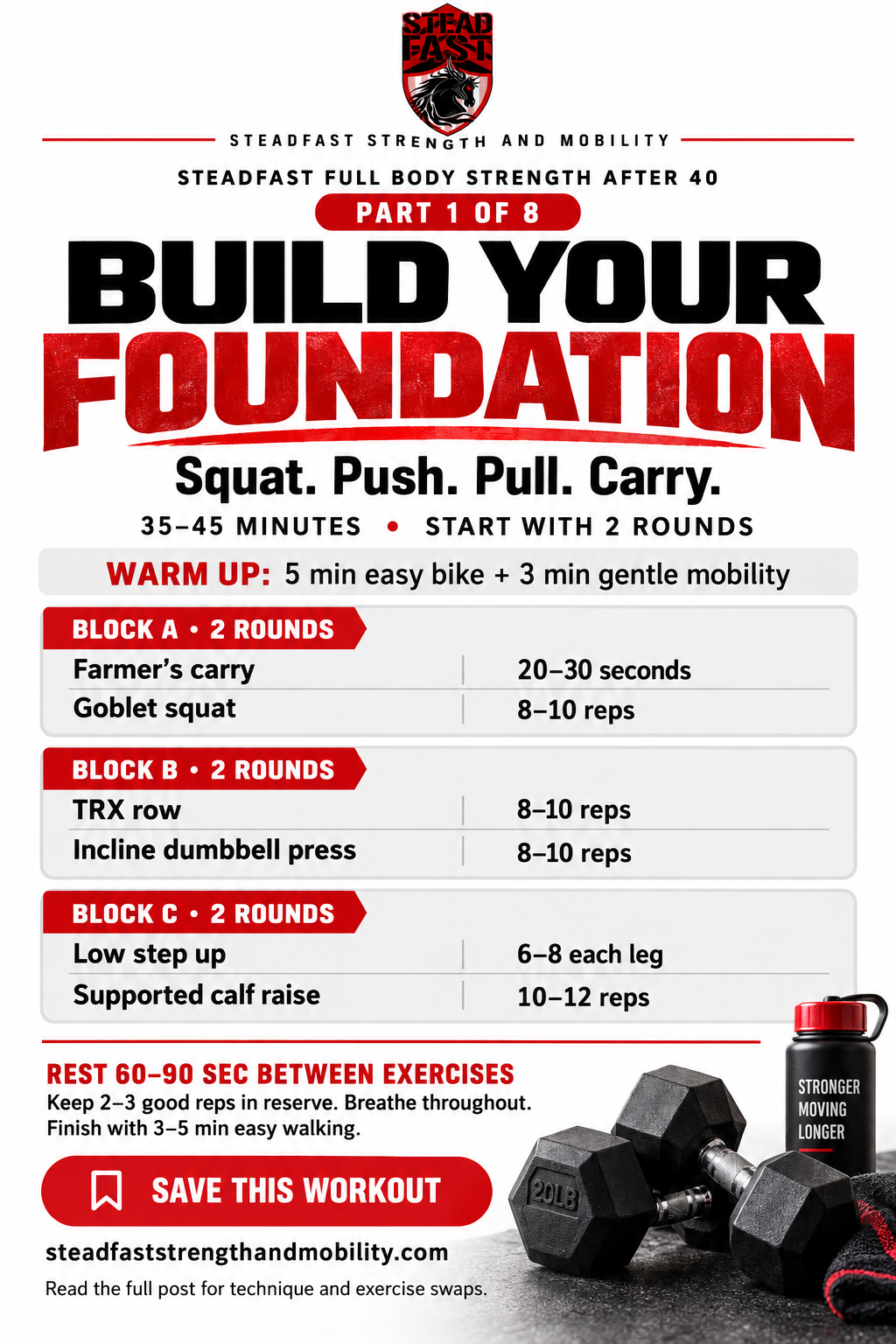
Complete both exercises in Block A, then repeat them once. Move on to Block B and follow the same approach, then finish Block C. Rest 60–90 seconds between exercises, including before the next round. Take longer if your breathing or technique needs it.
Choose resistance that leaves roughly two or three good repetitions available at the end of each set. For carries, use a load you can walk with steadily for the full time. Breathe throughout rather than holding your breath to finish a repetition.
| Block | Exercise | Each round | Rounds |
|---|---|---|---|
| A | Farmer’s carry | 20–30 seconds | 2 |
| A | Goblet squat | 8–10 reps | 2 |
| B | TRX row | 8–10 reps | 2 |
| B | Incline dumbbell press | 8–10 reps | 2 |
| C | Low step up | 6–8 each leg | 2 |
| C | Supported calf raise | 10–12 reps | 2 |
Coaching cues that matter
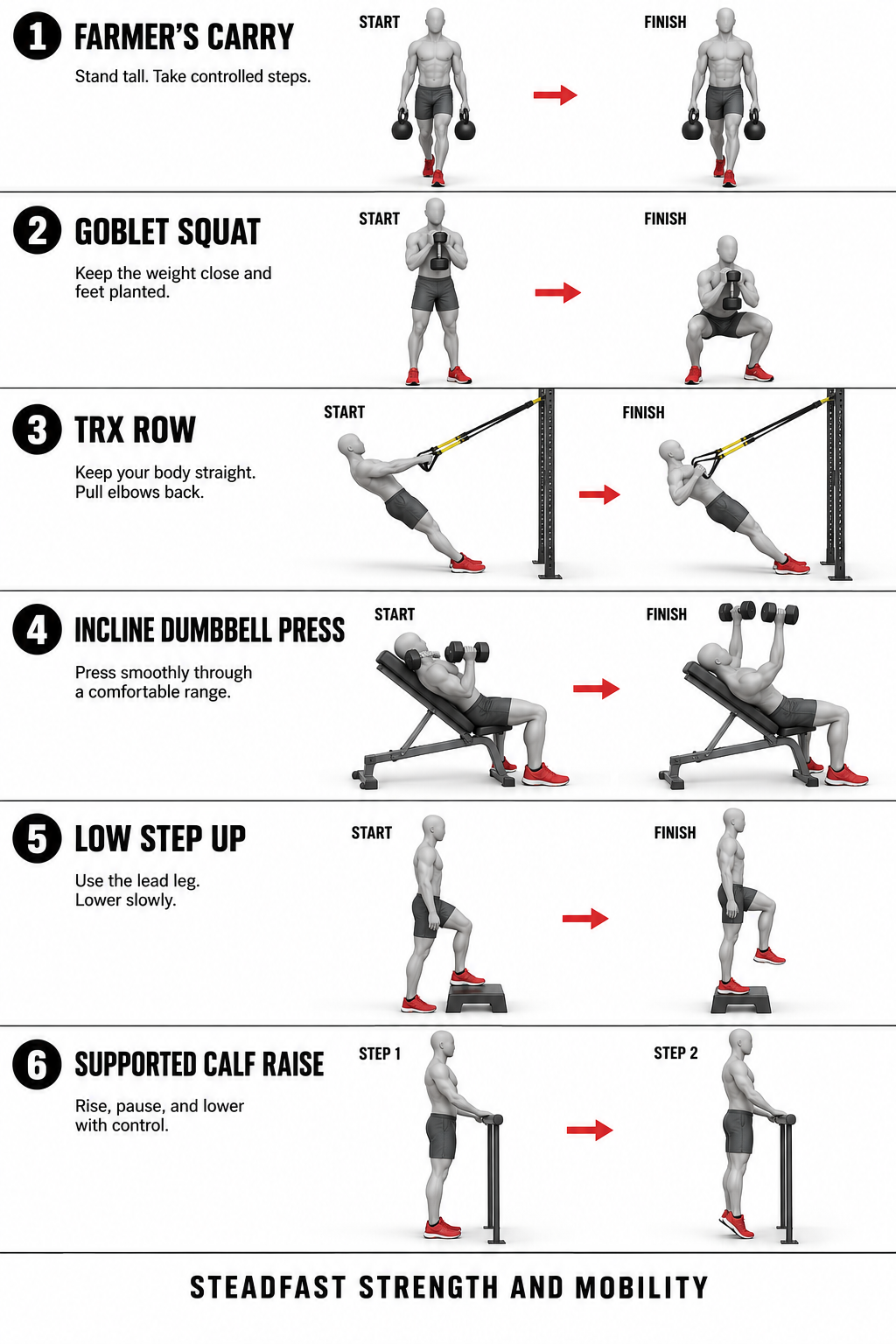
Farmer’s carry
Hold a dumbbell or kettlebell at each side and walk with short, deliberate steps. Keep your shoulders level and the weights clear of your legs. Use a clear path and turn slowly. If your grip opens or your posture changes, put the weights down and reduce the load.
Goblet squat
Hold one dumbbell close to your chest. Sit down between your hips, keeping your feet planted, then stand tall. Your comfortable depth is the target. A stable bench behind you can provide a consistent stopping point without forcing you lower.
TRX row
Check the anchor before starting. Begin relatively upright, with your body in a straight line. Pull your elbows back as your chest moves toward the handles, then lower under control. Standing more upright makes the movement easier; leaning farther back increases the challenge.
Incline dumbbell press
Use a modest bench incline and keep your feet supported on the floor. Press with your wrists stacked over your forearms. A neutral or slightly turned grip is an option if it feels more comfortable. Lower only as far as you can control comfortably.
Low step up
Start without weights. Place your whole lead foot on a low, stable step, stand up through that leg, and lower slowly. Complete six to eight repetitions on one side, then switch. Keep a stable support nearby if needed. Increase control before increasing step height or load.
Supported calf raise
Hold a stable support lightly. Rise onto the balls of both feet, pause briefly, and lower your heels under control. Keep the movement smooth. Bouncing through extra repetitions adds little to the quality of this set.
Make the session fit your equipment
No suspension trainer? Use a seated cable row. A bodyweight squat to a bench can replace the goblet squat. If bench setup makes dumbbell pressing awkward, a chest press machine is an alternative. If step ups are not comfortable or stable, try a supported split squat through a comfortable range, or omit that exercise until you have coaching.
For limited walking space, shorten the carry route and make slow turns. If balance makes loaded walking unsuitable, discuss a supported alternative with a coach. Swaps should make the workout more manageable, not introduce a harder movement.
How to build from here
Write down the weights, repetitions, and any adjustments. Repeat the session on another day once you have recovered, leaving at least a day between strength sessions at first. The CDC recommends muscle strengthening activity on at least two days each week, covering the major muscle groups. This session is one option within that broader weekly routine.
When both rounds feel controlled at the top of the repetition range, increase the resistance by the smallest practical amount and return to the lower end. Change one thing at a time. A third round can be an option later, but it is not part of the starting prescription and will lengthen the session.
Finish with three to five minutes of easy walking. Stop an exercise that causes sharp or worsening pain rather than pushing through it.
Where this session came from
This workout is adapted from a whiteboard session in our training collection. That version used four rounds and also included medicine ball slams and stick rotations. For this foundation installment, we have shortened the warmup, reduced the starting volume, kept six exercises, and added clear rest periods and exercise options.
Your next step
Save the workout, choose manageable weights, and give yourself a chance to learn the movements. The goal for your first session is to finish with useful notes and enough confidence to come back.
Want help choosing exercises and loads that suit you? Explore our strength and mobility coaching options or contact Steadfast about training in Haymarket, Fairfax, or online.
Coming next: Part 2, a full body dumbbell session. Stay with this workout as long as it is useful to you.
Save this workout
STEADFAST FULL BODY STRENGTH AFTER 40 · PART 1 OF 8
Build Your Foundation
35–45 minutes · Start with 2 rounds per block
Warmup: 5 minutes easy bike + 3 minutes gentle mobility.
| Block | Exercise | Each round | Rounds |
|---|---|---|---|
| A | Farmer’s carry | 20–30 seconds | 2 |
| A | Goblet squat | 8–10 reps | 2 |
| B | TRX row | 8–10 reps | 2 |
| B | Incline dumbbell press | 8–10 reps | 2 |
| C | Low step up | 6–8 each leg | 2 |
| C | Supported calf raise | 10–12 reps | 2 |
Rest: 60–90 seconds between exercises. Complete two rounds of one block before starting the next.
Keep 2–3 good repetitions in reserve. Use a manageable carry load. Breathe throughout.
Finish: 3–5 minutes easy walking.
Date: __________________ Notes / weights: __________________
________________________________________________________
steadfaststrengthandmobility.com
Read the full article for technique and exercise swaps. This is a general workout, not an individual rehabilitation plan.
