FULL BODY STRENGTH AFTER 40 · PART 4 OF 8
Thank you for reading this post, don't forget to subscribe!
You don’t need to swing a kettlebell over your head to get something out of it. Start with movements you can control, a weight you can manage, and a plan you can repeat.
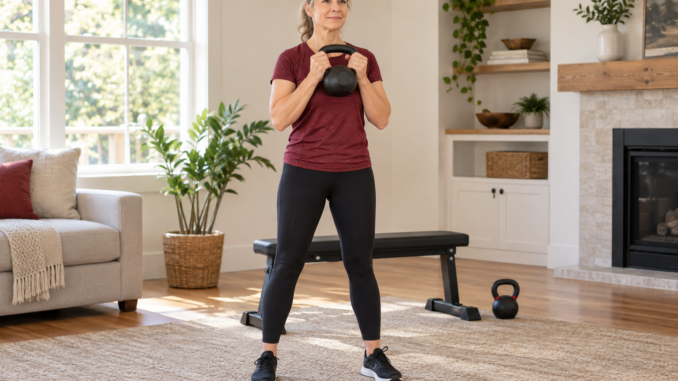
Kettlebell videos can make a simple piece of equipment look like an entrance exam. Swings. Cleans. Snatches. A long combination where the bell never touches the floor. Meanwhile, you’re trying to figure out what weight to pick up and where your feet should go.
You can start much more simply. This beginner kettlebell workout after 40 uses a deadlift, a squat to a bench, a supported row, an incline pushup, and a suitcase carry. The movements cover lifting, sitting and standing, pulling, pushing, and carrying. You’ll put the bell down between exercises and take enough rest to keep your repetitions controlled.
This is Part 4 of the Steadfast Full Body Strength After 40 series. Part 1 built the foundation, Part 2 introduced dumbbells, and Part 3 used suspension training. These are options you can learn and use. You don’t have to replace a workout that’s working just because you’ve reached the next article.
Why start with controlled kettlebell exercises?
A kettlebell is a weight with a handle. Its shape changes how you hold and move it, but it doesn’t make an exercise automatically better, safer, or more useful than a dumbbell or machine. The benefit comes from training consistently with a suitable challenge.
The American College of Sports Medicine’s 2026 guidance emphasizes regular resistance training, individual needs, and gradual progress. Complicated routines and training to failure are not requirements for the average healthy adult. That supports keeping the starting plan straightforward. It does not mean every exercise fits every person.1
For this session, you’ll learn to manage the bell during movements with a clear beginning and end. Swings and other faster lifts can be learned separately when your skill and tolerance support them. They aren’t a prerequisite for getting started.
Who this workout is for
This is a general starting template for adults who are new to kettlebells or returning to basic strength training and can tolerate the listed movements. Turning 40 doesn’t automatically require a special exercise menu. Your experience, current capacity, symptoms, and recovery matter more than your birthday.
If you have an active injury, recent surgery, significant heart or vascular disease, or restrictions on lifting, get an individualized plan that respects those limits. This article is exercise education, not rehabilitation. Stop for sharp or worsening pain, dizziness, chest discomfort, or unusual breathlessness. Severe or persistent concerning symptoms need urgent medical attention.
What kettlebell weight should you start with?
Choose the weight by the exercise, not by an age chart or a label that says “beginner.” A bell you can deadlift comfortably may be too heavy for a supported row. Your legs and upper body don’t need to use the same load.
Begin with a light practice set. You should be able to control the movement, keep a secure grip, breathe throughout, and finish with several good repetitions still available. For working sets, aim to leave about 2 or 3 clean repetitions in reserve. If you’re brand new and can’t judge that yet, err on the lighter side while you learn.
If your only bell is too heavy, use a lighter dumbbell, choose the bodyweight substitution, or get a more appropriate load. Struggling to hold the equipment isn’t a useful test of commitment.
Set up your space before you start
Use a firm, nonslip surface. Move loose rugs, pets, cords, and other obstacles out of the training area. Your bench or chair should be stable and have no wheels. Use a fixed counter or a wall for pushups, not a chair that could tip. Don’t use kettlebell handles as pushup supports.
Keep the walking path clear for carries. Place unused weights where you won’t step over them. Set the bell down before changing hands rather than passing it around your body while tired.
A simple five minute warmup
- Walk or march comfortably for about two minutes.
- Do five controlled chair stands. Use support if needed.
- Practice five unloaded hip hinges, moving your hips back with soft knees.
- Do five easy wall pushups.
- Before each new exercise, practice a few easy repetitions with little or no load.
The warmup is a chance to check how you’re moving today. If an unloaded movement hurts, adding a kettlebell isn’t the next step.
Your beginner kettlebell workout after 40
Complete both sets of one exercise before moving to the next. Rest 60 to 120 seconds between sets, and longer when you need it to recover your breathing and control. This is a strength session, so don’t rush through it to keep your heart rate up.
For your first session back, one set of each movement is a reasonable way to learn the routine. Build toward two sets as your response allows. Start twice weekly with a day between sessions. General public health guidance recommends muscle strengthening on at least two days each week, alongside aerobic activity.2 The exact exercises, rep ranges, and rest periods below are a practical coaching template, not a universal prescription.
| Exercise | Sets | Target | Main focus |
|---|---|---|---|
| Kettlebell deadlift | 2 | 8 to 10 reps | Hip and leg strength |
| Goblet squat to a bench | 2 | 6 to 10 reps | Sitting and standing under control |
| Supported one arm row | 2 | 8 to 12 each side | Upper body pulling |
| Incline pushup | 2 | 6 to 10 reps | Upper body pushing |
| Suitcase carry | 2 | 20 to 30 seconds each side | Grip and trunk control while walking |
For rows and carries, completing both sides counts as one set. Take a short rest between sides if needed, then your normal rest before the next set. The carry time is a starting range. Use a shorter interval whenever your grip, posture, or breathing calls for it.
How to do each exercise
1. Kettlebell deadlift
Place the bell between your feet. Stand with your feet about hip to shoulder width apart. Soften your knees, move your hips back, and grip the handle with both hands. Keep the bell close to your center, your arms long, and your back in a comfortable, steady position.
Push through your feet and stand up with the bell. Finish tall without leaning backward. Move your hips back again and lower the bell under control. Let it settle before the next repetition.
Coaching cue: Hips back. Stand tall. Set it down quietly.
Make it easier: Raise the bell on a stable, load bearing platform if reaching the floor changes your position. You can also practice an unloaded hinge first. Persistent discomfort calls for an assessment, not repeated attempts to stretch deeper into the lift.
2. Goblet squat to a bench
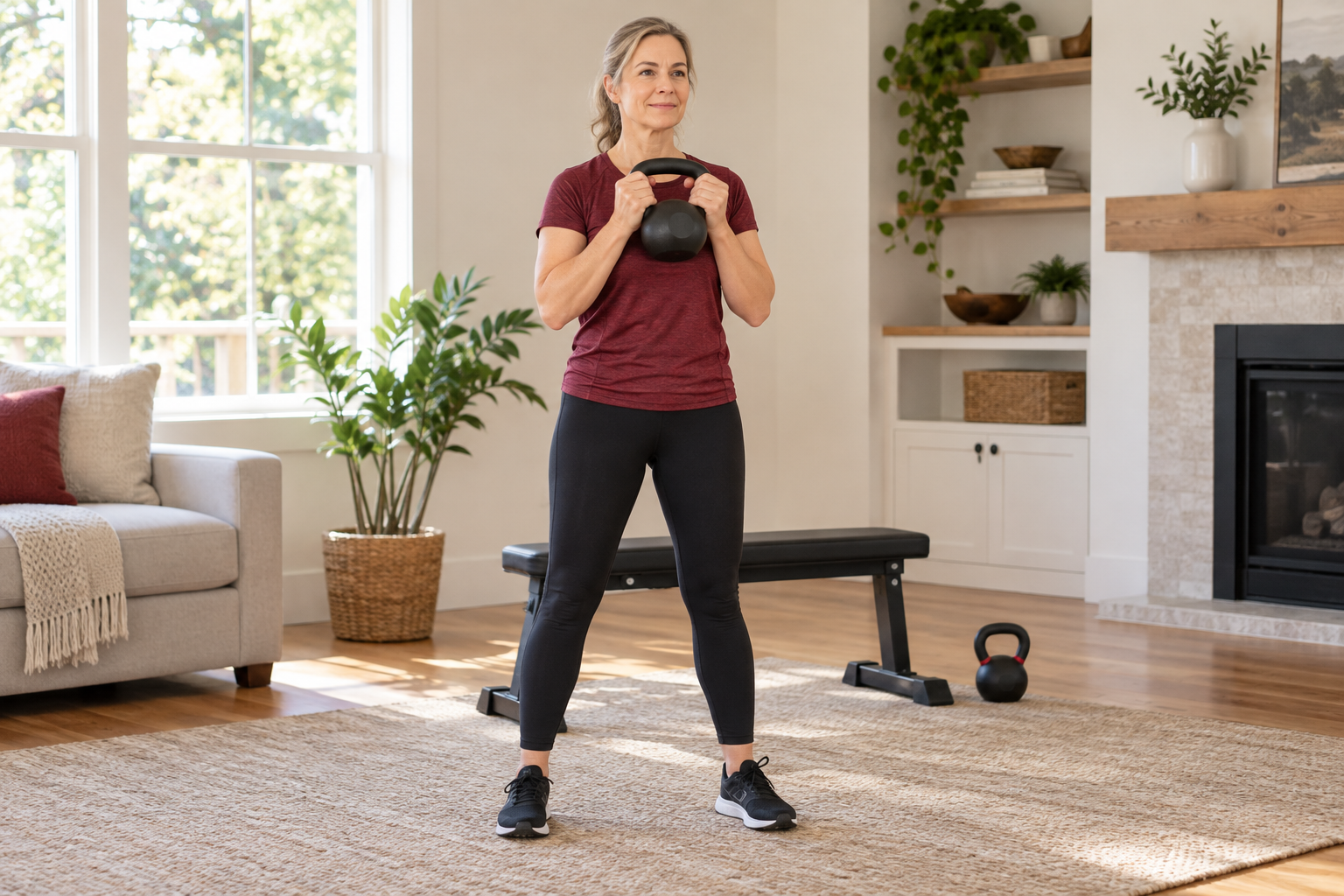
Stand in front of a stable bench or chair with the bell held close to your chest. Hold the sides of the handle with both hands and keep your elbows angled down. Use a stance that lets your feet stay planted as your knees bend.
Sit down under control until you lightly touch the seat, then press through your feet to stand. Keep the weight close. Don’t drop onto the bench, rock backward, or bounce out of the bottom.
Coaching cue: Light touch. Steady feet. Stand without rocking.
Make it easier: Use a higher seat or put the bell down and perform a bodyweight chair stand. If you need your hands for support, use them without also trying to hold a kettlebell.
3. Supported one arm row
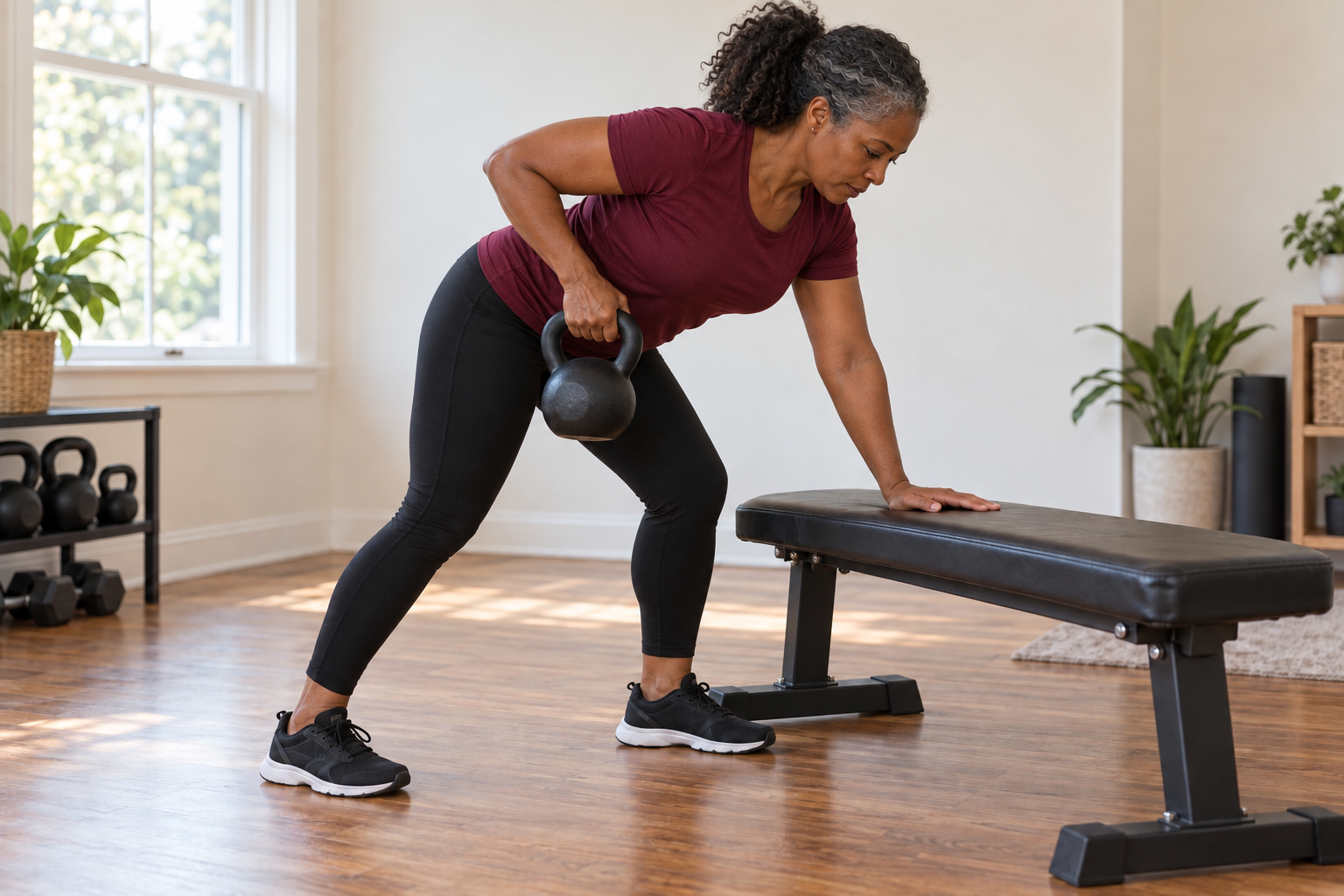
Place one hand on a stable bench or fixed support. Set your feet apart in a comfortable stance, soften your knees, and hinge forward enough to let the other arm hang. Hold the bell beneath that shoulder.
Pull your elbow toward your hip, bringing the bell toward the side of your lower ribs. Lower it slowly until your arm is long again. Keep your torso quiet rather than twisting to move the weight. Repeat on the other side.
Coaching cue: Pull with the arm. Keep the rest of you steady.
Make it easier: Reduce the weight or use a lighter dumbbell. If the bent position bothers your back, try a seated band row with an anchor secured according to its instructions. Don’t force a position that continues to hurt.
4. Incline pushup
Place your hands on a fixed counter or wall, roughly shoulder width apart. Step back enough to create a manageable challenge. Keep your body in a straight line from your head through your hips as you bend your elbows and bring your chest toward the support.
Let your elbows angle somewhat back instead of flaring directly out to the sides. Press away with control. Use a comfortable range and breathe through each repetition.
Coaching cue: Move your body as one piece.
Make it easier: Raise your hands or use the wall. Yes, this exercise uses body weight in a kettlebell workout. It fills the pushing pattern without requiring a beginner to manage a kettlebell over the face or learn an overhead lift.
5. Suitcase carry
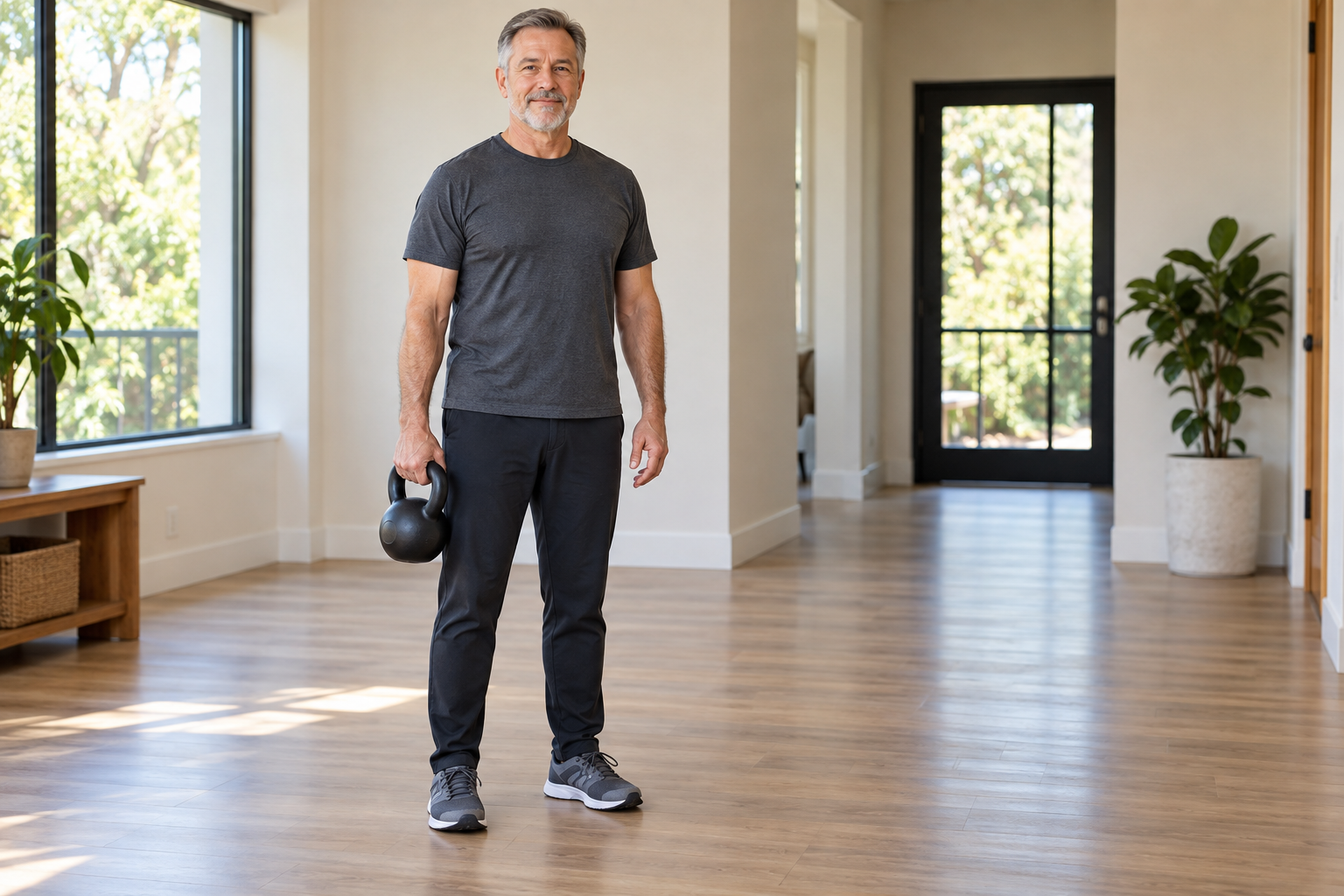
Pick up a manageable bell with one hand and let it hang beside your thigh. Stand tall with your shoulders level. Walk slowly along a clear path while keeping your torso upright. The goal is to resist being pulled sideways, not to lean away from the weight.
Stop while you still have a secure grip and steady posture. Set the bell down before switching sides. Breathe normally rather than turning the carry into a breath holding contest.
Coaching cue: Walk like you’re carrying one grocery bag without letting it pull you crooked.
Make it easier: Start with 10 to 15 seconds or a light stationary hold beside a stable support. A hold isn’t permission to strain longer. If balance or grip is unreliable, skip the carry until an appropriate alternative has been assessed.
Adjust for the limitation you actually have
A modification should solve a specific problem. A higher seat can reduce squat depth. A lighter bell can make a row manageable. A wall pushup can reduce the load on the upper body. None of these options guarantees that an exercise will suit an injured or painful joint.
If your shoulders don’t tolerate the goblet position, put the weight down and use chair stands. If your grip starts to open, end the set. If your back dislikes the hinge even after reducing the load and range, stop repeating it and have the movement assessed. Making an exercise easier and pushing through pain are different decisions.
How to progress without making the workout complicated
Keep a short record of the load, repetitions, and how the session felt. Your printable card has space for this. Start at the lower end of each rep range and earn more repetitions with the same controlled movement.
When you can complete both sets at the top of the range with about 2 or 3 good repetitions left in two consecutive sessions, try the smallest available weight increase. Return to the lower end of the rep range with the new load. For a pushup, a slightly lower, equally stable support can increase the challenge.
For carries, first build to 30 seconds per side without leaning, rushing, or losing your grip. Then consider a small load increase and shorten the time again. Change one thing at a time. More load, more repetitions, and less rest in the same session make it harder to know what you can actually tolerate.
Kettlebell jumps can be large. You don’t have to force the next size. Keep practicing with your current bell, or use a dumbbell or adjustable option to make a smaller change. Progress also includes steadier movement, less assistance, and better control at a familiar load.
What should the next day feel like?
Some muscle soreness can happen when an exercise is new, but soreness isn’t the goal. You should still be able to manage normal daily activities. If soreness changes how you walk or move, reduce the next session’s load or number of sets and allow more recovery.
Sharp pain, worsening joint symptoms, or unusual fatigue that persists deserve attention. Don’t assume they’re normal just because you’re over 40. If you’re coming back from a longer break, the first 30 days back in the gym guide can help you approach the restart more gradually.
Common questions
Can I do this workout with one kettlebell?
Yes, if that bell is appropriate for the movements you use it for. If it’s too heavy for your row or goblet hold, use a lighter dumbbell or the listed substitution. One piece of equipment shouldn’t dictate poor technique.
Do beginners need kettlebell swings?
No. This session works without them. Swings involve a faster hip movement and a different skill demand. Learn them separately when appropriate rather than adding them because a workout feels too simple.
Should I do this workout every day?
Start twice weekly on nonconsecutive days and see how you recover. You can walk or do other suitable activity between sessions. Add training only when your schedule, goals, and recovery support it.
Are kettlebells better than dumbbells after 40?
Neither tool wins by default. Choose the equipment that offers a comfortable grip, useful load increments, and movements you can perform consistently. You can mix them in the same workout.
Will this workout help me lose weight?
It can be part of a broader activity plan, but this workout alone doesn’t determine weight loss. Food intake, daily movement, consistency, and other individual factors matter. Use the session to build strength and training habits rather than judge it by sweat or a calorie estimate.
References
1. American College of Sports Medicine. 2026 resistance training guidelines update. General guidance for healthy adults; not validation of this exact kettlebell routine.
2. Centers for Disease Control and Prevention. Adult activity recommendations. Accessed October 10, 2026.
