
A hard workout followed by cramps or an urgent bathroom trip can leave you wondering whether your Crohn’s disease or ulcerative colitis is getting worse. These are types of inflammatory bowel disease (IBD), which causes inflammation, or swelling and irritation, in the digestive tract. A flare is a period when the disease becomes more active. Your symptoms deserve a careful check.
Research has not shown that hard workouts cause IBD flares. Hard exercise can cause gut symptoms, and those symptoms need attention. Research also cannot promise that every type of hard training is safe for every person with IBD.
If you are over 40 and trying to stay strong, it helps to know what research can tell you. You also need to know how to change a workout without guessing whether your IBD is active.
Exercise-related gut symptoms and an IBD flare need different explanations
Hard exercise can upset the gut. Feeling sick, belly discomfort and diarrhea can happen during or after exercise, even without IBD. How hard and how long you exercise can matter. So can the heat, how much fluid you drink, and which foods agree with you. The 2025 Sports Dietitians Australia and Ultra Sports Science Foundation position statement describes these exercise-associated gastrointestinal problems.
These findings do not prove that a workout caused Crohn’s or colitis inflammation to return. But you should not assume that symptoms after exercise are harmless, either.
Your care team may ask about symptoms and use blood, stool or other tests to understand what is happening. For Crohn’s disease, the American Gastroenterological Association recommends checking symptoms along with test results, rather than relying on symptoms alone.
A coach can notice that symptoms started during or after a workout. That timing alone cannot tell the coach whether you are having a flare.
Can exercise trigger an IBD flare? What the research can tell us
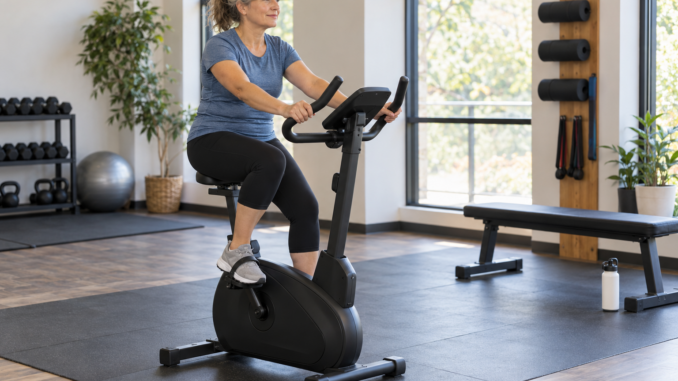
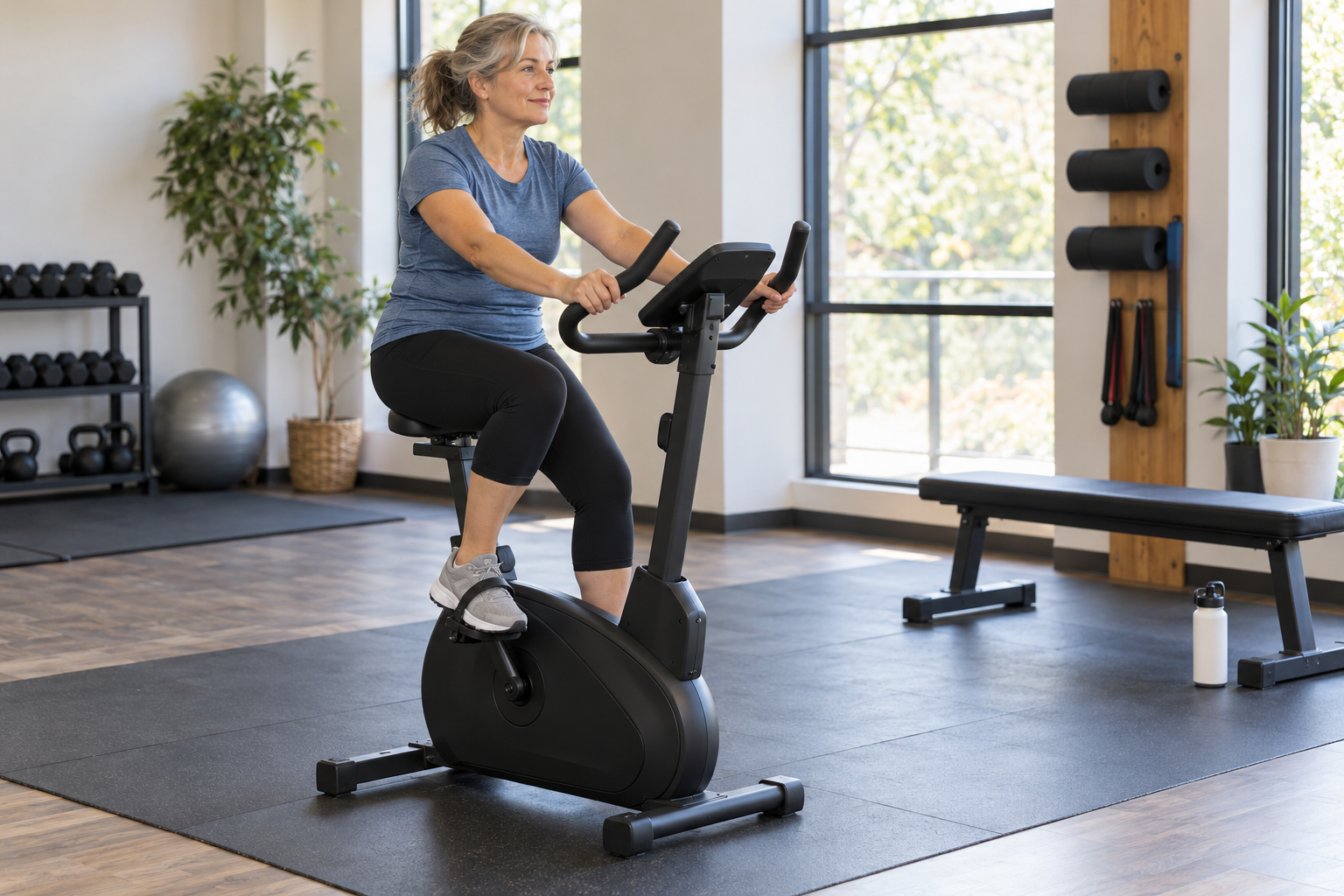
One example is a small trial of 36 adults with Crohn’s disease. Their disease was inactive or only mildly active. Researchers assigned them by chance to one of three groups: supervised cycling with short bursts of hard effort and recovery breaks, steady cycling at a moderate effort, or usual care. The exercise programs lasted 12 weeks. Researchers checked on participants over six months.
The study suggested that people could follow and accept these programs. It also recorded three non-serious health problems linked to exercise. Two people had disease relapses, meaning their disease became active again, with one in each exercise group. Other factors may have explained those relapses. The study was too small to show whether exercise caused them or to reliably measure flare risk.
This supervised cycling study gives us some useful information. It does not tell us whether other hard workouts are safe for everyone. Examples include doing several exercises in a row with little rest, heavy lifting, long races in the heat, or exercising during a major flare.
What remains uncertain
We still have gaps in what we know about different workouts, how much exercise to do, and risks when IBD is active. Many studies include people in remission, meaning their disease is well controlled, or people with only mild disease. The results may not apply to someone with severe symptoms, other health problems or recent surgery.
There is no single heart-rate limit or workout length that is safe for everyone with IBD. These studies also do not show that exercise prevents or treats IBD. Keep following your treatment plan and attending medical checkups.
What counts as a hard workout depends on the person
A familiar workout may feel harder after a break from exercise or during a low-energy week. Several things affect how hard it feels: the weight you lift, how close you get to being unable to do another repetition, how little rest you take, and how long you exercise. A repetition, or rep, is one complete movement. A set is a group of reps followed by a break.
Lighter weights alone may not solve the problem. Doing exercises one after another with little rest can still be tiring. You may also need longer breaks or a shorter workout.
Write down what you did, how long you exercised and what changed afterward. Include your rating of perceived exertion, which is a number you use to describe how hard the exercise feels. These details tell your coach more than simply calling the workout “intense.”
How to make training more manageable
Start with the activity guidance from your IBD team, especially if symptoms have changed. The Crohn’s & Colitis Foundation advises limiting exercise during flares and discussing an appropriate return with your physician.
When training is appropriate, these are options to discuss with your coach:
- Do less exercise. Do fewer sets, shorten the workout or skip the extra cardio, such as cycling, at the end.
- Make the effort easier to control. Replace short bursts of very hard exercise with a steady, comfortable pace. Take longer breaks between sets of strength exercises.
- Choose a convenient setting. Train close to a bathroom, somewhere you can stop easily, rather than committing to a distant route.
- Keep the workout familiar. If you are unsure how much exercise you can manage today, avoid trying several new exercises or a new energy drink before training.
- Allow the plan to change. Stopping early or taking a rest day should be a normal option, without a make-up workout attached.
For example, you might replace a fast workout with two familiar strength exercises and longer breaks. For someone else, even that may be too much that day. These are options to discuss with your coach and care team. They cannot tell you whether your gut is inflamed.
Our recovery and return-to-training approach explains how a coaching plan can adapt when your capacity changes.
IBD can affect how much food and fluid you need and what you can comfortably eat. Ask your care team or a dietitian who works with IBD for advice that fits you. Avoid copying an athlete’s eating plan or cutting out foods just to get through a workout.
Use patterns to inform a conversation
A brief log can help you explain a recurring problem. Note the activity, approximate effort, duration, symptoms and when they started. Include whether symptoms also happen on rest days and whether anything else recently changed.
You do not need a perfect spreadsheet. For example: “I suddenly needed the bathroom halfway through two recent bike workouts. That feeling continued afterward.” This gives your care team and coach something specific to discuss.
Take a repeated pattern seriously, but remember that timing does not prove the cause. Do not repeat a workout that makes you unwell just to test it. Do less of that activity or stop it, and ask your care team for advice.
Know when the workout needs to stop
Stop if symptoms become concerning or worsen during training. Contact your IBD team about new, persistent or recurring symptoms rather than repeatedly adjusting workouts around them.
Heavy bleeding, severe abdominal pain, ongoing vomiting, high fever or dehydration need urgent medical attention. The Foundation’s flare guidance recommends contacting your healthcare team right away or seeking emergency care for severe symptoms. Do not finish the session first.
Frequently asked questions
Do hard workouts cause Crohn’s flares?
Research has not established that they do. Small studies in selected groups cannot provide a universal guarantee, either. Symptoms after training deserve attention, and your IBD team should assess a suspected flare.
Does diarrhea after exercise mean my IBD is active?
It can have more than one explanation. Exercise-related symptoms do not confirm a flare, and their timing does not rule one out. Discuss new or recurring diarrhea with your care team.
Should everyone with IBD avoid high-intensity exercise?
There is no single rule for everyone with IBD. Consider how well your disease is controlled, other health problems, your exercise experience, how you recover and your care team’s advice. A workout used in a supervised study may not be right for you.
Can a personal trainer tell whether I am flaring?
No. A trainer can adjust exercise and help describe your response. Diagnosing a flare and making treatment decisions belong with your healthcare team.
Build a plan with room to adjust
Learn about our Crohn’s and autoimmune-aware fitness coaching and its boundaries before deciding whether it fits your needs.
If you would like help matching strength training to your current capacity and your healthcare team’s guidance, contact Steadfast Strength and Mobility about a consultation. We can discuss your goals and whether coaching is a useful fit.
This article provides general education. It does not replace individualized advice, diagnosis or treatment from your healthcare team.
Sources
- Costa and colleagues. Professional position statement on exercise-associated gastrointestinal symptoms. 2025.
- Tew and colleagues. Crohn’s disease exercise pilot randomized trial. 2019.
- American Gastroenterological Association. Biomarkers and Crohn’s disease management. 2023.
- Crohn’s & Colitis Foundation. Exercise guidance and flare resources.
Enjoy our strength and mobility articles?
Add Steadfast Strength and Mobility as a preferred source on Google to see more of our training advice, educational articles, and practical fitness information.
Or choose Steadfast in Google’s source preferences

Be the first to comment