
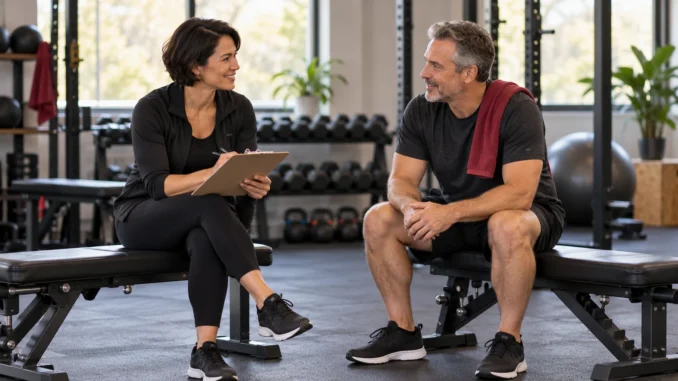
If you’ve been putting off personal training because you’re unsure what the first appointment will be like, it helps to know what you’re walking into. You might be wondering how much exercise you’ll do, whether an old injury will come up, or what to say when someone asks about your goals.
You can start with the answer you have: “I’d like to feel stronger, but I’m not sure where to begin.” That gives you and your coach something useful to talk about.
Your first personal training session is a chance to explain what you’re hoping for, try things with guidance if exercise is planned, and see how you feel about working together. You can ask questions throughout. You can also say that you’re nervous or that it’s been a long time since you’ve exercised regularly.
Here’s what to sort out beforehand and what to pay attention to once you’re there.
Before you go
First, ask what the appointment includes. A consultation may be mostly conversation; an assessment or training session may include movement. Coaches arrange those first steps differently, so it’s worth checking how much time to allow and whether you should arrive dressed to exercise.
At Steadfast Strength and Mobility, the starting conversation covers your goals, training experience, schedule, and current concerns. From there, you can discuss which coaching option fits.
For personal training in Fairfax, sessions take place at District Barbell, 8550 Lee Hwy, Suite 150, Fairfax, VA 22031. Haymarket coaching may take place in your home or another agreed location, depending on location, scheduling, and service fit. Confirm where to meet when you book.
If you’ll be moving, wear comfortable clothes and footwear, and bring water. Complete any forms you’ve been asked to fill out, and bring relevant exercise guidance from your healthcare team. A few questions saved on your phone can be useful if you tend to forget them once a conversation gets going.
That’s enough preparation. You can ask about equipment purchases after you’ve talked through the plan.
What to say when your coach asks about your goals
Think about something you’d like to feel more comfortable doing. Maybe carrying groceries upstairs has become harder than you’d like. Maybe you miss hiking, or you’d like to lift weights again but feel unsure about where to start.
Those everyday examples help explain what “getting stronger” means to you. You don’t have to arrive with a target weight, a deadline, or the names of the exercises you need.
Talk about your week, too. If you can usually manage two mornings but evenings are unpredictable, say so. If a previous program took more time than you had, that matters. So does knowing that you enjoy walking but dislike long gym sessions.
This is also the time to mention health conditions, previous injuries, current symptoms, and any exercise restrictions or relevant medication information. If you’re uncertain about a detail, say that rather than guessing. Ask how health information is collected and kept private.
An old injury may be the thing you’re most worried about. Explain what currently bothers you and share any guidance you’ve received. A coach can discuss how that affects training, but persistent pain or a concern that needs diagnosis belongs with a healthcare professional. Personal trainers don’t diagnose injuries or provide physical therapy, as NFPT’s scope-of-practice guidance explains.
You can also say what worries you: “I’m worried I’ll be the least fit person there,” or “I need someone to explain the equipment.” Those are useful things for a coach to know.
When it is time to move
If your appointment includes exercise, there should be a reason for what you’re asked to try. You might practice getting up from a chair, learn a light pulling exercise, or work through the setup for a movement in your program. These are examples of possible starting activities; the exact session depends on the person and the appointment.
What you try should fit your health history, current fitness, lifestyle, and goals. There may be other things to check as you and your coach continue working together.
In practice, you should be able to ask, “What are we looking for here?” and understand the answer. You might be learning a setup, trying a comfortable range of movement, or giving the coach information to help choose an exercise.
Take the time you need to understand an instruction. “Could you show me again?” is a perfectly reasonable request. So is asking where you should feel an exercise or why one version has been chosen for you.
Tell your coach if a movement hurts or you feel unwell, and pause. You can also mention that a weight feels too heavy or that you’re unsure of your balance. Keep any support you need. Knowing that helps your coach decide what to try next.
As you go, notice whether the explanations make sense to you and whether you feel comfortable speaking up. You’re learning about the coaching as well as the exercises. Read more about the personal side of coaching and progress beyond appearance.
Before you decide what comes next
Leave some time for the practical questions. What would you work on first? How often would you meet? Would you have exercises to do on your own, and how would you know when to adjust them?
Ask how progress will be reviewed and what support is available between appointments. You should also understand the price, payment schedule, and cancellation terms before agreeing to ongoing coaching. Read any agreement you’re given and ask about anything that’s unclear.
Then consider whether the proposed routine fits the week you described. If it sounds difficult to manage, bring that up now. It’s easier to discuss a realistic starting schedule while you’re making the plan.
You can finish a first appointment with a clearer idea of what you need, even if you still have questions. If you’re ready to begin that conversation, contact Steadfast Strength and Mobility with your main goal and where you’d like to train.
Frequently asked questions
Is the first consultation free
Steadfast currently advertises a free first consultation and assessment on its Fairfax service page. Confirm what’s included when you book and ask separately about ongoing coaching costs.
Can I start with online coaching
Yes. Online coaching is available. Ask what the initial appointment involves, whether you’ll need space to move, and how to join the call.
Can I ask about nutrition too
Yes. Steadfast’s Haymarket service information says general nutrition education and habit guidance may be included when appropriate. Medical nutrition needs require a suitably qualified healthcare professional.
Sources
Sources rechecked October 14, 2026.
- American Council on Exercise: ACE Answers, “How do I select the appropriate assessments for my client?” Supports individual assessment selection and timing.
- NFPT: Legal and Ethical Scope of Practice for Personal Trainers. Supports the boundary between personal training, diagnosis, and physical therapy.
- Steadfast’s contact page, Haymarket page, and Fairfax page. Used for the starting conversation, local arrangements, online availability, nutrition scope, and advertised free consultation and assessment.
Enjoy our strength and mobility articles?
Add Steadfast Strength and Mobility as a preferred source on Google to see more of our training advice, educational articles, and practical fitness information.
Or choose Steadfast in Google’s source preferences

Be the first to comment