If dinner needs to happen soon, start with something you already have. Eggs and black beans can go into tacos. Leftover chicken works with a potato and frozen broccoli. And while you’re in the kitchen, you can stir together yogurt and oats for tomorrow’s breakfast.
High protein meals after 40 are easier to repeat when they fit the way you already eat. Start with a familiar protein food, add the other foods you enjoy, and give yourself a few combinations you can make without much planning.
The six ideas below leave room for that flexibility. Change the vegetables, use a sauce you like, and adjust portions to your appetite and any dietary guidance you’ve been given.
Six meals to try this week
Protein amounts are estimates; brands and portions vary, so check labels, especially for yogurt and tofu.
Peanut butter and berry yogurt oats
About 30 grams of protein
Stir together about ¾ cup plain Greek yogurt, ½ cup dry rolled oats, and 2 tablespoons peanut butter. Add berries, cinnamon, and enough water or milk to get a texture you like, then refrigerate overnight. If you prefer a warm breakfast, cook the oats and serve the yogurt alongside them.
The estimate assumes a 170-gram serving of yogurt with 17 grams of protein on the label, plus the oats and peanut butter. Lactose-free Greek yogurt can work too. If you’re using plant-based yogurt, check its protein content; it can be quite different.
Egg and black bean tacos
About 25–30 grams of protein
Scramble three large eggs until set. Warm ½ cup cooked or drained canned black beans and divide the eggs and beans between two small corn tortillas. Finish with salsa and whatever vegetables you have, such as cabbage or leftover peppers.
The eggs provide roughly 18 grams of protein, with the beans and tortillas adding the rest. This is also an easy dinner when you haven’t planned ahead. If you prefer a bowl, leave out the tortillas and adjust the estimate accordingly.
Salmon and white bean lunch bowl
About 30 grams of protein
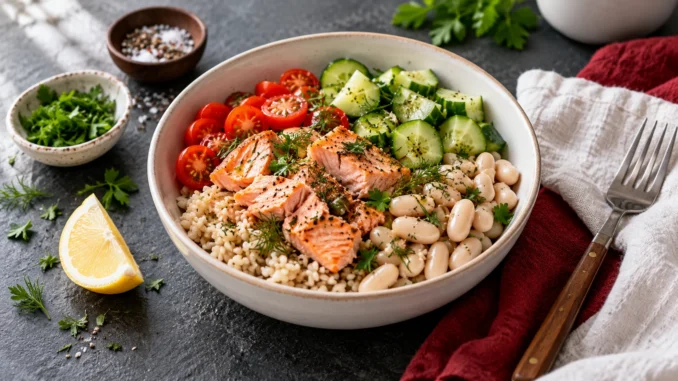
Toss 3 ounces of drained canned salmon with ½ cup drained white beans. Add cucumber, tomatoes, lemon juice, olive oil, and herbs. Serve with about ½ cup cooked rice or another grain you enjoy.
The salmon supplies roughly 20 grams of protein; the beans and rice bring the meal to about 30. Keep the ingredients separate until lunch if you prefer, and follow the package storage instructions. Canned salmon makes this useful on days when you’d rather assemble lunch than cook it.
Tofu and edamame rice bowl
About 30–35 grams of protein with the label amounts below
Pan-cook 6 ounces of firm tofu, then serve it with ½ cup cooked shelled edamame, ¾ cup cooked brown rice, and cooked frozen vegetables. Add a sauce you enjoy. Ginger, lime, and a little soy sauce work well together.
This estimate assumes tofu with 10 grams of protein per 3 ounces. Your 6-ounce portion supplies 20 grams, with the edamame and rice adding the rest. Tofu varies considerably by brand and type, so check the carton. A ready-to-eat version, used according to its package directions, can save a cooking step.
Lentil tomato pasta
About 25–30 grams of protein
Warm 1 cup cooked lentils in tomato sauce with garlic and Italian herbs. Toss with 1 cup cooked whole-wheat pasta, adding spinach or mushrooms if you like. Canned or precooked lentils make this easier on a busy evening.
The lentils supply roughly 18 grams of protein and the pasta about 8 grams. Parmesan is optional and isn’t included in the estimate. If you’re unused to eating a large serving of legumes, begin with less and see how you feel before increasing the portion.
Chicken and potato dinner plate
About 30–40 grams of protein
Put 3 ounces of cooked skinless chicken breast on a plate with one medium baked potato and about 1 cup cooked broccoli. Add olive oil, lemon, herbs, or your favorite seasoning.
The chicken provides most of the protein, with smaller amounts from the potato and broccoli. Leftover roast chicken or a prepared option works here. If you make extra, you can use similar ingredients in a wrap or grain bowl for another meal. Refrigerate perishable food promptly and follow storage instructions.
How much protein should you aim for
Once you’ve found a few meals you like, the numbers can help you see how they fit together. The 2025–2030 Dietary Guidelines for Americans give a daily protein target of 1.2–1.6 grams per kilogram of body weight, adjusted for individual calorie needs. For someone who weighs 150 pounds, that works out to roughly 80–110 grams a day.
That example gives you a sense of scale. Your own needs depend on factors including body size, activity, and health. Turning 40 alone doesn’t tell you how much to put on your plate.
If you have kidney disease or follow a medical diet, speak with your clinician or registered dietitian before increasing protein. Kidney-related protein needs vary, including between people receiving dialysis and those who aren’t.
For the next grocery trip, choose one or two meals you’d actually look forward to eating. Buy enough to try them, then notice what would make them easier next time. You might keep canned beans in the cupboard, buy frozen edamame, or put breakfast together while cleaning up dinner. Start with the shortcut that solves a problem you regularly run into.
For help building strength training and everyday nutrition habits into your week, contact Steadfast Strength and Mobility to discuss coaching in Northern Virginia.
Frequently asked questions
Do I need protein shakes after 40
No. Regular foods can supply protein, and age alone doesn’t create a need for a shake. A supplement may be convenient when eating enough is difficult. The NIH’s protein guidance also notes that athletes can meet their needs through food.
Should every meal contain 30 grams of protein
The amounts above are examples, rather than a target for every plate. Your meals can vary in size. Consider your daily needs and usual eating pattern, with individual advice where needed.
Can I do this without meat or fish
Yes. The tofu bowl and lentil pasta are two places to start. Use enough food overall and a variety of protein sources, and check labels when making substitutions. A plant-based alternative may contain a different amount of protein than the food it replaces.
Sources
Sources checked October 14, 2026. The food-composition tables below provide approximate nutrient values; they are not presented as new research.
- USDA — Protein in Household Measures. Abridged table from the 2018 Standard Reference Legacy database, used for approximate food portions.
- Health Canada — Nutrient Value of Some Common Foods. Government food-composition reference, 2008.
- U.S. Departments of Agriculture and Health and Human Services — Dietary Guidelines for Americans, 2025–2030. Daily protein target on PDF page 3, printed page 2.
- National Institute of Diabetes and Digestive and Kidney Diseases — Healthy Eating for Adults with Chronic Kidney Disease. Individualized protein advice and needs during dialysis.
- NIH Office of Dietary Supplements — Dietary Supplements for Exercise and Athletic Performance. Protein section, including meeting needs through food.
Enjoy our strength and mobility articles?
Add Steadfast Strength and Mobility as a preferred source on Google to see more of our training advice, educational articles, and practical fitness information.
Or choose Steadfast in Google’s source preferences
Be the first to comment