
STEADFAST STRENGTH AND MOBILITY
Thank you for reading this post, don't forget to subscribe!
You finish a set, put the weights down, and know you could have managed another two clean repetitions. Did you stop too soon?
For many training goals, that can be a productive place to stop. At Steadfast, the aim is to choose a challenge you can perform well, recover from, and gradually improve. A session should move your training forward while leaving room for the rest of your life.
Start with the goal, then choose the repetitions
A repetition is one complete performance of an exercise. A set groups several repetitions together. Repetition based training uses repeated movements against resistance, with the load, number of sets, and effort chosen for a purpose.
Terminology can be confusing. In some strength sport systems, the repeated effort method specifically refers to sets performed to failure. Here, we are discussing a broader coaching application: repeated resistance exercises with a planned stopping point. The sample below does not require failure or use a complete conjugate training system.
For a busy adult, the useful question is simple: what amount of work helps me get stronger and build muscle while fitting my experience, schedule, and recovery?
A challenging set does not have to become a failed repetition
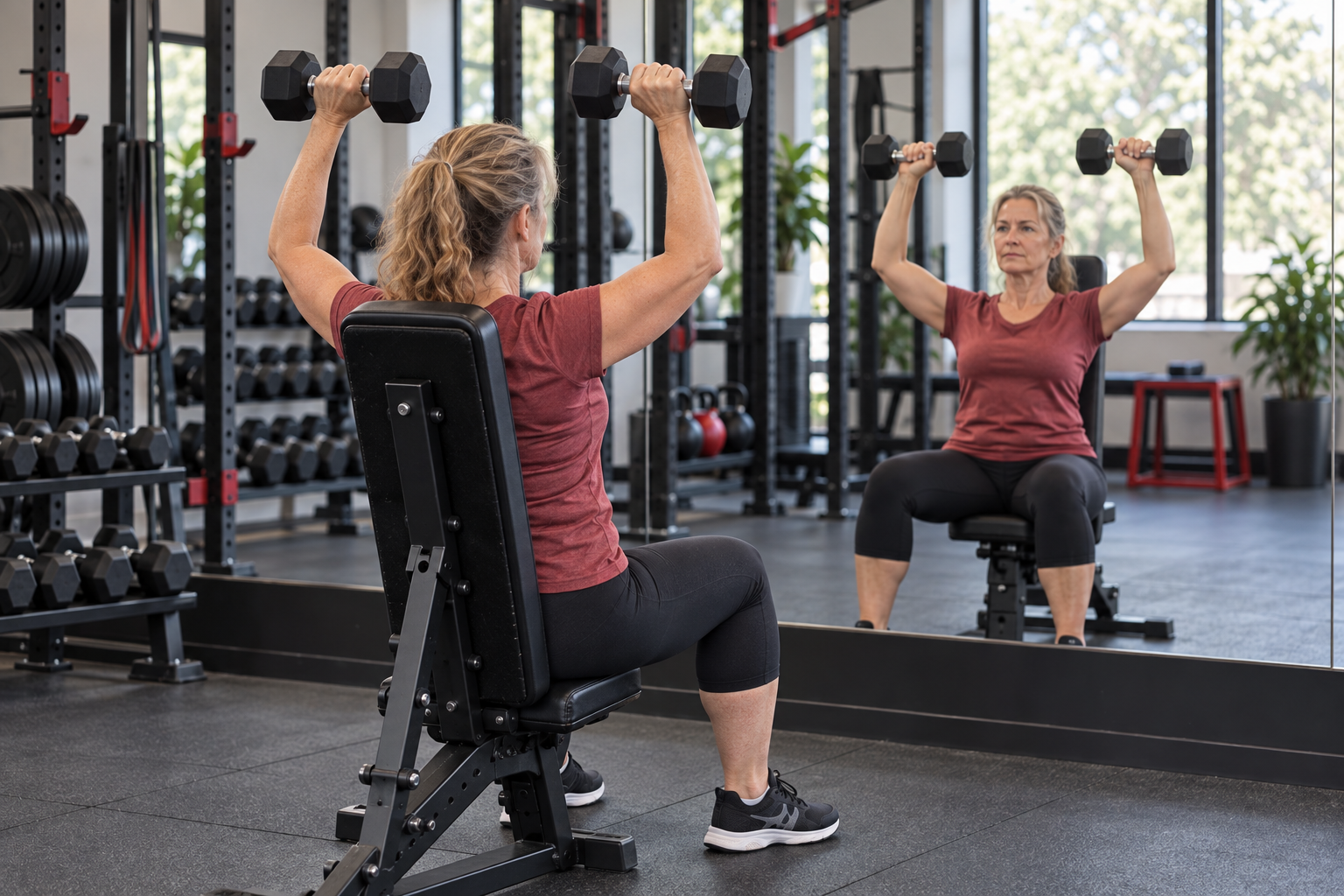
Reps in reserve, often shortened to RIR, describe how many additional repetitions you estimate you could complete with the same technique. Two reps in reserve means you believe two more clean repetitions were available. It does not mean two more repetitions with a shorter range, swinging, or assistance.
A trial in trained participants found improvements with both failure and nonfailure training. This supports treating failure as a programming choice rather than a requirement. It does not establish one ideal effort level for every person or exercise. Read the training study.
Estimating effort takes practice. Record your best estimate and let your coach compare it with movement quality and your performance across sessions. If the last repetitions look completely different from the first, stop and reassess the load.
Choose a useful load, not a magic rep number
In a 12 week study of trained young men, both lighter and heavier training produced muscle growth when sets reached voluntary failure. Bench press strength improved more in the heavier group. Short term hormone changes did not predict the muscle or strength gains. These findings should not be treated as a direct prescription for adults returning after illness or surgery. Morton and colleagues, 2016.
Our practical application is to choose a repetition range that suits the exercise and makes effort manageable. Eight to twelve repetitions can be a convenient starting range for several movements. Some exercises may fit ten to fifteen better. Neither range is a guarantee of results.
You also do not need to test your maximum before starting. Try a conservative weight, complete a controlled practice set, and adjust with your coach. A useful load allows the intended movement and leaves the planned repetitions available.
An example session for an adult returning to consistent training
This is an illustrative starting session for a generally healthy adult who can perform these movements comfortably. It needs adjustment for current ability, symptoms, and medical restrictions. It is not a rehabilitation protocol.
Begin with 5 to 10 minutes of comfortable movement and practice sets for the exercises you will perform. Use those sets to assess the day’s movement and choose your working weights.
| Movement | Working sets | Repetitions | Coaching focus |
|---|---|---|---|
| Goblet squat to a box | 2 | 8 to 12 | Use a height you can control |
| Seated cable row | 2 | 8 to 12 | Keep the torso steady |
| Machine chest press | 2 | 8 to 12 | Choose a comfortable grip and range |
| Glute bridge | 2 | 10 to 15 | Finish with the hips without arching the back |
| Supported calf raise | 2 | 10 to 15 | Use support and controlled movement |
Use rest intervals of approximately 2 minutes between working sets, and longer when needed to repeat the movement well. This is not a race through a circuit. If two sets are too much for your starting point, begin with one.
A possible training frequency is two sessions per week on nonconsecutive days. Your coach can adjust movement choices and total work as you establish consistency. Keep the exercises stable long enough to learn them and compare performance.

Progress one variable at a time
Use double progression, a simple way to apply progressive overload. Keep the weight the same while gradually adding repetitions within your chosen range. Increase the load only when all working sets reach the top of that range with consistent technique and the intended effort.
For example, a cable row might progress from 10 and 9 repetitions to 11 and 10, then eventually 12 and 12. These are illustrative sessions, not a promised weekly schedule. Once 12 and 12 is repeatable with approximately two repetitions available, try the smallest practical weight increase. Your repetitions may move back toward the lower end of the range.
If the next weight forces you below the range or changes your technique, return to the previous load. Large machine increments may require staying at the same weight longer. More weight is only useful when it supports the purpose of the exercise.
Record the exercise, weight, repetitions, estimated RIR, and any symptoms. Our workout volume calculator can help track sets, repetitions, and load. Compare similar exercises and conditions. A larger tonnage total by itself does not prove that a session was more effective.
Fit training to the person
Being over 40 does not automatically mean you need light weights or an easy program. Training experience, current capacity, preferences, and recovery give your coach more useful information than age alone.
On a difficult week, hold the load steady or reduce the number of sets. When a movement is uncomfortable, reassess the setup, range of motion, or exercise rather than forcing extra repetitions. Mobility work should address a specific movement need, such as preparing the ankles for your squat, instead of becoming an unrelated checklist.
People returning after surgery or managing conditions that affect exercise tolerance need an individualized plan that follows their clinician’s restrictions. A lighter weight performed to exhaustion is not automatically an appropriate alternative to heavier training.
Frequently asked questions
Do I need to feel sore for the workout to count?
Use your training record as the main scorecard: movement quality, repetitions, load, and whether you can recover for the next session. Deliberately chasing soreness makes those decisions harder.
Can I use machines instead of free weights?
Yes. This example intentionally includes machines and cables. Choose equipment that lets you perform the intended movement consistently and progress in practical increments.
Should I add more repetitions every workout?
That is a goal to work toward, not a deadline. Repeat a session when needed. Increase the challenge when performance and recovery support it.
Is this the same as cardio?
This plan is organized around resistance exercises and recovery between sets. Keep your aerobic activity in your broader plan rather than using breathlessness as the measure of a successful lifting session.
Do I need maximal effort lifting?
This introductory plan does not require maximal attempts. If your goals later call for heavier strength work or power training, your coach can introduce it according to readiness and purpose.
