
Affiliate disclosure: Steadfast participates in Relax The Back’s affiliate program. This is a researched buying guide, not a hands-on product test. Product details and prices were checked October 12, 2026 and may change.
A recovery chair is a big purchase. Before comparing touchscreens, heat settings or leather colors, decide what you want the chair to do: give you a comfortable place to rest, provide an automated massage, or combine both.
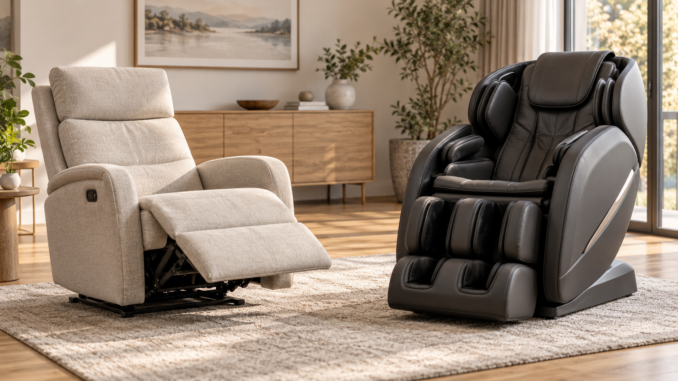
A zero-gravity recliner mainly changes your resting position. A massage chair adds powered massage features, and many also recline. The categories overlap. The best choice depends on the experience you want, your body size, your space and the terms of the sale.
The short answer
- Start with a recliner if supported rest is your main goal and you do not need powered massage.
- Consider a massage chair if you already enjoy massage pressure and will use the automated features.
- Try the exact model before buying when possible. Price and feature count cannot tell you whether the seat fits.
What does zero gravity mean in a chair?
The name describes a reclined position with the legs elevated. You are still fully under the force of gravity. The chair supports your body in a different position than an upright seat, which some people find comfortable.
Look past the label and check how the chair adjusts. Can you move the back and leg rest separately? Does the headrest support you without pushing your chin down? Can you return upright and stand up without struggling?
A product description may promise less pressure or better circulation. Those claims do not tell you whether a chair will treat your particular symptoms. If you are choosing a position because of a medical condition or recent surgery, ask your clinician what is appropriate for you.
What does a massage chair add?
Depending on the model, a massage chair uses rollers, air bags, vibration or heat. Some include a body scan that adjusts the program. Read that as a fitting feature, not a medical diagnosis.
The feel matters more than the marketing name. During a demonstration, check the lowest intensity first. Notice whether the rollers line up with comfortable areas and whether the leg compartments fit without pinching.
NCCIH’s massage overview describes possible benefits for some pain conditions while noting limits in the evidence. Research on massage therapy does not automatically prove that a particular chair improves recovery, prevents injury or treats a condition.
Comfort and training recovery are different questions
A pleasant chair can become part of your evening routine. That alone can be a reasonable reason to buy it. Be more cautious when a sales pitch promises faster muscle growth, injury repair or a replacement for treatment.
Before spending thousands, ask what you would change if you bought nothing. Could you make your existing resting space more comfortable? Does your training schedule leave room to recover? Our guide to choosing a workout split can help you examine the schedule side of that decision.
Five checks that matter before you shop
- Body fit. Check weight capacity, seat width, seat depth and supported leg length. A capacity rating is a limit, not a promise of comfort.
- Getting in and out. Try the chair in its upright position. Do not assume a recliner includes lift assistance.
- Room and delivery fit. Measure the fully reclined footprint, wall clearance, doors, stairs and turns on the delivery route.
- Controls you will use. Test how quickly you can stop massage and return upright. A long feature list can add cost without adding value to your routine.
- Total ownership cost. Include tax, delivery, setup, service coverage and any return charges. Ask what happens if the product is uncomfortable after delivery.
Two examples from Relax The Back
These products show the difference between the categories. They are examples to compare, not a claim that either is the best chair for everyone.
Perfect Chair PC-610: for supported reclining
The listed Comfort configuration starts at $3,299. It has separate powered back and leg adjustments. Relax The Back lists a 400-pound maximum load, a 23-inch-wide seat and 9 inches of required recline clearance. The fully reclined length is 64 inches.
This is a candidate for someone who wants adjustable resting positions without paying for a full massage system. Check the upholstery package carefully: added lumbar and heat features differ by package. Confirm the exact color and order’s return eligibility before paying. Review the PC-610 specifications.
Cozzia Quantum: for an automated massage experience
The Quantum was listed at $11,999, with a 320-pound capacity and a fully reclined length of 74.4 inches. This is a much larger commitment for someone who wants powered massage features and has confirmed the chair fits their body and home. Review the Quantum specifications.
Relax The Back lists massage chairs as non-returnable. Try this model before buying and obtain written answers about delivery, warranty service and what happens if it arrives damaged.
Read the return terms before choosing a color
The store return policy lists a 30-day window for eligible items, a 15% restocking fee and customer-paid return shipping. Massage chairs, custom orders and sale products are excluded. Recliner eligibility also depends on the order. Confirm the terms for your exact selection rather than assuming a 30-day home trial.
A practical buying decision
Choose the least complicated chair that comfortably does the job you identified. A recliner can be the right purchase even when a massage chair has more features. A massage chair can make sense when you enjoy its actual feel, will use it regularly and are comfortable with the final cost and return limits.
If neither passes the fit test, keep looking. No discount makes an uncomfortable chair a good match.
Frequently asked questions
Is a zero-gravity chair the same as a massage chair?
No. Zero gravity describes a reclining position. Massage describes powered features. A chair can have one, both or neither. Check the exact model.
Can a recovery chair replace exercise or medical treatment?
No. Treat it as a comfort purchase. Do not use a chair to delay assessment of ongoing or worsening symptoms, and follow any positioning restrictions from your clinician.
Should I buy the most expensive chair I can afford?
Compare fit and likely use first. Pay for features that improve your experience, then include delivery, service and return costs in your decision.
What if I cannot try the chair in person?
Ask for detailed seat and reclined measurements, a demonstration of controls, and written return terms for your exact order. A non-returnable chair is a bigger risk when you cannot test it.
Educational information, not a diagnosis or individual treatment plan. Manufacturer specifications describe product features; they do not establish clinical results.
Enjoy our strength and mobility articles?
Add Steadfast Strength and Mobility as a preferred source on Google to see more of our training advice, educational articles, and practical fitness information.
Or choose Steadfast in Google’s source preferences

Be the first to comment