
MOVE BETTER. TRAIN WITH PURPOSE.
Thank you for reading this post, don't forget to subscribe!
You finally make time to exercise. Then the warmup turns into twenty minutes of searching for tight spots, leaning on a foam roller, and wondering whether you are doing enough to get your body ready.
If that sounds familiar, you are not alone in having questions. Does foam rolling actually help? Should you do it before or after training? Does it need to hurt? And once you are over 40, is it something you should be doing every day?
Foam rolling can have a useful place in your routine. The key is giving it a specific job, using a manageable amount, and judging it by what happens when you move afterward. You do not need an elaborate recovery ritual before you are allowed to train.
This guide separates research findings from practical coaching suggestions, then shows you how to build a simple experiment around your own training. The goal is to spend less time guessing and more time getting stronger.
What is foam rolling, and what can it help?
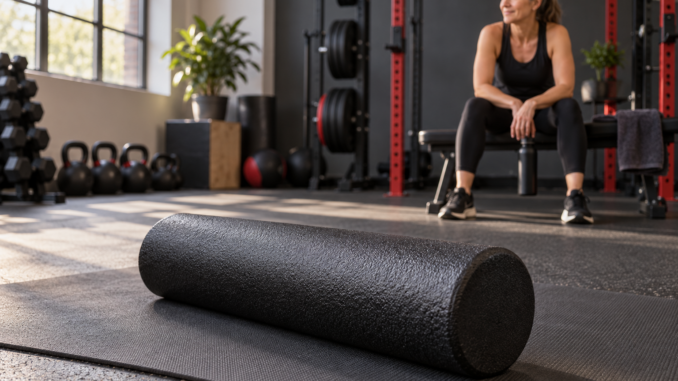
Foam rolling is a form of self massage. You use a cylindrical roller and some of your body weight to apply pressure while moving across a muscle area. A handheld massage roller offers a related approach, with pressure controlled through your hands.
You may also hear it called self myofascial release. That name suggests a particular explanation for why it works, but the explanation deserves more caution than the marketing usually gives it.
For everyday use, think of the roller as an optional preparation or comfort tool. Its value depends on the problem you are trying to solve. Feeling a little more comfortable before a squat is a different outcome from building stronger legs, recovering from an injury, or improving your ability to climb stairs.
A temporary increase in range of motion
A review of 26 trials found that foam rolling improved immediate joint range of motion compared with doing no exercise. It was not superior to stretching in that comparison. That supports foam rolling as one possible way to prepare for movement, without making it the only useful option. [1]
Range of motion describes how far a joint can move. For your training, the practical question is whether an exercise becomes more comfortable and controlled. A larger movement on a test does not automatically tell you how much weight to lift or which exercise variation is right for you.
Some help with soreness, with modest expectations
A 2019 review found that rolling after exercise could reduce the perception of muscle soreness. Across performance and recovery outcomes, the overall effects were generally small or negligible, and results varied. A roller should not come with a promise that you will recover dramatically faster or feel ready for every hard session. [2]
Use that finding as permission to try something that feels helpful. Avoid turning temporary comfort into a reason to ignore a training session that was clearly too demanding. How you feel during the next workout still matters.
Potential improvements with repeated use
Research is not limited to immediate effects. A 2022 review of 11 studies found improved range of motion after repeated foam rolling, with differences between muscles and intervention lengths. However, participants averaged about 24 years old. Those results do not establish a special protocol or guaranteed benefit for adults over 40. [3]
Your age helps describe the audience for this guide; it does not dictate a universal rolling prescription. Your comfort, health history, available time, and actual response deserve more attention than the number on your birthday cake.
What foam rolling cannot promise
The phrase “breaking up knots” can make rolling sound like a repair job in which harder pressure must produce a better result. That is an oversimplified picture. A review of possible mechanisms found insufficient evidence that releasing myofascial restrictions is the primary explanation for the effects of rolling. Changes in sensation and nervous system responses may contribute. [4]
A tender spot is not something you need to defeat. Nor does temporary relief prove that you corrected an injury or removed scar tissue. Avoid judging a session by how uncomfortable you made it.
It is also worth separating mobility work from strength work. A roller does not supply the same training task as a squat, row, carry, or press. If becoming stronger is your goal, you still need an appropriate plan for progressively challenging your muscles.
The CDC recommends that adults include muscle strengthening activity on at least two days each week, alongside aerobic activity. Foam rolling is not a substitute for those activities. [5]
Here is a useful way to organize your expectations:
| Your goal | A reasonable role for rolling | What still needs attention |
|---|---|---|
| Feel ready to move | Optional brief preparation | Active warmup and exercise practice |
| Manage ordinary workout soreness | A comfort option if tolerated | Next session readiness and training demands |
| Become stronger | Support the routine if useful | Progressive resistance training |
| Understand persistent pain | No diagnosis from a roller | Appropriate professional assessment |
Start with a goal, not a full body checklist
Before picking up the roller, finish this sentence: “I want this to help me…” Be specific. Perhaps you want your first few bodyweight squats to feel less stiff. Perhaps you enjoy a few quiet minutes after training. Either is easier to evaluate than a vague intention to fix your entire body.
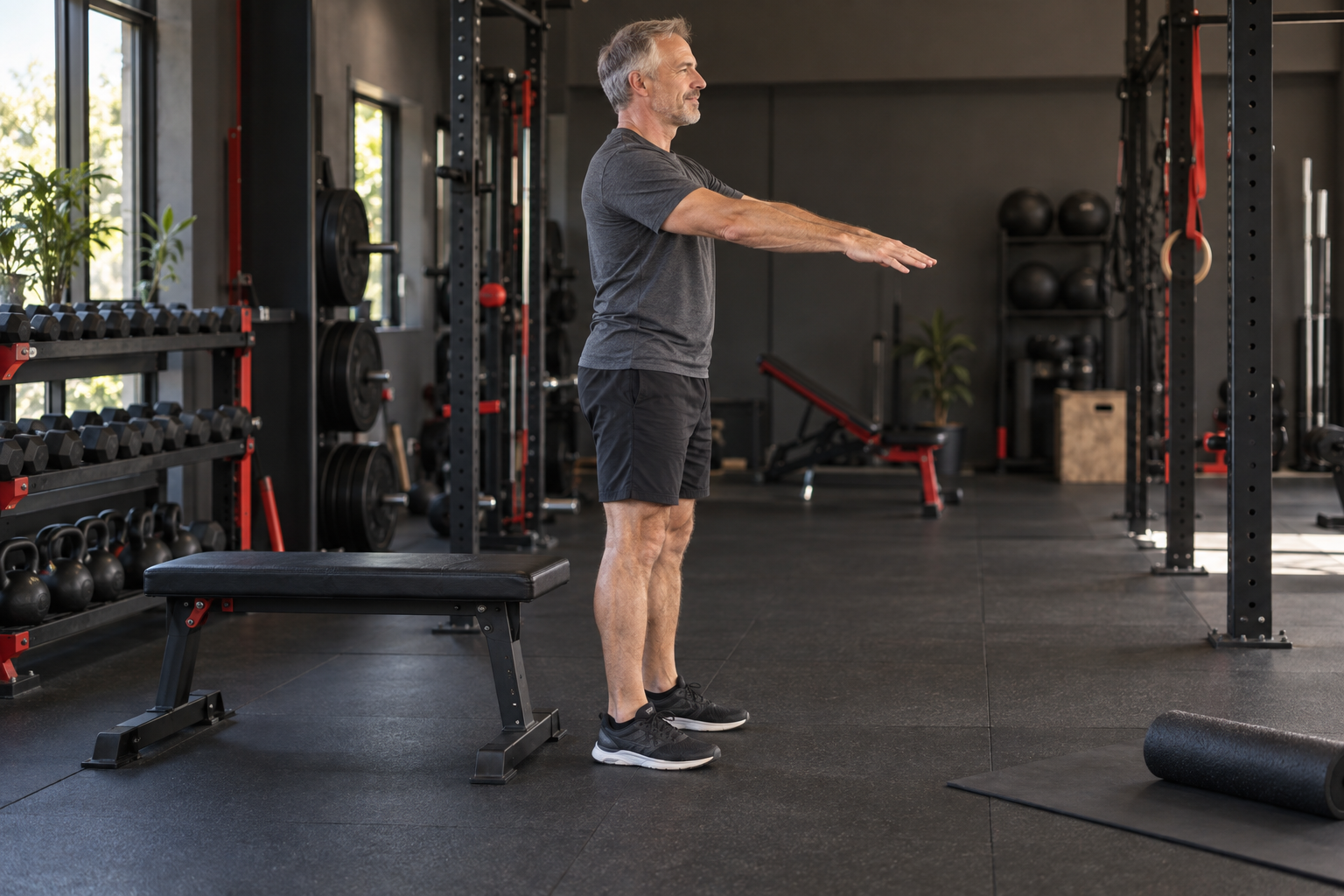
Choose one familiar movement to check before and after. It might be a comfortable sit to stand from a bench or a short walk. Use the same setup and an easy effort. You are observing your response, not attempting a personal record or diagnosing a limitation.
Also decide how much time the experiment deserves. If you have a thirty minute training window, preparation should leave room for the session itself. Setting a timer can stop an optional tool from taking over the workout.
You do not need to roll every muscle because a video demonstrates a long sequence. Start with one area, keep the approach simple, and give yourself a clear stopping point.
Choose a setup you can control
For a first trial, a smooth roller with manageable firmness is a practical choice. This is a convenience recommendation, not a claim that one product is scientifically best. Borrow an available roller before deciding whether you need to buy anything.
Make sure the space is clear and the mat will not slide. Getting into and out of the position should feel manageable. If supporting yourself on your hands or getting down to the floor is difficult, ask a qualified professional to help you find a different setup.
A handheld roller may be easier to control while seated, although it is a different tool and not every foam rolling study applies directly to it. The best starting setup is one you can use calmly without struggling to hold your position.
Keep the pressure comfortable
Begin with light pressure and a small, slow movement. Use your supporting limbs to control how much weight goes onto the roller. You should be able to breathe normally rather than brace against an unpleasant sensation.
Do not chase sharp pain, numbness, tingling, or a feeling of weakness. Stop if those occur. Avoid direct pressure over joints and bony areas, and leave the neck, abdomen, and direct rolling along the lower spine out of a beginner routine.
These are conservative coaching boundaries for a general article, not a rehabilitation prescription. You do not have to tolerate a painful technique to prove that you are committed to improving.
When to get advice before rolling
Foam rolling is not appropriate for every situation. An international expert consensus identified medical cautions, including local tissue inflammation and deep vein thrombosis. This was an expert consensus process, not a trial proving that every application is safe. [6]
Do not roll an area with a known or suspected blood clot. New unexplained swelling, redness, warmth, or significant pain warrants medical assessment rather than self massage. Call 911 for those symptoms accompanied by breathlessness or chest pain. [7]
Get individualized guidance if you have a recent injury or surgery, impaired sensation, a bleeding disorder, take blood thinners, or have another condition that makes pressure or floor exercise a concern. Keep the roller away from open wounds and bruised areas.
Recurring pain that changes how you walk or train also deserves attention. A coach can help adjust an exercise session, while a qualified healthcare professional can assess a medical problem.
A short trial routine before training
The following is an original coaching example, not a research validated five minute protocol. It is intended for a generally healthy adult who can comfortably use the positions described. Shorten it, skip rolling, or get help with setup as needed.
- Check a familiar movement. Walk a few steps or perform two comfortable sit to stands. Notice how the movement feels without forcing extra depth.
- Try one calf at a time. Sit on a mat with the roller beneath the fleshy part of one calf. Keep the other foot on the floor and use your hands for support. Make small movements while keeping pressure light. Stay away from the back of the knee and the Achilles tendon.
- Keep the first dose brief. Try about 20 to 30 seconds per side. These times are starting suggestions, not an established ideal dose. Stop sooner if the position or pressure is uncomfortable.
- Stand and move again. Repeat your easy walk or sit to stand. Ask whether it feels better, unchanged, or worse.
- Continue into active preparation. Use comfortable movement practice and lighter versions of the exercises in your planned workout before progressing to working sets.
The sequence is deliberately small. If it is useful, you have found something simple you can repeat. If it is not useful, you have learned that without spending half the session on the floor.
For a session built around upper body exercises, do not automatically add calf rolling just because it is listed here. Your preparation should relate to the movements you intend to perform. A coach can help choose an alternative when needed.
Before training, afterward, or on another day?
Let your purpose decide the timing. Before exercise, keep a trial focused on preparing for the session. Afterward, use it only if you find it comfortable and worthwhile. On another day, it can be a brief personal preference rather than another required workout.
There is no need to do all three. Adding several rolling sessions to an already crowded week can turn a small convenience into another obligation. The routine should support your training life, not give you another reason to feel behind.
Consider this example: you finish work with forty minutes available. You could spend twenty minutes rolling everything, then rush through your exercises. Or you could do a brief check, use a minute of rolling if helpful, and give the rest of your preparation and training the attention they deserve.
That is a scheduling choice, not a promise that one minute produces an identical physiological effect to twenty. It keeps the decision tied to your main goal and the time you actually have.
A realistic example for a busy week
Imagine a recreational exerciser with two planned strength sessions and a weekend walk. Their goal is to feel comfortable starting training, not to become an expert in every recovery technique. They choose the same easy sit to stand before each session and give calf rolling a brief trial.
On the first day, the movement feels about the same afterward. They continue with their planned warmup instead of adding more rolling. On the second day, they prefer the feeling after rolling, but the difference is small. They note it and complete the session as planned.
After several comparable sessions, they decide whether that small benefit is worth the time. They might keep the roller near the mat for days when they want it, without making it mandatory. They might also decide that walking and practicing the first exercise are enough.
This is an illustrative example, not a client story or a promised outcome. Its purpose is to show a useful decision process: choose a goal, try a manageable action, observe the result, and keep the larger training plan in view. A tool can be helpful without becoming the centerpiece of every workout.
How to tell whether it is worth keeping
For two weeks, keep a tiny note after comparable sessions. Record the area you rolled, roughly how long you spent, whether your chosen movement felt better, and whether anything felt irritated later.
Do not change the roller, pressure, duration, exercises, and workout intensity all at once. A simpler experiment makes your own observations easier to interpret. It will not be a controlled study, but it can help you make a practical decision.
Keep the routine if it reliably helps you get started and fits your available time. Reduce it if it becomes uncomfortable or distracts from training. Skip it if you notice no useful difference. You do not need to maintain a habit solely because it appears in other people’s warmups.
Also look beyond the first five minutes. Are you showing up regularly? Are exercises becoming more familiar? Can you follow your plan without repeatedly adding extra preparation? Those questions keep attention on the purpose of the whole session.
Common mistakes that make rolling less useful
Using discomfort as a score. A more unpleasant session is not automatically a more productive one. Choose pressure you can control and stop trying to win a contest with the roller.
Searching endlessly for tender spots. Decide what you are working on before you begin. Set a short timer and return to the movement you wanted to prepare for.
Changing everything after one session. A good or bad day can have several explanations. Notice patterns across comparable sessions instead of crediting every change to one tool.
Treating relief as permission to push harder. Keep the planned exercise effort in mind. Feeling temporarily more comfortable does not require adding weight or extra sets.
Putting preparation ahead of participation. You do not need a flawless warmup ritual to begin an appropriately scaled session. If the routine creates more friction than confidence, simplify it with help.
Common questions about foam rolling after 40
Do I need to foam roll every day?
No daily schedule is required for this trial. Start around a few comparable training sessions and evaluate whether it helps. More frequent use is not automatically a better fit for your goals, comfort, or schedule.
Can I just stretch instead?
You can consider stretching or active movement as alternatives. The immediate range of motion review did not show foam rolling to be superior to stretching. Choose preparation that fits the session and is comfortable for you. [1]
Should I roll a painful area?
Do not use this general guide to treat unexplained pain. Stop if rolling creates concerning symptoms, and have persistent or worsening pain assessed. The location of discomfort alone does not tell you what needs treatment.
What if I feel no difference?
That is a useful result. You can leave rolling out and focus on an appropriate active warmup. Optional tools should solve a problem for you, rather than become requirements you follow without a reason.
Will foam rolling build muscle?
Do not use it in place of resistance training. For a strength goal, your exercise selection, consistency, and progression deserve the planning time. Our progressive overload guide explains how training challenges can develop gradually.
Build a routine around the life you want to live
The most useful foam rolling routine is one that has a clear purpose and leaves space for the training you came to do. Start small, observe honestly, and give yourself permission to keep, change, or remove it.
At Steadfast Strength and Mobility, the broader goal is to help you build strength, move with confidence, and stay capable for daily life. That starts with understanding your goals and finding an approach you can actually follow.
Explore personal training in Fairfax or Haymarket, or learn about online coaching. If you want help deciding where to start, your first consultation and assessment are free.
Sources and further reading
- Wilke et al. Acute Effects of Foam Rolling on Range of Motion in Healthy Adults. Sports Medicine, 2020. Systematic review and meta analysis.
- Wiewelhove et al. A Meta Analysis of the Effects of Foam Rolling on Performance and Recovery. Frontiers in Physiology, 2019.
- Konrad et al. Foam Rolling Training Effects on Range of Motion. Sports Medicine, 2022. Systematic review and meta analysis.
- Behm and Wilke. Do Self Myofascial Release Devices Release Myofascia? Rolling Mechanisms. Sports Medicine, 2019. Narrative review.
- CDC. Adult Activity: An Overview. Public health guidance.
- Bartsch et al. Expert Consensus on the Contraindications and Cautions of Foam Rolling. Journal of Clinical Medicine, 2021. International Delphi study.
- NHS. DVT: Symptoms and when to get medical help.
Research findings inform this article; the sample routine and scheduling examples are practical suggestions, not protocols tested by these studies. Editorial images were generated with AI.
