
If your clothes fit differently and your lifts are improving while your weight barely changes, the scale may be missing part of the story. Body recomposition after 40 means paying attention to fat loss and muscle gain together. That takes a different approach from trying to make your weight drop as quickly as possible.
What body recomposition actually is
Body recomposition means losing body fat while gaining muscle. Those changes can partly offset each other on the scale. A stable weight doesn’t prove recomposition is happening, but it doesn’t rule it out either.
Body recomposition vs weight loss comes down to what you’re measuring. Weight loss describes a change in total weight. It doesn’t tell you how much came from fat, muscle or water. Recomposition asks whether you’re changing body composition while building useful strength.
Why it works after 40 (and why "just lose weight" is the wrong goal)
You can respond to strength training after 40. Preserving muscle while losing fat is worth making part of the goal, especially if you’ve spent more time cutting calories than training consistently.
People beginning resistance training may have more room to improve than someone who has trained well for years. Returning after time away is also a reason to rebuild a consistent routine before judging results. Starting body fat, training history, food intake and recovery all affect the outcome. Having fat to lose doesn’t guarantee simultaneous muscle gain.
An experienced lifter close to their current potential should expect smaller changes and may need a more specific plan. Maintaining muscle during fat loss can still be a useful result. Recomposition doesn’t have to be the only acceptable outcome.
Protect a consistent sleep schedule and leave room between demanding sessions.
Lever 1: strength training
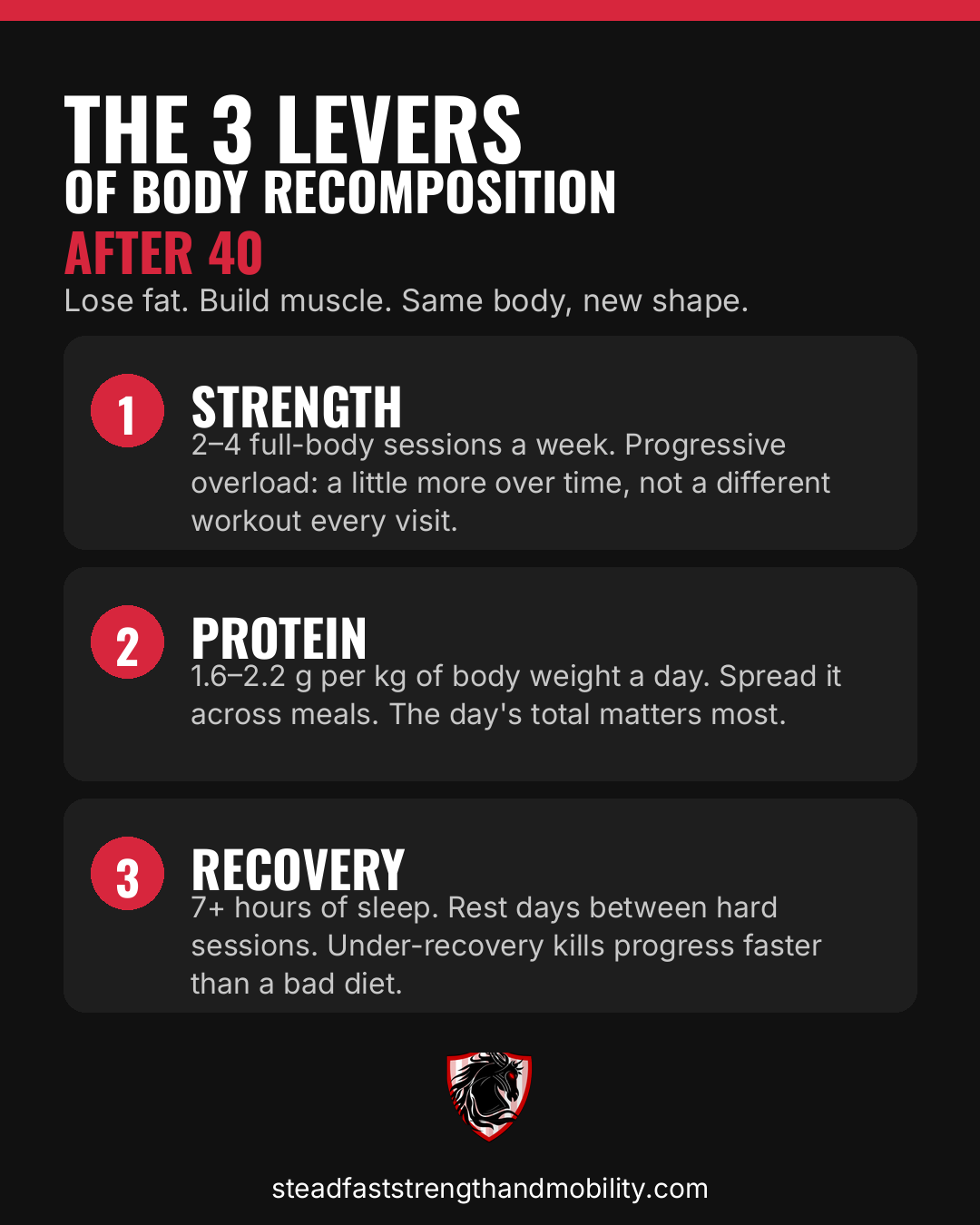
Start with two full body sessions each week that you can repeat. A body recomposition workout needs a consistent strength stimulus, not a different collection of exercises every visit. ACSM’s current resistance training guidance emphasizes training all major muscle groups at least twice weekly.
Use the full body foundation workout for structure, or the beginner strength training guide if you’re starting fresh. Keep a record of the exercises, weights and repetitions so you can tell what is changing.
Progressive overload means gradually asking more of your muscles as you become capable of doing more. That might mean another controlled repetition before increasing the weight. Keep technique steady rather than chasing a heavier number at any cost.
Some people can build toward three or four weekly sessions. Those extra days need to fit their recovery and program. They aren’t an entry requirement. For exercise options that feel manageable, use the joint friendly strength training guide.
Lever 2: protein
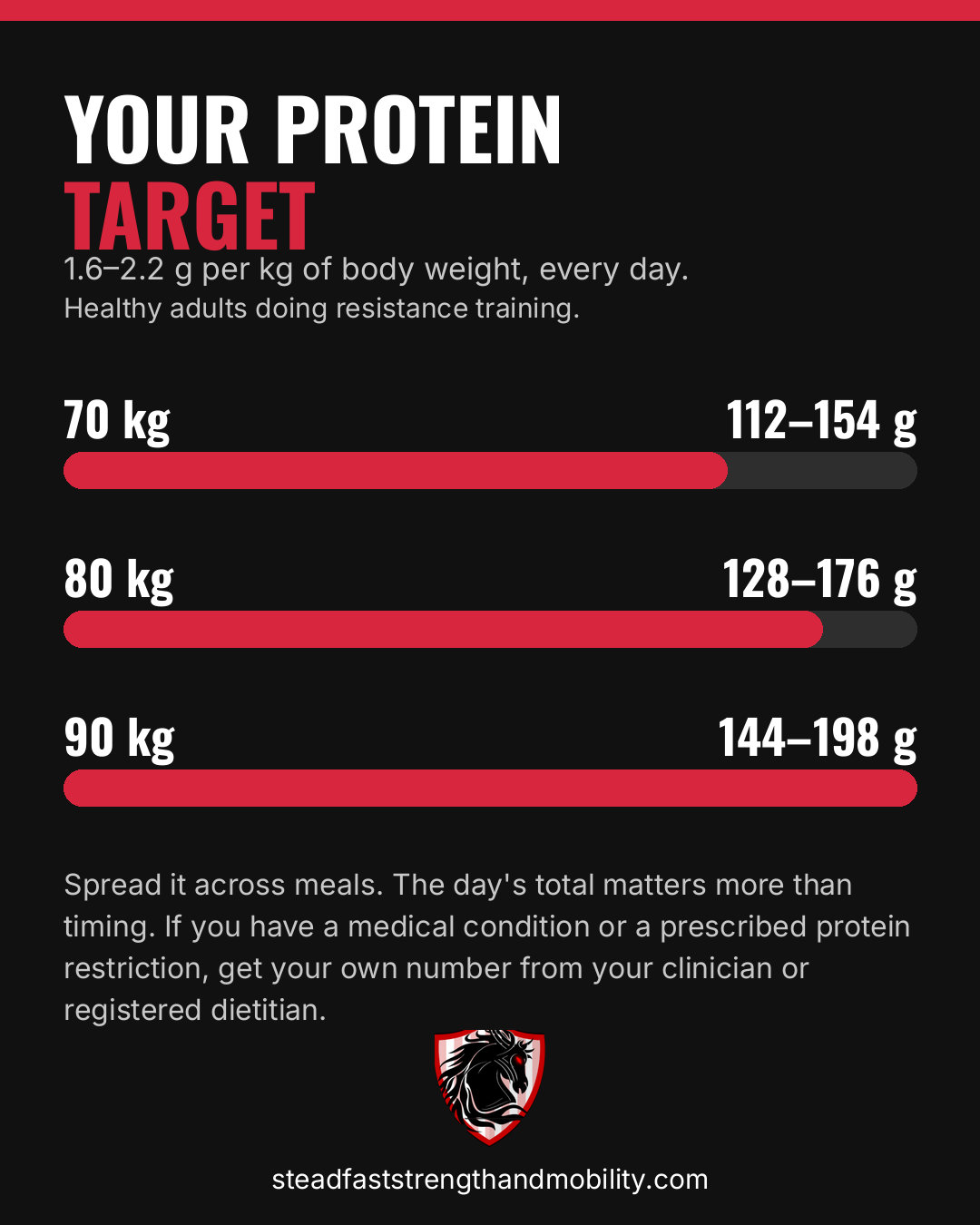
Protein gives your body material to build and maintain muscle. For healthy adults doing resistance training, roughly 1.6 to 2.2 grams per kilogram of body weight per day is a useful planning range, consistent with ISSN’s position on body weight reduction. You don’t have to aim for its upper end.
For someone weighing 80 kilograms, that works out to about 128 to 176 grams a day. Your appropriate target depends on your circumstances. If you have a medical condition or a prescribed protein restriction, get an individual recommendation from your clinician or registered dietitian.
Spread protein across meals in a way you can maintain. Meeting the day’s total matters more than getting a shake into a narrow window after training. The high protein meals guide can help you think through food choices. The protein powder guide explains where a convenient option may fit. You don’t need a product to make the plan work.
Lever 3: recovery and sleep
Training gives your body work to adapt to. Recovery gives you the opportunity to come back and perform that work again. If each session leaves you less able to train, adding more isn’t automatically the answer.
Protect a consistent sleep schedule and leave room between demanding sessions. CDC guidance recommends at least seven hours for adults aged 18 to 60, with different ranges for older adults. A rough night happens. A pattern of poor sleep deserves attention alongside the workout plan.
Use the rest days guide to think through your week. Repeatedly struggling with the same workload is a reason to review training, food and recovery together, rather than assuming you need more discipline.
What to eat
A body recomposition diet should provide enough food to support training. Maintenance calories or a modest deficit may be reasonable starting points, depending on your body composition and priorities. A review of resistance training during energy restriction found that deficits impaired lean mass gains, supporting a cautious approach to calorie cuts.
Build meals around a protein source, then include foods you tolerate and enjoy that help you meet your overall energy and nutrient needs. Avoid turning every meal into a test of how little you can eat. Review the pattern over time instead of reacting to one day on the scale.
If you have Crohn’s disease or another gut condition, work with your clinician or registered dietitian on food choices and adequate intake.
How to measure progress without the scale
Choose a few measures you can repeat consistently: waist measurement, optional progress photos, strength numbers and how your clothes fit. None measures muscle gain perfectly on its own. Look for a pattern across them.
At the start, record your waist and current training performance. If photos are useful to you, keep their lighting, clothing and position similar. Then review every four weeks. That is a practical review schedule, not a promise that your body will visibly change each month.
Ask whether you’re completing sessions, maintaining technique and gradually doing more. Compare waist measurements taken the same way. If the information is mixed, keep tracking before making a large change. You can still use body weight as one part of the record.
Realistic timeline
Think in months rather than days. There is no reliable universal deadline for seeing a change, and feeling stronger doesn’t always arrive on the same schedule as looking different.
Your starting point, consistency and health affect the pace. Use the reviews every four weeks to decide whether the plan is workable and whether the overall direction is useful. If you’re following it consistently without a helpful trend, review it with a qualified coach or dietitian. Avoid treating an advertised transformation deadline as a test you have failed.
Who shouldn’t chase recomposition right now
If you’re not eating enough, in a Crohn’s flare or managing a medical issue that affects eating or exercise, put deliberate fat loss on hold and speak with your clinician. Restoring adequate intake or managing symptoms may need to come first. General training advice cannot decide when a body composition goal is appropriate for you.
FAQ
Can you really build muscle and lose fat at the same time?
Yes, it can happen, but it isn’t guaranteed. Training history, food intake and recovery influence the result. Beginners often have more room to adapt than highly trained lifters. Returners should first rebuild a consistent routine.
Do I need a calorie deficit?
Not everyone needs a deliberate calorie cut to begin. Maintenance intake may support progress for some people. If fat loss is a priority, a modest deficit can be considered while watching training and recovery.
How much protein?
For healthy adults doing resistance training, about 1.6 to 2.2 grams per kilogram daily is a useful range. Medical conditions or prescribed dietary restrictions call for individualized advice.
How long before I see it?
There isn’t a dependable deadline. Review your habits and measurements every four weeks and allow time for trends to emerge. Visible changes may be slower than improvements in strength.
Is the scale useless now?
No. It measures total body weight, which can still be useful. It just can’t tell you whether a change came from fat, muscle or water.
This is general coaching guidance. Treatment decisions and clearance to exercise belong with your clinicians.
Ready to choose a manageable starting point? Book a free Mobility + Strength Assessment to discuss your goals and next steps.
Enjoy our strength and mobility articles?
Add Steadfast Strength and Mobility as a preferred source on Google to see more of our training advice, educational articles, and practical fitness information.
Or choose Steadfast in Google’s source preferences
Be the first to comment