
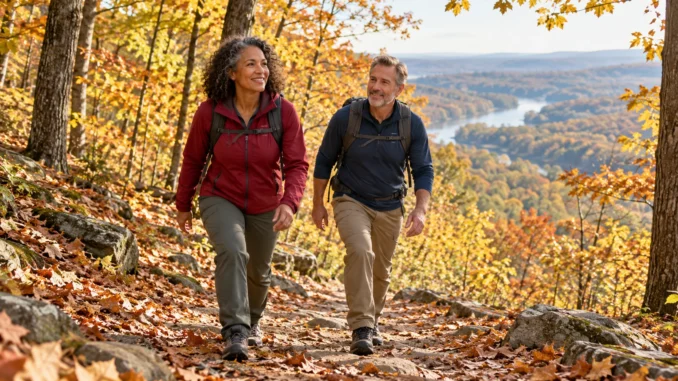
You want to enjoy the trail and still feel capable on the way back. That might mean handling a hill more comfortably, stepping down with more control, or carrying your daypack without feeling worn out halfway through.
Those are useful goals to bring into your workouts. Strength training for hiking gives the chair stands, step-ups, and walks in your week a purpose you can picture: the outing you want to take.
If you live in Haymarket, Gainesville, or elsewhere in Northern Virginia, start with a manageable local route. Then give yourself time to prepare for its distance, hills, and footing. Four to six weeks can be a useful practice block, with room to repeat a week whenever you need to.
Start with the hike you have in mind
A short walk on gently rolling ground asks something different of you than a long, hilly outing. Look at the route before deciding what your training needs to include.
Manassas National Battlefield Park’s hiking page is one place to start. The park has more than 40 miles of trails, with shorter and extended options, plus an official map to help you plan. Choose a distance and terrain that make sense for where you are now.
Then take a familiar walk and notice how it feels. How long can you walk comfortably? How do stairs feel going up and coming down? Are you steady with your usual walking aid, if you use one? Pay attention to your legs and joints later that day and the next morning, too.
Ten comfortable minutes is a useful starting point. If you already walk farther regularly, begin there. Your current ability tells you more than your age alone.
Keep both walking and strength work in your preparation. Your walks help you get used to time on your feet. Strength work gives you a controlled place to practice climbing, lowering, and lifting for the route you have in mind.
If an injury, recent surgery, unexplained symptoms, or a health condition affects your exercise, get guidance about suitable activities and restrictions before starting.
Give the hills some attention at home
Try two short strength sessions a week with a day between them. Begin with a few minutes of comfortable walking and familiar gentle movements. Choose one set of each exercise at first, resting until you’re ready to continue. Finish each set with a few controlled repetitions still possible.
As the movements become more comfortable, increase the repetitions gradually. Keep the support you need while you practice.
-
Supported low step-up: 4–8 repetitions per side. Use a low, stable step beside a secure handrail. Place your whole foot on the step, rise smoothly, and come down slowly. Choose a height you can manage without hopping or pulling yourself up with your arms. Keep the handhold. A firm-chair sit-to-stand, using your hands if needed, is an alternative.
-
Supported calf raise: 5–10 repetitions. Stand on level ground with both hands on a stable counter. Lift your heels comfortably, pause briefly, and lower with control. A smaller movement is fine. Keep both the support and the level surface.
-
Hip hinge: 6–10 repetitions. Soften your knees, move your hips backward, and return to standing. Keep your back comfortable and start without weight. Once the movement is familiar, a light dumbbell held close to your body can add resistance. Use a range you can control.
Give the downward part of the step-up as much attention as the climb. On your hike, you’ll need to come back down, and this is a chance to practice taking your time through that movement.
Round out the session with some upper-body work:
-
Supported row: 6–10 repetitions per arm. Place one hand on a sturdy surface and hold a light dumbbell in the other. Pull your elbow toward your side without twisting, then lower slowly. A seated row machine is another option if you’re comfortable using it.
-
Wall push-up: 5–10 repetitions. Put your hands on a solid wall around chest height. Bend your elbows to bring your body toward the wall, then press away. Stand closer for an easier version.
While you still feel fresh, spend a little time on supported balance practice. Beside a counter, place one foot slightly ahead of the other and hold for 10–20 seconds, keeping a hand on the support. Switch feet. Widen your stance if needed.
If you walk steadily without hand support, you can also try carrying two light, balanced weights a short distance on a clear, level floor. Skip this if you need your hands for support. Stop any exercise that causes pain or makes you feel unwell.
Our strength and stability workout after 40 offers another general starting point. Choose exercises and equipment you can use safely.
Gradually make your walks more like the trail
For the first week or two, settle into walks you can comfortably repeat alongside those strength sessions. Keep the ground predictable. Notice whether you feel ready to go again after recovering.
When that feels manageable, change one thing. You could add a few minutes to one walk, include a short gentle hill, or add repetitions to an exercise. A second set of one or two movements is another option. See how you respond before adding more.
On hills, slow down as needed. The CDC’s talk test describes moderate aerobic effort as being able to talk while finding singing difficult. Easier walking belongs in your plan, too.
Around weeks five or six, if you’re ready, try a modest outing that more closely resembles your planned hike. That could mean a familiar unpaved path or gentle elevation changes. Test your intended shoes and fitted daypack on a short walk, carrying the essentials that outing requires.
Avoid increasing distance, hills, and pack weight together. If ordinary walking or stairs feel worse afterward, reduce the next session and give yourself more time. The calendar can help you plan, but your response determines when to progress.
Before the hike itself, leave recovery time after your last demanding leg session. Check the weather and the park’s current alerts and conditions. Access and trail conditions can change; a training plan can’t tell you whether a route is suitable that day.
Allow time and energy for the return. The National Park Service’s Hike Smart guidance recommends matching the route to your group’s abilities, telling someone your plan, bringing appropriate supplies, and setting a turnaround time. Your water, food, navigation, and other essentials belong in that plan from the start.
Questions before you head out
Is walking enough to prepare?
Walking is essential practice. Strength work adds a controlled way to work on stepping, lowering, and lifting. How much preparation you need depends on the hike’s duration, elevation, and footing, along with your starting point.
Should I train with a heavy backpack?
Get comfortable carrying the pack and supplies you actually need. Additional training weight is optional. Build carrying demands gradually, and choose a shorter outing if the essentials are already too demanding.
What if step-ups bother my knees?
Stop the painful version. A lower step or assisted chair stand may feel more comfortable, but persistent or recurring pain needs individual assessment. A blog routine can’t determine the cause.
Keep the next outing in mind as you train. Your walks and strength sessions will help you judge what to try next.
If you’d like help choosing exercises and building toward your hiking goal, contact Steadfast Strength and Mobility. Bring the route you have in mind and an honest picture of where you’re starting.
Sources
Sources checked October 14, 2026, UTC.
- Centers for Disease Control and Prevention. Adult Activity: An Overview. Weekly aerobic and strength guidance.
- NHS. Strength exercises. Reviewed February 28, 2024. Supported exercises and gradual progression.
- Centers for Disease Control and Prevention. How to Measure Physical Activity Intensity. The aerobic talk test.
- National Park Service. Hiking at Manassas National Battlefield Park. Updated April 9, 2026. Trail options and official map.
- National Park Service. Manassas Alerts and Conditions. Check before departure.
- National Park Service. Hike Smart. Route selection, supplies, and turnaround planning.
Enjoy our strength and mobility articles?
Add Steadfast Strength and Mobility as a preferred source on Google to see more of our training advice, educational articles, and practical fitness information.
Or choose Steadfast in Google’s source preferences
Be the first to comment