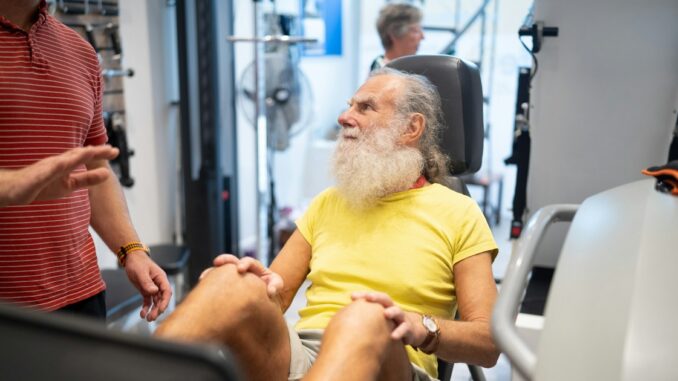
Strength training with Crohn’s disease needs room for change. A session that felt manageable last week may be too much today. The useful question is what your body can handle now, with your care team’s guidance. Sometimes that means lifting less. Sometimes it means resting.
This is a practical starting template for adults over 40 whose care team agrees they can exercise. For the broader picture, start with how exercise fits with Crohn’s overall.
Why strength training matters with Crohn’s
Inflammation, poor nutrition and reduced activity can contribute to muscle loss. Corticosteroids can also affect muscle and bone health. Those concerns make preserving everyday strength worth discussing with your care team: getting out of a chair, carrying groceries and staying steady on stairs.
Resistance training gives your muscles work to adapt to. It does not treat Crohn’s or replace medication. Fatigue also deserves attention rather than a harder workout by default. Our guide to fatigue and exercise in remission covers that distinction.
The rules before the program
Ask your care team whether strength training fits your current disease activity, nutrition, symptoms and recovery. Get individual guidance after surgery or with an ostomy. A coach can adjust exercise, but cannot diagnose a flare or clear a medical restriction.
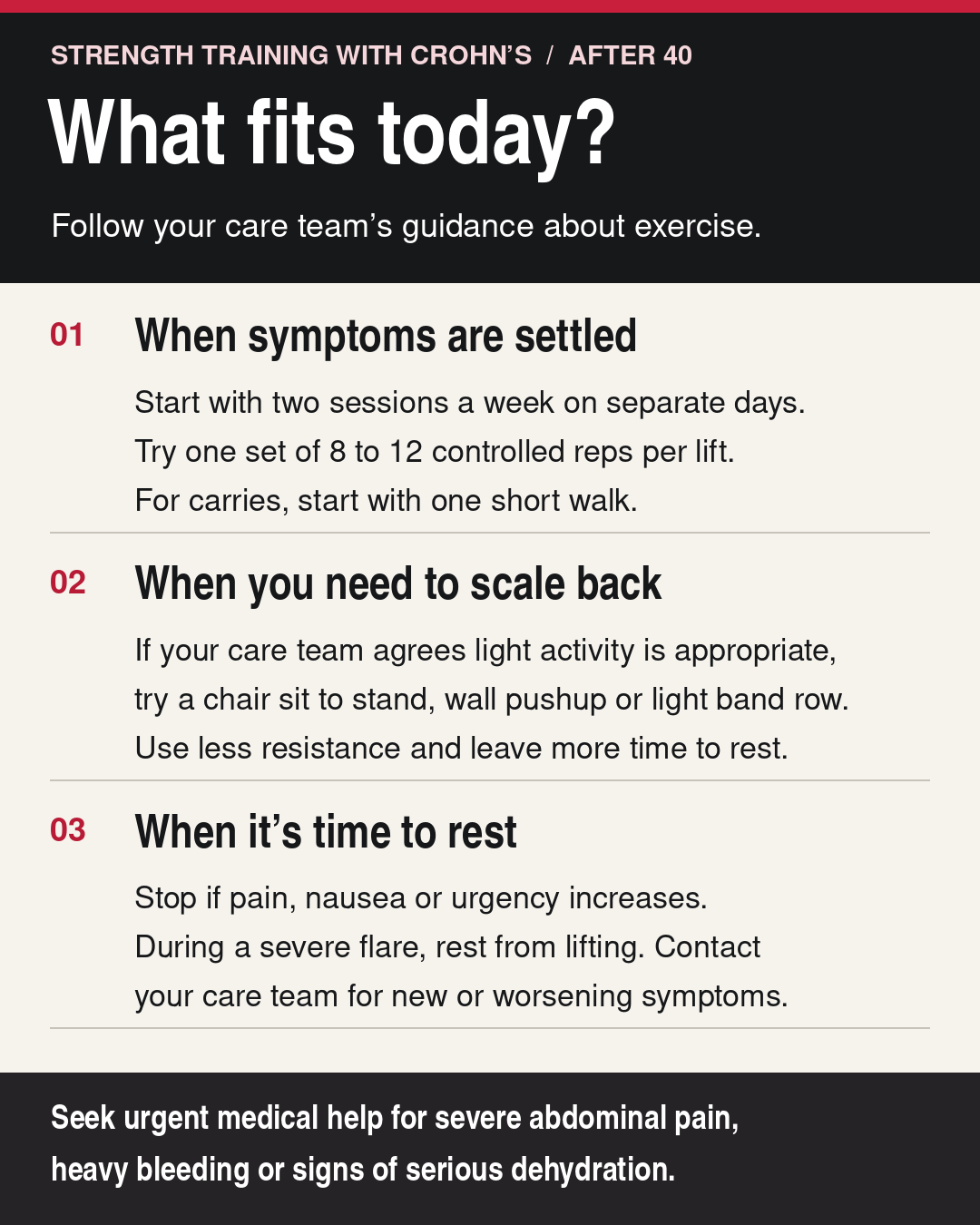
Do not lift through a severe flare. New or worsening symptoms need your care team’s advice. Stop training and seek medical help right away for severe abdominal pain, heavy bleeding or signs of serious dehydration.
Symptoms alone do not tell you how much inflammation is present. Your clinician may use symptoms alongside tests. Treat a symptom log as information for that conversation, not a home diagnosis.
The exercise evidence is encouraging but limited. Tew and colleagues studied supervised cycling in adults with inactive or mildly active Crohn’s. That pilot was not a heavy lifting trial or a test of exercise during severe flares. Read the evidence on hard workouts and IBD flares before treating any program as universally safe.
The program — good days
Use this template when symptoms are settled, ordinary activity feels manageable and your care team has no relevant restriction. The exercise choices and numbers below are coaching starting points, not a Crohn’s treatment protocol tested in a trial.
Start with two sessions a week on separate days. A third can wait until you recover comfortably between sessions. Begin with easy movement and a light practice set of each exercise. Choose one option from each pattern:
Squat: sit down to a sturdy chair and stand up. Add a light goblet squat to a box when that feels comfortable.
Hinge: practice moving your hips back toward a wall. Progress to a light dumbbell deadlift from a raised surface if the position feels comfortable.
Push: use a wall or counter pushup, or a light seated machine press.
Pull: try a band row or supported cable row. Keep the movement controlled instead of jerking the weight.
Carry: walk a short, clear route with light weights at your sides. Skip it if carrying creates abdominal discomfort or conflicts with your care team’s restrictions.
For the squat, hinge, push and pull, start with one set of eight to twelve controlled repetitions. Add a second set only if the first feels manageable. Finish with room to do a few more good repetitions. You should not need to strain through the last one.
For the carry, start with one brief walk rather than a repetition target. Stop while posture and breathing remain comfortable. Rest two to three minutes between sets, longer if needed.
Choose options that suit your joints. These guides to joint friendly strength after 40, the full body foundation workout and beginner strength training explain the patterns further.
Progress only after the same session feels manageable twice in a row, including recovery afterward. Change one thing: a few repetitions within the range, a second set, or a small increase in weight. If recovery worsens, return to the previous amount and discuss persistent symptoms with your care team.
For your abdomen, use a comfortable brace and keep breathing. Avoid forcing a hard bearing down effort. Stop any movement that provokes tenderness and ask your care team about it. Recent abdominal surgery or an ostomy needs a separate, individualized return plan.
Flare-day scaling — the dimmer switch
The phrase “flare day” does not make lifting appropriate. During an active flare, follow your care team’s advice. Rest may be the right choice. Use these changes only when light activity is appropriate and symptoms allow it.
If your usual session is two sets per exercise, try one. Choose a lighter load and stop well before straining. Rest longer, drop the carry if it bothers your abdomen, and finish after the movements you tolerate. It is fine to leave out a pattern.
A barbell session can become chair sit to stands, wall pushups and light band rows. Bands and bodyweight are not automatically easier; choose an angle or resistance you can control comfortably. Stop an exercise that increases pain, nausea or urgency.
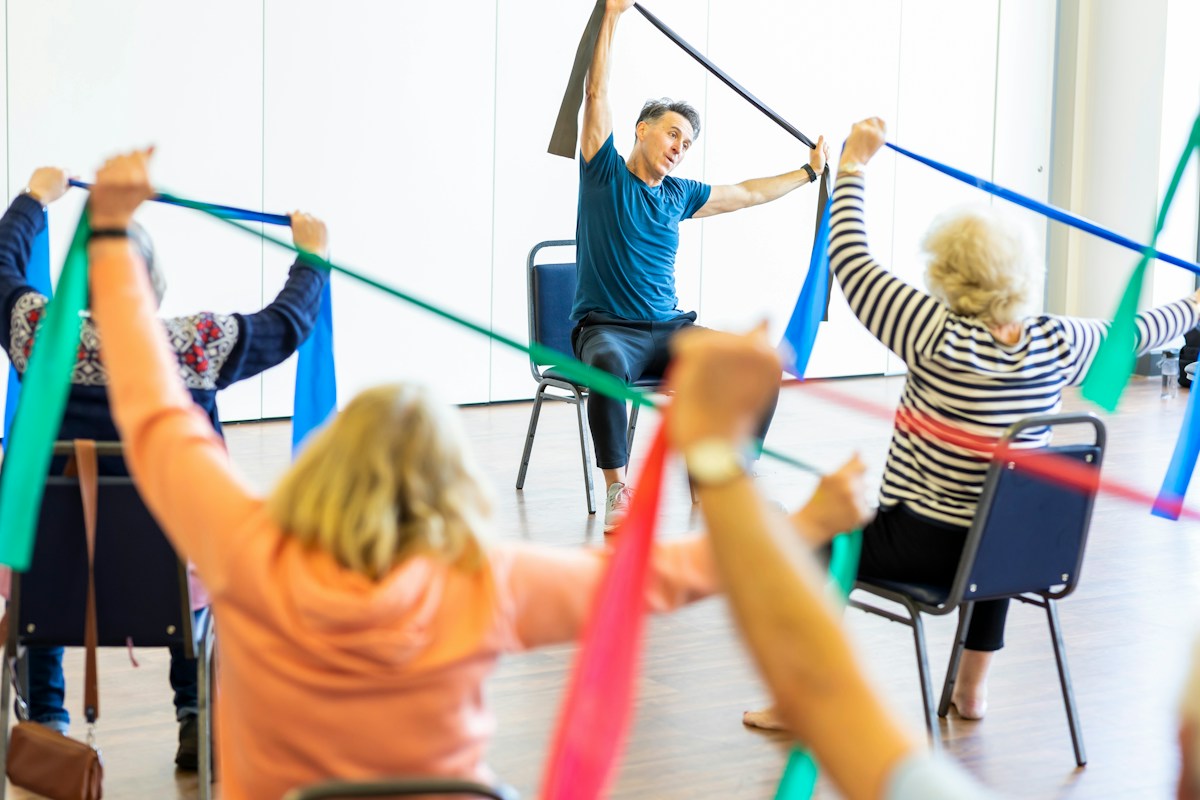
If lifting does not feel appropriate, an easy walk may be an option if your care team agrees. If walking worsens symptoms, stop and rest. Use the train, modify or rest guide to prepare questions for your clinician and coach.
What to skip or treat with care
Heavy loading that demands hard abdominal straining is a poor choice when your abdomen is tender. High repetition circuits without rest make it harder to notice when effort is getting away from you. Neither belongs in a session you are already struggling to tolerate.
Avoid training in excessive heat or while dehydrated. Exercise can provoke gastrointestinal symptoms even without IBD, so a difficult workout is not a reliable test of whether Crohn’s is active.
An athlete’s schedule may assume recovery, experience and health circumstances that do not match yours. Choose a load from today’s controlled repetitions, not an old personal record.
Recovery and tracking
Leave rest days between sessions at first. Sleep and enough food matter, especially when appetite or intake is limited. Discuss nutrition concerns with your care team or an IBD dietitian. Protein meal ideas can help with planning, but do not override individual food tolerance or medical nutrition advice.
Keep a short log: exercises, load, sets, repetitions, effort, symptoms and timing. Note how you feel later that day and the next morning. Bring recurring patterns to your care team rather than assuming every symptom came from lifting. Our guide to rest days after 40 offers a starting framework for scheduling.
FAQ
Is strength training safe with Crohn’s?
It can be appropriate for some people, particularly when disease is controlled, but safety depends on your health and the exercise. Ask your care team and start conservatively. Evidence from mild or inactive disease does not establish safety during severe flares.
Will lifting make a flare worse?
There is no reliable yes or no for every person and workout. Exercise related gut symptoms and inflammatory disease activity are different issues. Stop if symptoms worsen and get advice rather than pushing through or diagnosing the cause yourself.
Can I lift during a flare?
Do not lift through a severe flare. For milder symptoms or a known active flare, your care team should guide whether to rest or use gentle activity. The reduced session above is not medical clearance.
What if I have an ostomy or recent surgery?
Follow your surgeon, stoma nurse or rehabilitation clinician’s instructions for returning to exercise on lifting, abdominal work and return to exercise. Do not use this generic template to choose a recovery date, weight limit or hernia prevention strategy.
This article provides general education. It does not replace individualized advice, diagnosis or treatment from your healthcare team.
Book a free Mobility + Strength Assessment to match strength training to your current capacity and your care team’s guidance.
Enjoy our strength and mobility articles?
Add Steadfast Strength and Mobility as a preferred source on Google to see more of our training advice, educational articles, and practical fitness information.
Or choose Steadfast in Google’s source preferences
Be the first to comment